
Category: Editorials and Opinion
The Doctor of Movies’ Top 10 of 2014
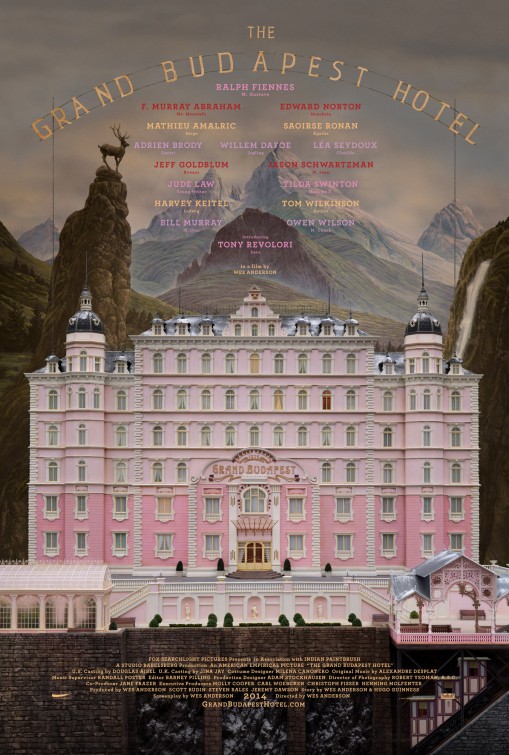 1. The Grand Budapest Hotel (Wes Anderson)
Wes Anderson has for two decades now been the most distinctive cinematic voice in America, and this 1930s-style caper film is the most complete realisation yet of his aesthetic. Anderson first-timer Ralph Fiennes is not known for comedy, but he is tremendous here in leading an all-star cast. In a time when so many comedies are built around rambling improvisation it, there is something really striking about the meticulously crafted nature of The Grand Budapest Hotel. With a Russian Doll structure, the film is beautifully designed and precisely shot. A real treasure.
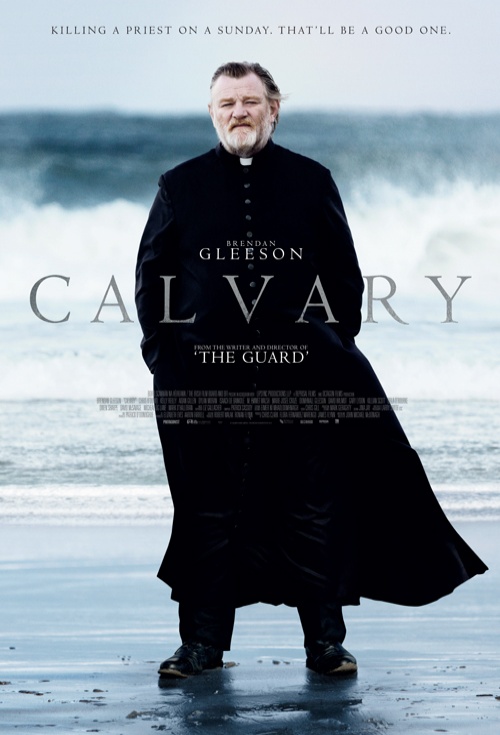 2. Calvary (John Michael McDonagh)
Irish director John Michael McDonagh managed to one-up his brilliant debut feature, The Guard, with this poignant, powerful and yet still very funny film about a rural Irish priest who receives a death threat in the confessional. What starts as a black comedy transitions into a quite profound modern passion play, with Brendan Gleeson delivering what is for mine the year’s best performance as Father James Lavelle, a good man who must bear the sins of the institution that he represents, an institutation that has failed both the wider community and himself.
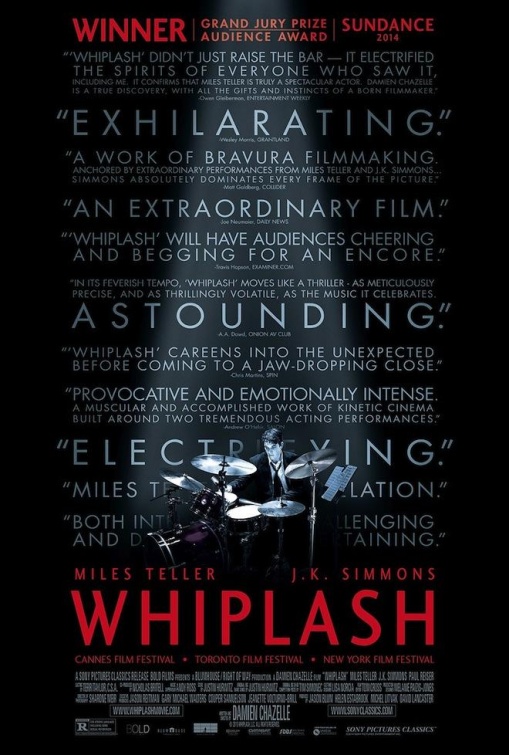 3. Whiplash (Damien Chazelle)
Where so often movies about music focus on passion, soul, creativity and love for the art, Damien Chazelle’s debut feature chooses to explore the determination, single-minded obsession and dangerous perfectionism that goes into the pursuit of greatness. This emotionally and psychologically brutal film features a powerful and controversial depiction of the student mentor relationship as a determined young drummer is brought to the brink by a borderline psychotic conductor. JK Simmons is surely a short price favourite to walk away with a Best Supporting Actor Oscar early next year.
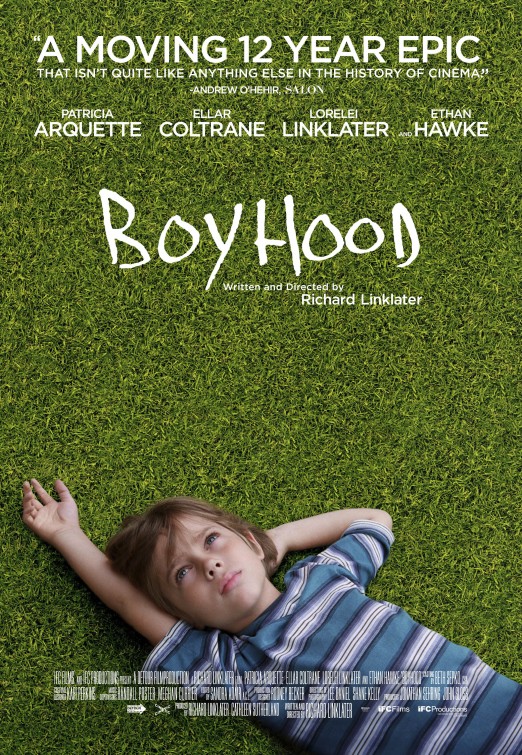 4. Boyhood (Richard Linklater)
There has never been a film quite like Boyhood. Writer-director Richard Linklater shot the film over a twelve year period, following the same boy (Ellar Coltrane) as he grew from a six year old into a young adult. Incredibly ambitious and effectively executed, the film manages to not only explore the evolving family dynamic as this family grows up together, but also to navigate the cultural and political changes the world experienced over the twelve years of production. Managing to be at the same time epic in scope and incredibly intimate, Boyhood is a truly unique cinematic experience.
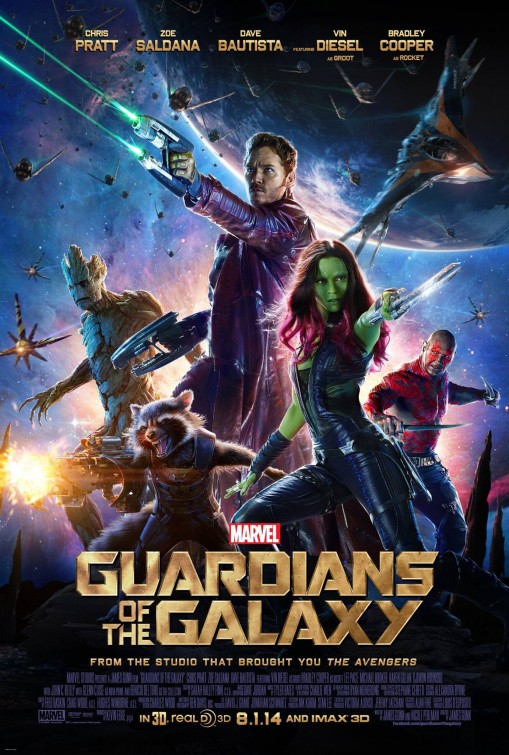 5. Guardians of the Galaxy (James Gunn)
How hot are Marvel Studios right now? In what looked like a questionable step following the success of The Avengers, they announced they would be bringing a minor comic book about a motley crew of space adventurers that includes, among others, a talking raccoon and a walking tree, and they have turned it into the most exciting, fun and fresh blockbuster in decades. Rather than repeating the formula of The Avengers, James Gunn has gave Guardians of the Galaxy a completely different style and tone. This 1980s style sci-fi adventure is Marvel’s funniest film and has made a legitimate movie star out of Christ Pratt.
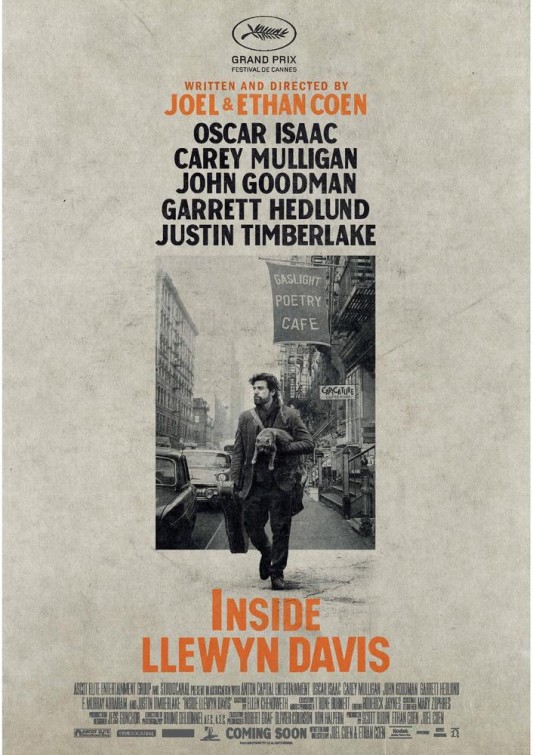 6. Inside Llewyn Davis (Joel & Ethan Coen)
While it lacked the mainstream potential of True Grit and No Country for Old Men, Inside Llewyn Davis saw the Coen brothers in top form. This character study of a neurotic, arrogant but undeniably talented folk musician offered significant insight into the mind of an artist while poking gentle fun at the earnestness of the Greenwich Village folk music scene. Bruno Delbonnel’s cinematography is stunning, with its muted colour palate of greys, greens and browns making the film feel almost black-and-white. The soundtrack, arranged by T-Bone Burnett is outstanding.
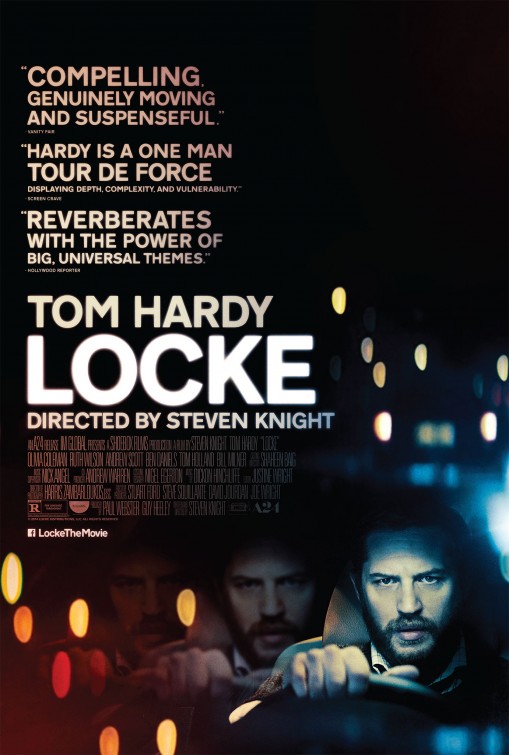 7. Locke (Steven Knight)
One man in a car making phone calls. Who’d have thought that could be the basis of the year’s best thriller? Steven Knight’s variation on the one-man play breaks with formula and bravely rethinks how to tell a story on screen. Carried by a compelling performance from Tom Hardy – one of the few actors in the world who can carry a film on their own for ninety minutes – this minimalist piece of filmmaking reimagines the very nature of what is cinematic.
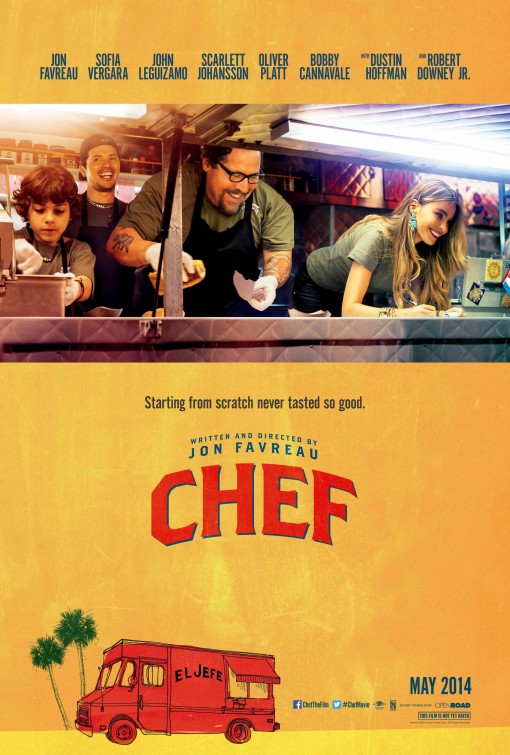 8) Chef (John Favreau)
Jon Favreau got back to his indie roots in 2014 with his passion project Chef, the food porn film of the year. With its simple story, Chef is a completely endearing celebration of food, cooking, creativity, passion and family, with many critics seeing more than a hint of autobiography in chef Casper’s quest to rediscover his creative spark. Vibrant and alive with the Cuban inspired flavours of the food and the music, Chef is a joyous film and not to be seen on an empty stomach.
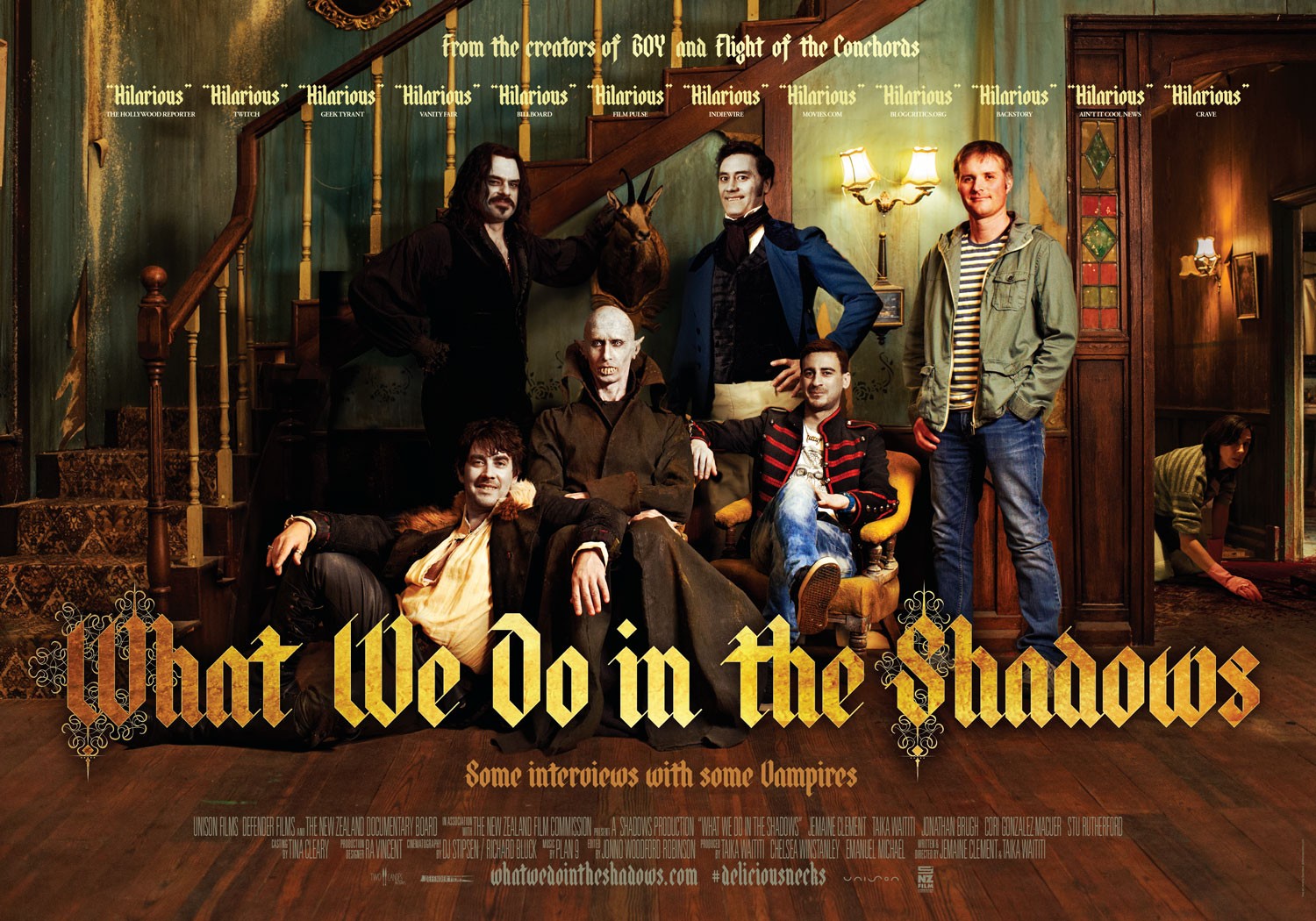 9) What We Do in the Shadows (Jermaine Clement & Taika Waititi)
With What We Do in the Shadows Kiwi duo Taika Waititi and Jermaine Clement take a subject matter, vampires, with which popular culture is teetering on the edge of overload, and a form, the mockumentary, that is every bit as tired and combine them to create a vibrant, original and downright funny movie. Juxtaposing the extraordinary with the mundane, the film follows a trio of vampire flatmates living in Wellington. The New Zealand sense of humour brings a slightly different sensibility to the film than we’d get from an American or British equivalent.
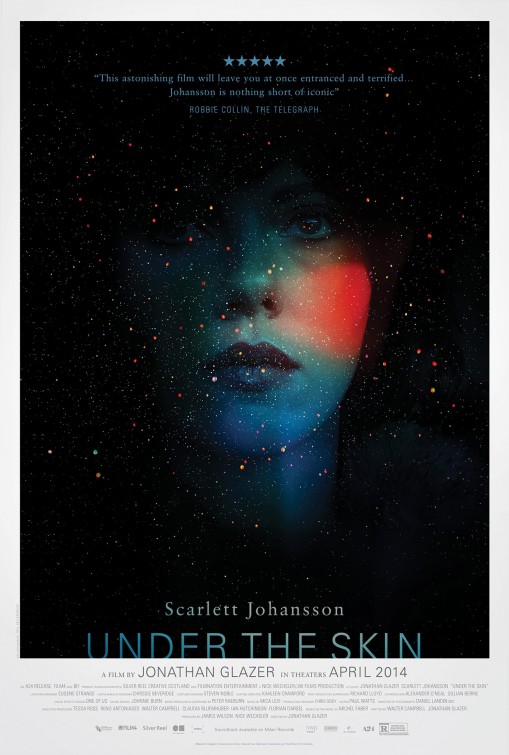 10) Under the Skin (Jonathan Glazer)
This year saw two films in which Scarlett Johansson got a bit cerebral. While Lucy was among the year’s worst films, Under the Skin was among its best. This odd film sees Johansson driving around Glasgow and the Scottish highlands, picking up men and then… well it’s best not to give away too much. A most peculiar and entrancing film, when you get to the end of Under the Skin you won’t quite know what you’ve seen but you’ll know you’ve seen something.
The Next Best (alphabetical): The Dark Horse (James Napier Robertson), Dawn of the Planet of the Apes (Matt Reeves), Frozen (Chris Buck & Jennifer Lee), The Lego Movie (Phil Lord & Christopher Miller), Nightcrawler (Dan Gilroy), The Wolf of Wall Street (Martin Scorsese)
The Worst Movie of the Year:
 I, Frankenstein (Stuart Beattie)
200 years after being brought to life, Frankenstein’s monster finds himself in the middle of an ongoing war between demons and gargoyles for… You know what? It’s not worth going on. This diabolical film which recasts Frankenstein’s monster as an action hero is utter nonsense and would have Mary Shelley rolling in her grave.
Other stinkers: Grudge Match (Peter Segal), Love, Rosie (Christian Ditter), Lucy (Luc Besson), My Mistress (Stephan Lance), Non-Stop (Jaume Collet-Serra), They Came Together (David Wain)
by Duncan McLean
What were your best and worst films of the year? Post in the comments section and let us know.
Six of the Best… Robin Williams
It was with great sadness that the world received the news that Robin Williams had been found dead, suspected of taking his own life. It is always a tragedy when someone commits suicide, but when it is someone who has brought so much joy and laughter and fun into the world, it is particularly sad.
As a comedic performer, Robin Williams was a force of nature. With his mouth going at a hundred miles an hour and still seemingly struggling to keep up with his mind, he was an explosion of physical and verbal energy. As his career progressed from stand-up comedian to sit-com star to screen actor, he began to show that in addition to his comedic talents he could really bring something to dramatic roles. When Williams reined in that energy and slowed himself down he had a powerful but calming screen presence. He would be nominated for three Best Actor Academy Awards, as well as winning an Oscar for Best Supporting Actor.
So in recognition of one of the great talents of my lifetime, I offer six of the best performances from Robin Williams.
Adrian Cronauer
Good Morning, Vietnam (1987)
Barry Levinson’s Good Morning,Vietnam was the film which first showed the world Robin Williams’ potential as an actor. As Adrian Cranauer, a disc-jockey for Armed Forces Radio, Williams is in comfortable territory playing a comedian and gets the opportunity to improvise around a script, kick that motor-mouth into gear and do what only he can do. But as hilarious as Williams is, the movie is not a comedy, and his character is placed in positions and situations which demand emotional depth from his performance. Good Morning, Vietnam is the perfect blending of Williams’ comedic and dramatic abilities and appropriately earned him his first Oscar nomination.
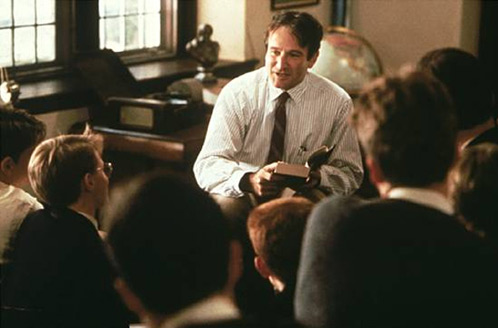
John Keating
Dead Poets Society (1989)
In Peter Weir’s Dead Poets Society Williams played John Keating, the teacher we all wish we could have had. Keating inspires in his students a passion not only for learning but for life, with his instruction to his students: “seize the day, make your lives extraordinary.” Williams effectively plays a young idealistic intellectual, marrying restraint with moments in which he still gets to riff – Keating’s impression of John Wayne doing Macbeth seems to be straight out of the Robin Williams saddlebag. While elements of the film are a bit thinly drawn, and this is Williams in full-blown sentimental mode, it is near impossible not get goosebumps as the students one by one stand up on their desks to declare their allegiance to their teacher: “O Captain, my Captain.”
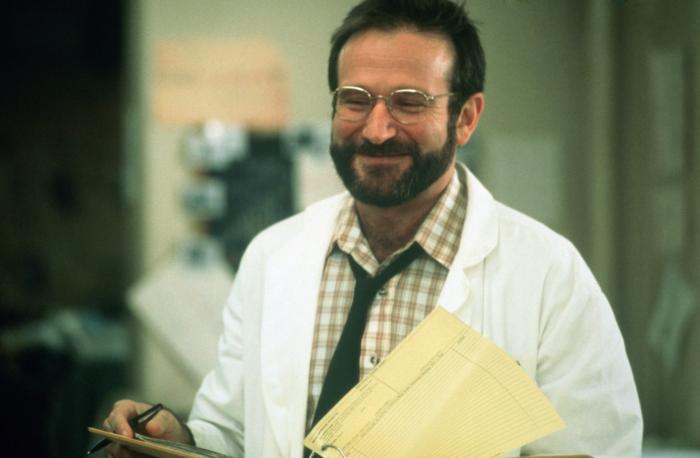
Dr. Malcolm Sayer
Awakenings (1990)
Not quite as high profile as some of Williams other films, Awakenings was a real change of direction for him as an actor. He plays Dr. Malcolm Sayer, an inexperienced, soft-spoken psychiatrist who finds himself working in a Bronx psychiatric hospital where a new drug is reviving patients who have been in a catatonic state for many years. What is interesting about this performance, is that for possibly the first time in his career, Williams did not play the dominant personality on the screen. As a patient revived after thirty years trapped in his own body, Robert De Niro has the more showy role. Williams’s role does not allow him to fall back on any of his usual shtick, but he rises to the occasion, holding his own opposite one of the all-time greats of screen acting.
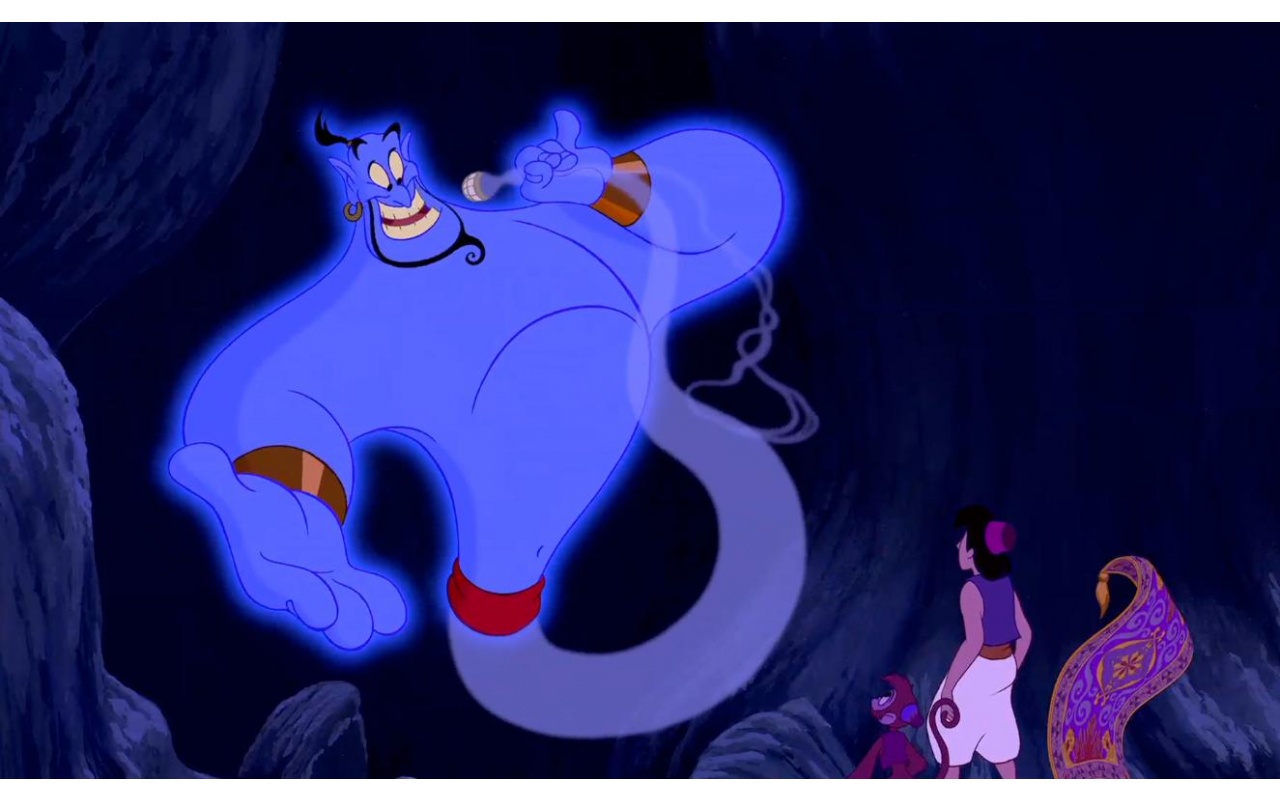
Genie of the Lamp
Aladdin (1992)
The Genie in Disney’s Aladdin is the pure physical embodiment of Robin Williams’ imagination. At the moment he is released from the lamp, we finally get to see a character with the freedom of form to keep up with Williams’ mind. The Genie owns the movie, completely overshadowing all other characters, and it is hard to imagine that Aladdin would hold its place in the pantheon of great Disney animated features without Williams. Aladdin was also a game changer for movie animation. Where animation had previously been the realm of the professional voice actor, the overwhelming response to Williams’ Genie showed studios, for better or worse, the potential of big name stars in animated movies. Without this performance there is no Tom Hanks and Tim Allen as Woody and Buzz, no Eddie Murphy as Donkey, no Jack Black as Po.
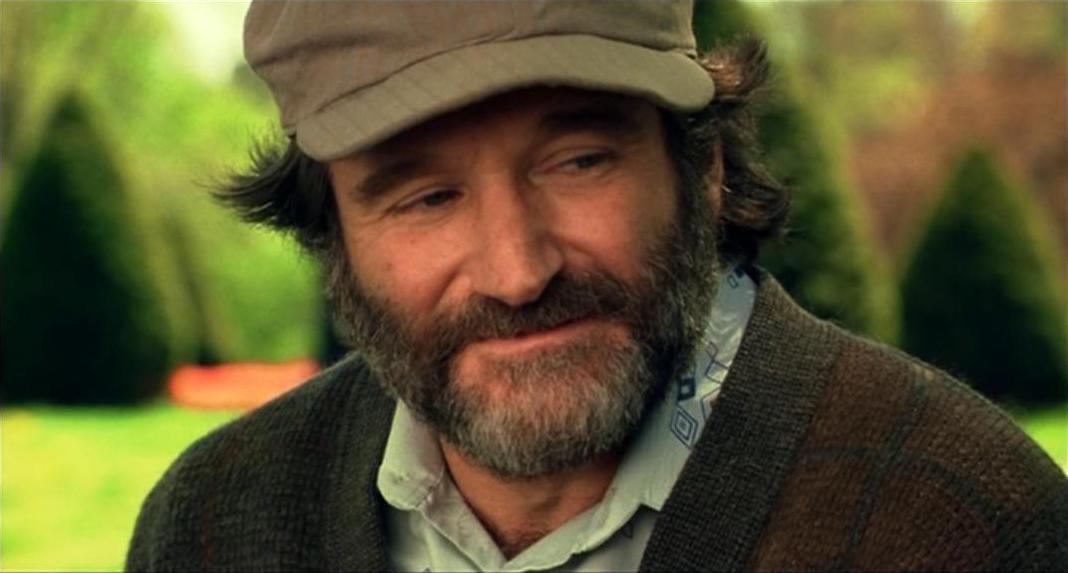
Sean Maguire
Good Will Hunting (1997)
Young screenwriters Matt Damon and Ben Affleck referred to the role of Sean Maguire in their screenplay of Good Will Hunting as the “Harvey Keitel part.” Like Keitel’s role in Reservoir Dogs, this was the role for an established star who could bring instant credibility to this small independent film. When Robin Williams committed to the role, all of a sudden it became much easier to get the film made. While Williams’ involvement was great for Damon and Affleck, it was pretty good for him too, finally earning him an Academy Award, for Best Supporting Actor. Playing a counselor to a brilliant but troubled young man, Williams took the fatherly persona he had employed in Dead Poets Society and gave it a harder edge. Sean Maguire was a man who had experienced loss, tragedy and hardship and Williams captured all of that beautifully.
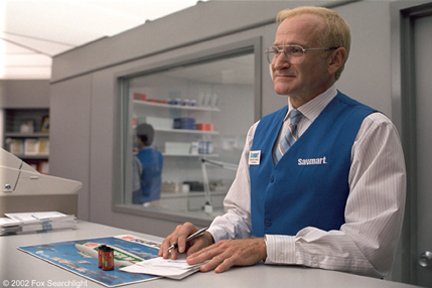
Seymour ‘Sy’ Parish
One-Hour Photo (2002)
This is a slightly left-field call given its inclusion at the expense of an Oscar nominated performance in The Fisher King, but it warrants a mention because it shows another element of Williams’ versatility. In 2002 Williams made two films in which he played the villain; Christopher Nolan’s Insomnia and Mark Romanek’s One-Hour Photo. Insomnia was the better film, but One-Hour Photo was the better Williams’ performance. Williams had done restrained before, he had done quiet before, but he had never done bland before. In becoming Seymour Parish, Williams entirely strips away the persona we associate with him to become so bland and beige that he is almost faceless, and in turn becomes incredibly unnerving, creepy and ultimately sinister.
By Duncan McLean
Best Picture Breakdown
This year’s Academy Awards looks like it could be a very interesting one indeed. It the favourites were to win in each of the major categories we could see a real spread of awards, with no one film dominating proceedings. This means that the big gong of the night, Best Picture, is still a reasonably open contest. So what do each of the films have going for them? And what is standing in their way? What follows is a basic for and against for each of the nine nominees which will hopefully shed some light on their chances in tomorrow’s ceremony.
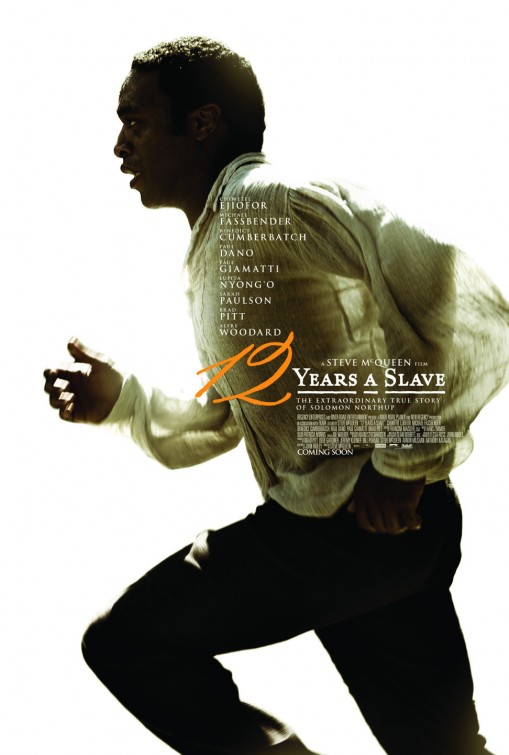
Nine Nominations
Notable Awards: Golden Globe Best Drama, BAFTA Best Film, PGA Outstanding Producer of Motion Pictures, AFI Movie of the Year, NBR Top Ten Films
Why 12 Years a Slave will win: There is no film in the field that looks more like a traditional Best Picture winner than 12 Years a Slave. It is a masterful piece of filmmaking, beautifully shot, well written and superbly acted. It is also a serious film dealing with socially important subject matter (filmmakers like to see themselves as playing an important social role so like to promote films like this). The fact that it is the first film about slavery to have been made by a black director and written by a black writer also gives the film a special significance. This has all been backed up by some good momentum coming into the Oscars having already won Best Drama at the Golden Globes and Best Picture at the BAFTAs and tied with Gravity for the Producers Guild’s top award.
Why 12 Years a Slave won’t win: 12 Years a Slave is rightfully the favourite, albeit a slight favourite, for the award. But while the film has been widely lauded it is not as widely loved as some of the other films in contention and in a tight race that could be significant. When it comes down to a fight between the film voters admire and the film they love, sometimes admiration alone doesn’t get the job done. Also, the Academy now uses a preferential voting system whereby voters rank the nominees from one through to nine. The votes are then counted, with preferences redistributed round by round until a film manages to secure more than 50% of the vote. In what looks to be quite a tight race, the odds that a film will secure over 50% of the votes in the first count is highly unlikely, so the preferences become very important and the system could end up favouring the film that can be everybody else’s second choice.
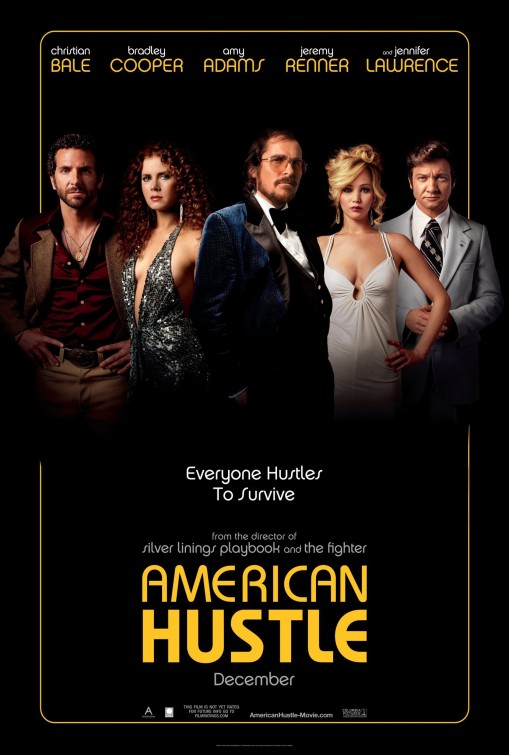
American Hustle
Ten Nominations
Notable Awards: Golden Globe Best Comedy or Musical, SAG Outstanding Performance by a Cast in a Motion Picture, AFI Movie of the Year
Why American Hustle will win: With ten nominations, American Hustle is tied with Gravity for the most nominated film in the field, but American Hustle’s nominations have come in more telling categories. For the second year in a row a David O. Russell film has been nominated in the big seven categories (Picture, Director, Actor and Actress, Supporting Actor and Actress, and one of the Screenplay categories), and American Hustle is the only film in the field this year to have achieved that feat. The four acting nominations may prove particularly important as actors make up the largest branch of Academy voters and it is possible that a film built on the strength of its ensemble cast is more likely to catch their eye than a film built on its outstanding technical achievement.
Why American Hustle won’t win: Of the major contenders, American Hustle is the one which seems to have lost a bit of momentum leading into the awards. Coming up to the announcement of the nominations it was arguably the front runner, and its ten nominations appeared to confirm that. Since then, however, people seem to be cooling on it. Even Jennifer Lawrence, who a month ago was an unbackable favourite to win her second Oscar, is no longer so far ahead of the pack. While Russell’s won the Golden Globe for Best Comedy or Musical, the Golden Globes have not proven to be a strong indicator of Oscar form, and it was also in a separate category from 12 Years a Slave and Gravity, the two films seen as being its greatest rivals for the Oscar so it is difficult to take much from that success.
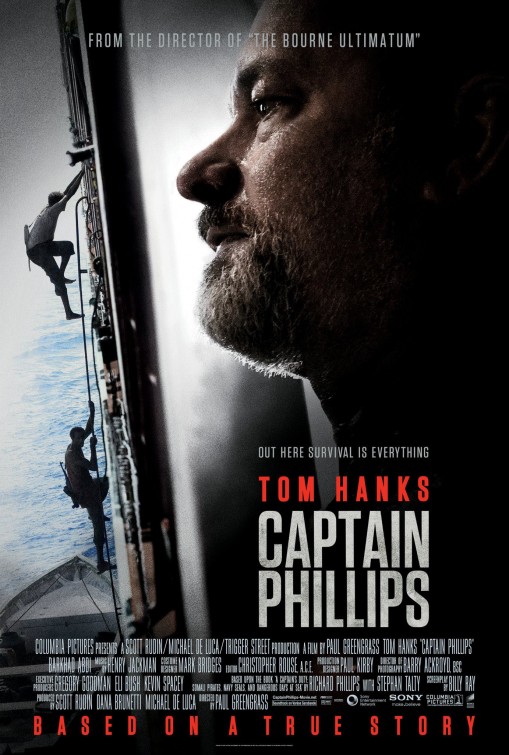
Six Nominations
Notable Awards: AFI Movie of the Year
Why Captain Phillips will win: Paul Greengrass’ Captain Phillips is an intensely gripping thriller based on recent real life events which impressively also manages to really humanise the players on both sides of its hostage situation. But when it comes to the Oscars, Captain Phillips really has one very big ace in the whole. Tom Hanks. Tom Hanks has been an Academy favourite for a long time, and while Forrest Gump is his only film to have won Best Picture, he’s had a number of films around the mark. While he surprisingly missed out on a nomination for a performance many – myself included – felt would have had him as a serious contender for Best Actor, Argo’s win last year after Ben Affleck’s director snub showed that a surprise snub can help to build support behind a film.
Why Captain Phillips won’t win: In a nine film Best Picture field, one of the basic indicators of who the real contenders are and who are making up the numbers is to look at which films get nominations in the Best Director category. Hollywood is still a very auteur influenced film culture, invested in the overall artistry of the director. Captain Phillips is one of the films which wasn’t recognised in the Best Director category, and only four films have ever won Best Picture without a Best Director nomination. While Argo managed to do just that last year, what are the chances it could happen two years in a row? Also, given how central Hanks’ performance was to the effectiveness of the film, the fact that it was overlooked for a nomination suggests that Captain Phillips is not seen as a real heavyweight.
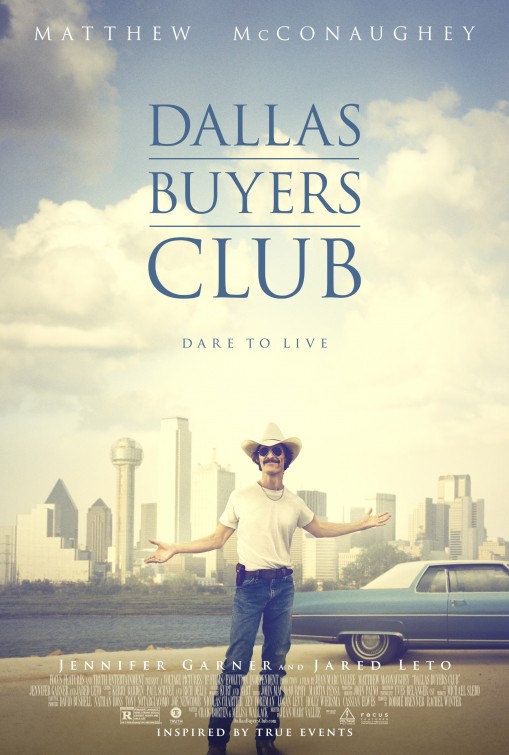
Six Nominations
Notable Awards: NBR Top Ten Independent Films
Why Dallas Buyers Club will win: Like 12 Years a Slave, Dallas Buyers Club ticks a number of the boxes of a Best Picture winner. It is a well written (it got a screenplay nomination) and directed film about a serious issue, based on a real life person, and built around two absolutely brilliant performances. The story of Ron Woodroof’s transformation from homophobic bigot to unlikely AIDS activist is quite uplifting and Academy voters have a bit of a history of being suckers for sentimentality over merit (Forrest Gump over Pulp Fiction and The Shawshank Redemption in 1995, Rocky over Taxi Driver in 1977). While Dallas Buyers Club has a hard edge which makes it far from the most sentimental film ever to get a Best Picture nomination it is definitely an inspirational, underdog tale.
Why Dallas Buyers Club won’t win: While Dallas Buyers Club has won a number of awards in the lead up to the Oscars they have been almost solely for the performances of McConaughey and Leto, not for the film as a whole. It is almost as though people have struggled to look past the brilliant performances to see the merits of the rest of the film.
Ten Nominations
Notable Awards: AFI Movie of the Year, DGA Outstanding Directorial Achievement in Feature Film, NBR Top Ten Films
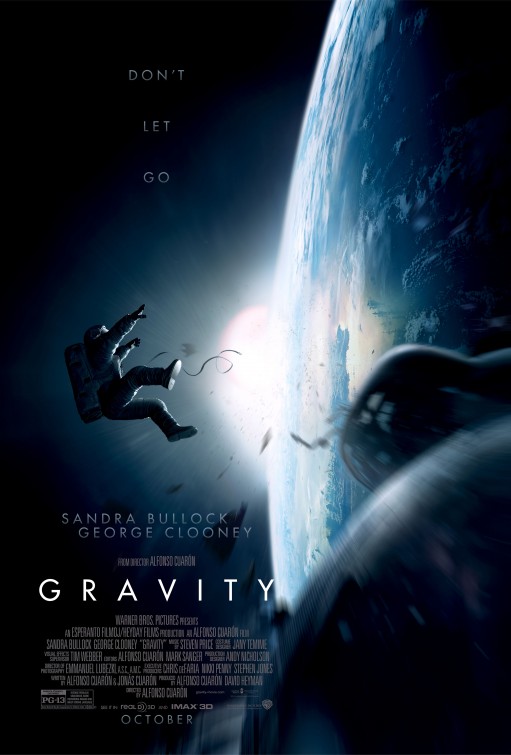
Why Gravity will win: No film this year received a stronger audience response than Gravity. Alfonso Cuaron’s immersive, experiential film had audiences legitimately awestruck and is the highest grossing film in the field. Its ten nominations have it equal with American Hustle as the most nominated film this year. While it lost out to 12 Years a Slave for the big prize at the Golden Globes and the BAFTAs, it tied for the top gong from the Producers Guild of American and, more importantly, Alfonso Cuaron won the Directors Guild Award for Outstanding Directorial Achievement in Feature Film. Of all the lead up awards each year, this one has the best track record of identifying the Best Picture Oscar Winner. Ten times in the last eleven years, including last year with Ben Affleck and Argo, the film whose director has been recognised by the DGA has gone on to win at the Oscars.
Why Gravity won’t win: Name the last science fiction film to win Best Picture. Here’s a clue… it’s never happened. Gravity is far from being typical Best Picture fare so would have to buck the trend of dramas being preferred over genre films. While it received ten nominations, many of them were in technical categories and it failed to receive a screenplay nomination. It is possible that Academy voters will see the film as a marvellous technical achievement more so than a marvellous all-round film. While Cuaron is the overwhelming favourite to take home Best Director, just last year we saw Ang Lee take home that award for a brilliant visual achievement in Life of Pi without the film winning the major award.
Five Nominations
Notable Awards: AFI Movie of the Year, NBR Best Film
Why Her will win: One thing that Her really has going for it is that it is by far the most original film of the nine nominees. Jonze’s film about the relationship between a man and the operating system on his computer is really unlike anything we’ve seen before. It is also original in a way that garners praise and attention (as evidenced by the many screenplay awards it has already won) rather than merely confronting and frightening people. While it hasn’t won any of the major lead in awards, it was named Best Film by the National Board of Review, so there is at least one instance where it has trumped the other nominees.
Why Her won’t win: Another film without a Best Director nomination, Her is also the only film in the running to not have a single nomination in any of the acting categories (even though Joaquin Phoenix would have been a deserving nominee). So you can add to the fact that only four films without a directing nomination have ever won Best Picture the fact that only 11 films without an acting nomination have won. It all adds up to suggest that Her is up against it.
Six Nominations
Notable Awards: AFI Movie of the Year, NBR Top Ten Films
Why Nebraska will win: This black and white, slow, small, indie film stands out a bit in the field. But unlike last year’s little indie nomination Beasts of the Southern Wild, Nebraska already has some serious Oscar credibility. It is director Alexander Payne’s third film in a row to be up for Best Picture – after Sideways in 2005 and The Descendents in 2012 – with each one being better than the last. Does that mean he’s getting closer? Many critics have likened the film’s tone and style to films of the Hollywood Renaissance period of the late 1960s/early 1970s, in particular Peter Bogdanovich’s The Last Picture Show. With that period being such a revered moment for many Academy voters could they really value that association in Nebraska? The stunning performance of veteran character actor Bruce Dern so late in his career also gives it a feel good element.
Why Nebraska won’t win: Left of centre indie films tend to earn critical praise and art-house admiration but that doesn’t have a history of translating into Oscar wins. That said, Alexander Payne has already won two Oscars for screenwriting. However neither of those films managed to capture the big prize. Nebraska is not the favourite to win in Best Original Screenplay and it would seem unlikely that it would win Best Picture without a win in that category.
Philomena
Four Nominations
Notable Awards: N/A
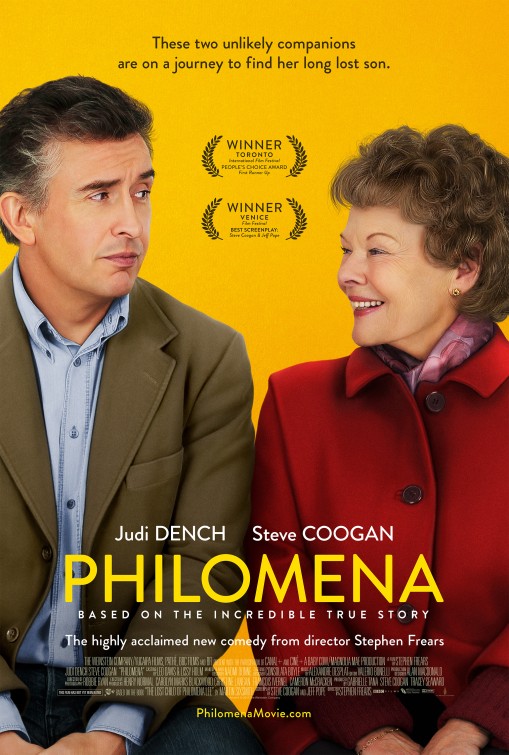
Why Philomena will win: While as a small, British film, Philomena would seem a real longshot to win the major award there are some punters who are seriously talking about it as a potential spoiler. Like 12 Years a Slave, Philomena has an important social message to its story, but the key to its chances lie in the fact that it is targeted at an older demographic. With the way the preferential voting works, there is the thought that with 12 Years a Slave, Gravity and American Hustle all so evenly matched they could steal each other’s votes, effectively cancelling each other out, and if the Weinsteins can effectively lobby the increasingly aging pool of Academy voters to get behind Philomena it could sneak through.
Why Philomena won’t win: Philomena’s four nominations are the least of any of the contending films, and it isn’t favoured to win in any of them. While Grand Hotel managed to win Best Picture in 1932 despite not being nominated in any other category, in the last 20 years The Departed with five nominations (for four wins) has had the least nominations of any Best Picture winner and it had the advantage of the Academy desperately wanting to give an Oscar to Martin Scorsese. Philomena hasn’t had any noteworthy wins in the lead up to the Oscars, so there is no evidence yet of judges rating it above the other nominated pictures, and it is another film which does not have a Best Director nomination.
Five Nominations
Notable Awards: AFI Movie of the Year, NBR Top Ten Films
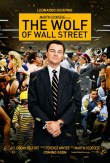
Why The Wolf of Wall Street will win: The Wolf of Wall Street appears to be the film most likely to challenge from outside the three favourite. One thing it has its favour unpredictable motives of the Academy voter. Scorsese is the filmmaker of his generation, but for a long time he went unrecognised by the Academy and it was seen as one of their great oversights. That would change in 2007 when he took home Best Director and Best Picture for The Departed. But even then, many felt that The Departed didn’t represent Scorsese’s best work, and more to the point it wasn’t a traditional Scorsese film. Academy voters, like tipsters, have been known to vote for the nominee they want to win rather than the one they think should win. With The Wolf of Wall Street being hailed as a return to the Scorsese of old, will the Academy voters jump at the chance to recognise a “real” Scorsese film?
Why The Wolf of Wall Street won’t win: The Wolf of Wall Street is easily the most controversial film in the field and controversy is something that is rarely rewarded on Oscars night. With its avalanche of sex, drugs and profanity, Scorsese’s film has been accused of distastefully celebrating and lionising the abhorrent behaviour of selfish, criminal stockbrokers. It only requires a small percentage of voters to conscientiously object to the film to have it out of the running.
——-
So with all that in mind, for mine the nominees can be broken up into four categories…
The Contenders: 12 Years a Slave, American Hustle, Gravity
The Potential Dark Horses: Her, The Wolf of Wall Street
The Outsiders: Philomena, Nebraska
Thanks for Coming: Captain Phillips, Dallas Buyers Club
By Duncan McLean
Six of the Best… Post-Classical Westerns
The Western is the great American cinematic form, a uniquely American genre. More than that, some have suggested that it stands alongside jazz as America’s great contribution to the arts. It is America’s equivalent of the Greek tragedy, where filmmakers replay and reimagine stories of America. The Western genre was at its height in Hollywood’s studio era, from the 1930s to the 1950s. Its conventional storylines and reusable sets and props made it one of the backbone genres of the mass production machine that was studio era Hollywood. Before World War II, at a time when the major studios were churning out approximately 500 films a year, B-grade Westerns accounted for 15% of all Hollywood production. As well as these quick and cheap B-movies the studio era gave us great Westerns such as Stagecoach (1939), Red River (1948), High Noon (1952), Rio Bravo (1959), The Man Who Shot Liberty Valance (1962) and the greatest of them all, The Searchers (1956). But by the 1960s the classical Western was starting to grow tired, audiences were growing tired of it, and the genre went out of fashion in Hollywood for a while in the 1970s and 1980s. While the Western has never quite re-established itself as a prominent genre in post-classical Hollywood, there have been a number of notable and interesting films that have employed the Western form. Here are six of the best of them…
 Butch Cassidy and the Sundance Kid (1969)
George Roy Hill’s Butch Cassidy and the Sundance Kid is a disarmingly likeable film, and possibly the greatest buddy movie ever. Butch and Sundance are part of the notorious Hole in the Wall Gang, but are forced to go on the run after a botched train robbery. With an unshakeable posse on their tail, they head for South America to start afresh as Bolivian bandits. Butch and Sundance are the perfect pairing. Butch is a charismatic, smooth-talking, sharp-minded leader. Sundance is cool, quiet and deadly. Paul Newman and Robert Redford (who would again team up with Hill in 1973 for The Sting) give the film genuine star power, while William Goldman’s Oscar-winning screenplay gives it its charm, humour and intelligence. The final freeze frame is one of the iconic shots in American film.
 The Wild Bunch (1969)
In addition to Butch Cassidy and the Sundance Kid, 1969 saw the release of another film about the Hole in the Wall Gang, Sam Peckinpah’s The Wild Bunch, and they could hardly have been more different. The Wild Bunch is a key film in the history of screen violence. Changes to American film censorship regulations in 1968, with a move from the all-encompassing Production Code to a ratings system, allowed for greater representations of violence on screen and Peckinpah took full advantage. The film is a masterpiece of excess and spectacle, with approximately 90,000 rounds of blanks fired in the production. The film’s final shootout is truly something to behold. But rather than spectacle for spectacle’s sake, violence penetrates this film at a thematic level. The Wild Bunch is a film about violence, about the passing on of violence from one generation to the next, as demonstrated through the evolving roll of children throughout the narrative.
 Little Big Man (1970)
Little Big Man is a comic Western saga which continued director Arthur Penn’s engagement with the strong counter-culture movement of the time. It tells the life story of 121 year old Jack Crabb, played by Dustin Hoffman. Having been captured by the Cheyenne as a child, Crabb spends his life jumping back and forth between living as a native American and as a frontiersman, and thus experiences both sides of a very transformative period in America’s history. Little Big Man provides a debunking of the classical Western myth, portraying the pacification of the West as an act of genocide. The Cheyenne people are shown to be a kind and peaceful people, and Penn’s dramatization of an attack on their camp by Custer’s Cavalry is an obvious commentary on the Vietnam War at a time before Hollywood films were ready to openly discuss the conflict.
 Unforgiven (1992)
Throughout the 1970s and 1980s, the lowest point for the Western as a film genre, it was Clint Eastwood who almost single-handedly kept it alive. Unforgiven is both a love letter and farewell from actor-director Clint Eastwood to the genre that made him a star. Set in the 1880s, when the days of the frontier were fading and a new world was rising, William Munny is of the old world. A retired gunman and a widower with two children, he is coaxed to pick up his gun once more by his old friend Ned to go after a bounty put up by a group of prostitutes in the town of Big Whiskey. Rather than a Wild West romp, Unforgiven is a dark and melancholy film. Where once Eastwood played a part in romanticising the West, here he shows it for its grim reality. Beautifully shot in Alberta, Canada, and featuring a tremendous cast including Eastwood, Morgan Freeman and Gene Hackman in an Oscar winning performance as sheriff Little Bill. Eastwood dedicated the film to directors Sergio Leone and Don Siegel.
 The Assassination of Jesse James by the Coward Robert Ford (2007)
The second feature film from Australian writer-director Andrew Dominik, The Assassination of Jesse James by the Coward Robert Ford is an epic Western with an almost art-film sensibility. The film uses the story of the final chapter of the life of one of the American West’s most iconic characters to show us the active process of the mythologising of the West. The young Robert Ford has grown up on the tales of the legendary exploits of Jesse James, so when he has the opportunity to join the James gang for their last robbery he idolises James. Theirs is a strange relationship built on Ford’s intense devotion, which can really only end one way. While this slow-paced, contemplative film is probably a bit longer than it needs to be, it is beautifully shot by Roger Deakins and features some very interesting performances from Casey Affleck and Brad Pitt.
 True Grit (2010)
Adapted from Charles Portis’ novel, the story of True Grit has a beautiful simplicity to it which has been missing from the Western in recent decades. Despite this old-fashioned quality, the direction of the Coen brothers and the beautiful cinematography, again from Roger Deakins, gives the film a modern feel and aesthetic. Hailee Steinfeld’s debut performance as Mattie Ross, the young girl who sets out with a hired Marshall to catch her father’s murderer, is simply brilliant with the role being undoubtedly one of the great young female characters. When the story was previously brought to the screen in 1969, John Wayne won his only Oscar for his portrayal of the drunken US Marshall Rooster Cogburn, but rather than simply imitate Wayne’s performance, Jeff Bridges brings his own characterisation to the part.
It technically isn’t a movie so wasn’t included in the six but no conversation about the Western genre in recent years would be complete without…

Deadwood (2004-2006)
Created by David Milch, for three 12 episode seasons HBO’s gritty series Deadwood was arguably the best show on television and the best single piece of work the Western genre had seen in decades. Set in the 1870s, the show followed the development of the town of Deadwood, annexed from the Dakota Territory, from a basic camp into a thriving, organised, but incredibly uncivilised and corrupt community. Marvellously written, the show’s dialogue was at the same time almost Shakespearean in its poetry and the most horrendously coarse thing you’ll ever hear. Ian McShane’s Al Swearengen, owner of the Gem Saloon and puppet-master over the citizens of Deadwood, was one of the great television characters of that decade. Tragically the show was cut short after three seasons, and while there was talk of two television movies being made to complete the story they never eventuated.
By Duncan McLean
Five Oscar Nomination Surprises
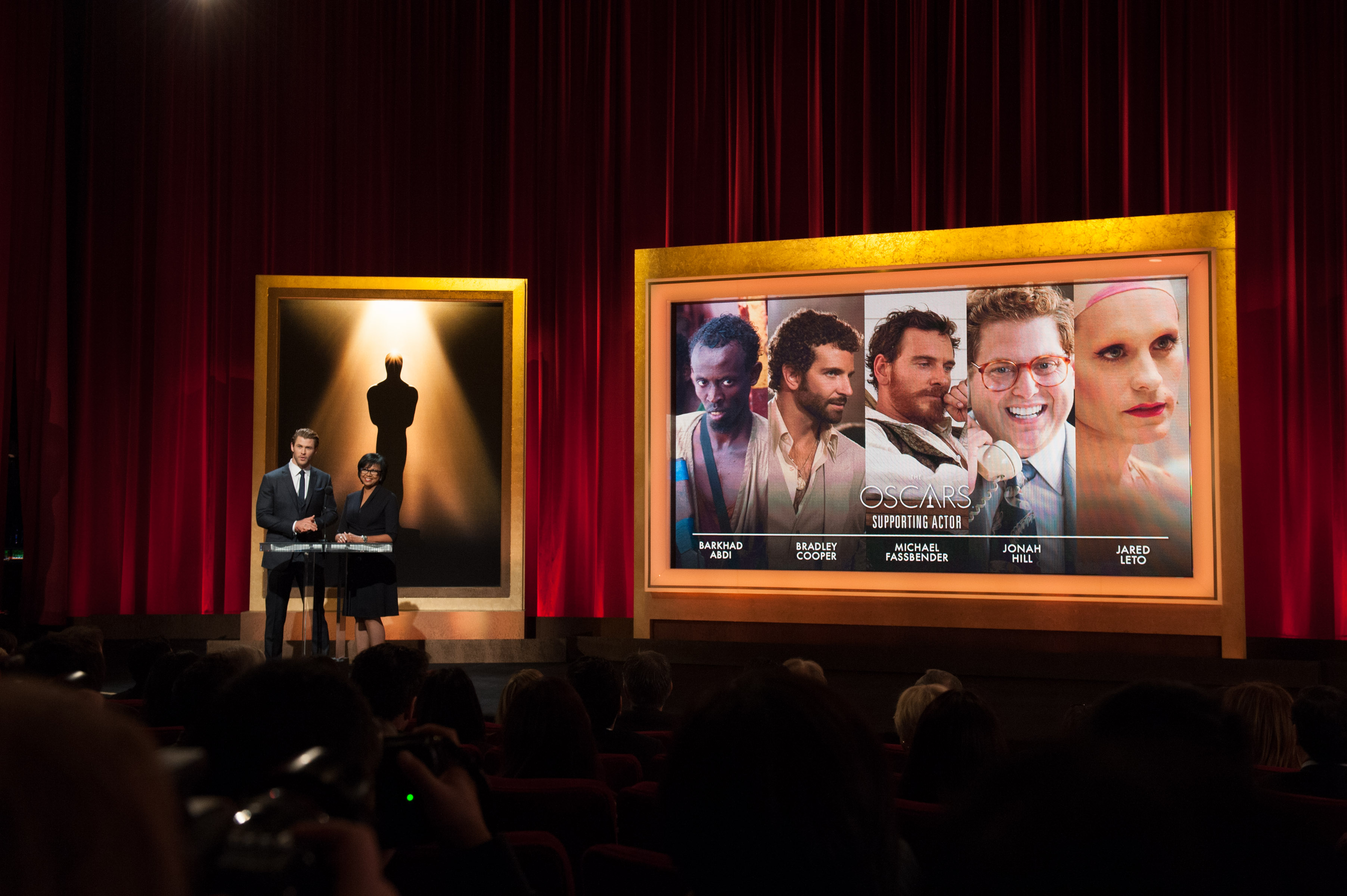
Chris Hemsworth and Academy President Cheryl Boone Isaacs announce the nominations for the 86th Academy Awards
Bright and early on 16th of January the President of the Academy of Motion Picture Arts and Sciences, Cheryl Boone Isaacs, was joined by actor Chris Hemsworth to announce the nominations for the 86th Academy Award to be held on 2nd March. A full list of the nominees can be found here. While there was plenty that we saw coming, as usual the Academy did throw us a few curve balls. This year has been heralded as quite a good year for Hollywood in a critical sense. While some years you would struggle to find five worthy nominees in each category, this year there seemed to be an abundance. As a result most of the surprises have come in the form of omissions rather than inclusions. Here are my picks for the five biggest…
1) The near complete shutout of Inside Llewyn Davis
The Coen brothers have become Academy favourites in recent years and their latest film, Inside Llewyn Davis, has been a critical darling and was expected to be a serious contender. As such, it was a surprise to see it miss out on a Best Picture nomination. This is made all the more significant by the fact the Academy chose only to nominate nine films when there are ten spots available. So it didn’t miss out in favour of something else. It was simply not chosen. Not only did it miss out on a spot in the main category, it was almost completely frozen out, missing out on nominations in the directing, screenwriting and lead acting categories where it would have been considered a chance. In only receiving two nominations (for cinematography and sound editing) Inside Llewyn Davis probably trumped Saving Mr. Banks as the big loser out of the nomination announcements.
2) No Best Actor nod for Tom Hanks
Probably the biggest individual surprise omission was Tom Hanks missing out on a nomination for his performance in the title role of Captain Phillips. A two-time Best Actor winner, Hanks’ was considered by many to be the frontrunner in this category. A win would have put him alongside Daniel Day Lewis as the only men to win three Best Actor Oscars. But as it is that will have to wait for another year.
3) No Best Actor nod for Robert Redford
Robert Redford is a bone fide Hollywood legend but has never won the coveted gold statue. His performance in JC Chandor’s All is Lost, where he played the sole character in the picture, was simply remarkable and left many thinking it put him in the mix for Best Actor – in situations like this the Academy has been known to give someone an award almost as a pseudo-lifetime achievement award. But Redford failed to receive a nomination, with the suggestion being that the film’s distribution company, Roadside Attractions, didn’t campaign as hard as they could have.
4) Blackfish misses out on a Best Documentary nod
Surprises don’t tend to get noticed as much in the documentary categories simply because not as many people have seen them. But in this case, plenty of people have seen Blackfish. The doco exposing the unacceptable living conditions and treatment of the performing Orcas living in Seaworld parks was well received critically and commercially and would have been expecting a nomination.
5) David O. Russell does it again
I don’t know if you can really call this a surprise, but it is definitely historically notable. For the second consecutive year a David O. Russell film has managed to score nominations for Best Picture, Director and Screenplay and all four acting categories. It has only happened 13 times in 86 Oscars ceremonies, so to do it twice, let alone in consecutive years, is impressive to say the least. It seems if you want to get nominated for an Oscar your best bet is to get yourself in a David O. Russell film.
By Duncan McLean
The Doctor of Movies’ Top 10 of 2013
 1. Silver Linings Playbook (David O. Russell)
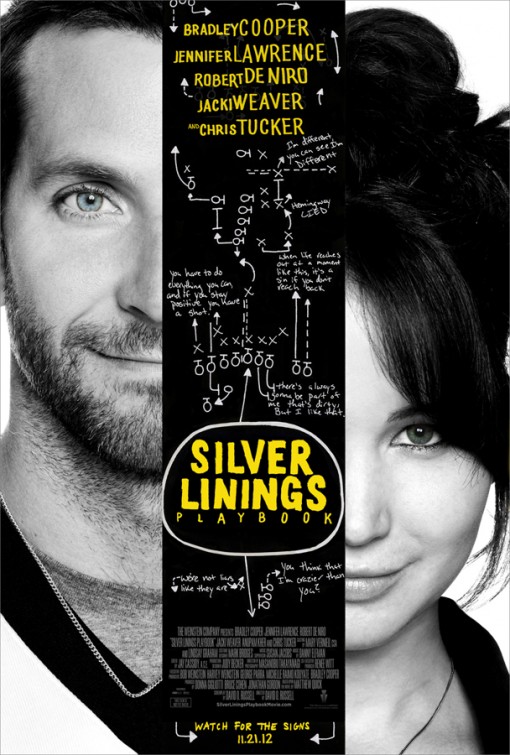
For mine, you have to go all the way back to the beginning of the year to find 2013’s best film. David O. Russell’s Silver Linings Playbook is a flawless picture. This beautifully written and compassionate film is a life affirming piece of cinema and, importantly, seeks to take the otherness out of mental illness. Cooper and Lawrence have tremendous chemistry and make for a memorable onscreen couple, and the supporting cast is equally impressive.
2. Gravity (Alfonso Cuarón)
Gravity is the most overwhelming cinematic experience in recent memory. Earning comparisons to Kubrick’s 2001: A Space Odyssey – high praise indeed – Cuarón’s film succeeds in making outer space at the same time breathtakingly beautiful and utterly terrifying. By far the most immersive use of the 3D format I have experienced, this simple narrative is a tight, 90 minute exercise in suspense and tension.
 3. All is Lost (J.C. Chandor)
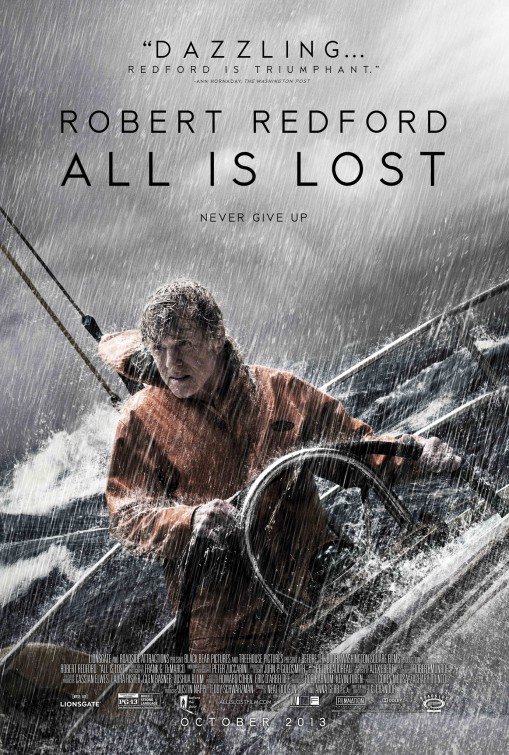
I love the bravery of this film. With this minimalist film – one character, one setting, little to no dialogue – J.C. Chandor puts a lot of trust in his audience. He trusts them to care about this man even if he doesn’t burden us with backstory and character detail. Redford is compelling as the stoic and unemotive protagonist, refusing to overact. From beginning to end All is Lost is simply riveting.
4. 12 Years a Slave (Steve McQueen)
McQueen has established himself as a filmmaker who does not shy away from difficult and provocative subject matter and doesn’t pull his punches and 12 Years a Slave is no exception. It is a brutal and unrelenting look at 19th Century slavery in the American south. It is also visually quite beautiful and has a haunting score by Hans Zimmer. There is a surprising lack of cinematic explorations of American slavery and this film, written by a black screenwriter and made by a black director, could be the most important on the subject thus far.
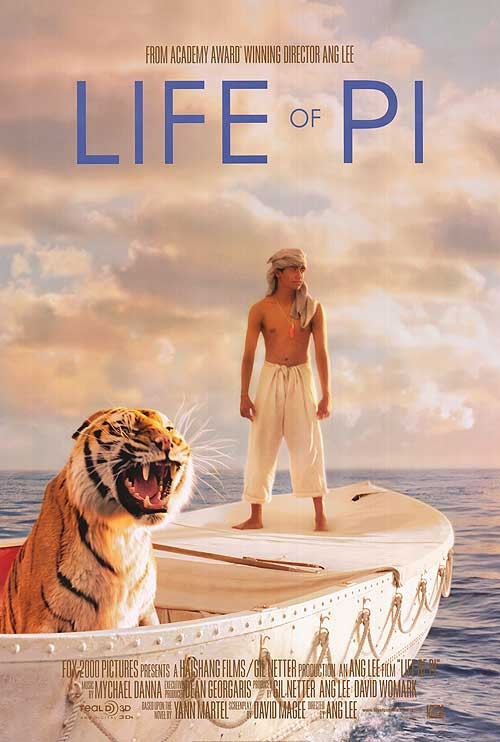 5. Life of Pi (Ang Lee)
For a decade Yann Martel’s beloved novel was believed to be unfilmable, but Ang Lee demonstrated that in the hands of the right filmmaker there is no such thing. Lee’s film is visually breathtaking using digital effects to create a heightened reality. It is also a deeply spiritual film, which separates it from other lost at sea films like All is Lost or Cast Away. Also contains the best performance by a CGI tiger I’ve ever seen.
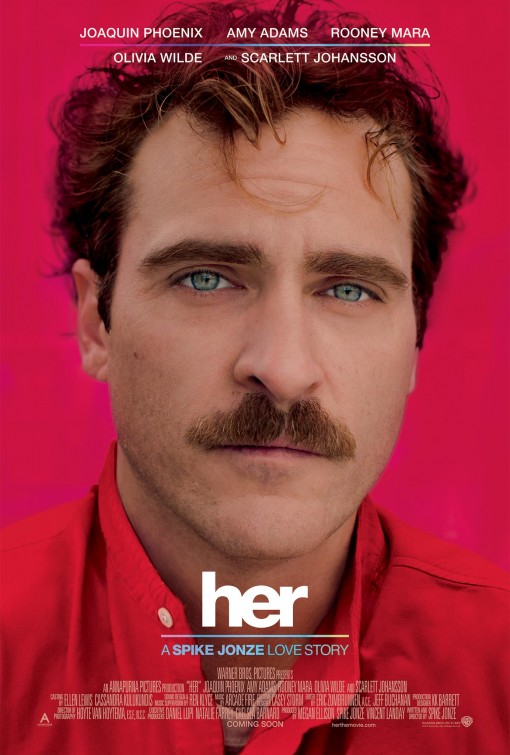 6. Her (Spike Jonze)
A perculiar and surreal film, Her is very much a story for our time. The story of a romance between a man and the artificial intelligence operating system of his computer, the subject matter which could have been silly had Jonze’s film not been so very sincere. Her features two brilliant but unconventional performances: one from Johansson as a disembodied voice, the other from Phoenix who for much of the film only has that voice to play opposite.
 7. Stoker (Park Chan-wook)
Stoker was film I knew nothing about until I saw it and was the year’s pleasant surprise for me. Park Chan-wook’s first English language, this psychological thriller retains the director’s talent for visual storytelling and creation of tone. It is a creepy and chilling film that elicits a visceral reaction. Had its second half maintained the subtly of its slow-burning first half this could have been the film of the year. Strong performances from a trio of Australian actresses in Wasikowska, Kidman and Weaver.
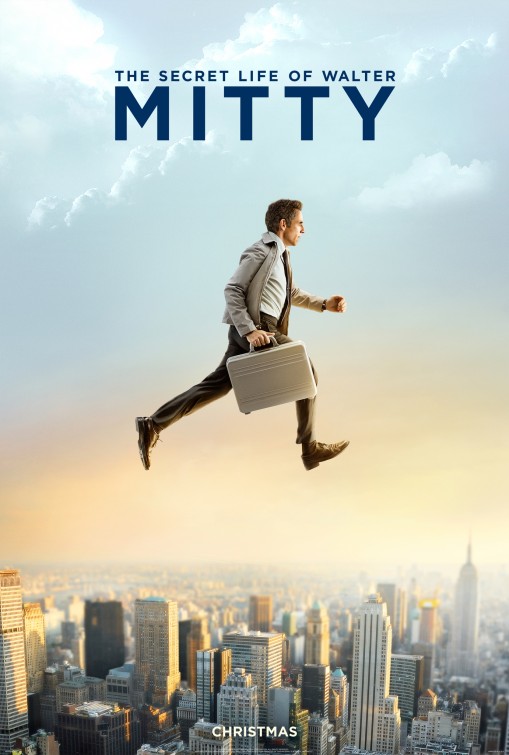 8. The Secret Life of Walter Mitty (Ben Stiller)
The Secret Life of Walter Mitty is a film for the dreamers, for those ordinary people who long to do something extraordinary. Stiller’s fifth feature film as a director, it contains a much stronger visual aesthetic than you would expect from a director best known as a comedic actor. It is a charming, whimsical and incredibly earnest film, and though it ventures into the overly sentimental, it is hard to begrudge it that.
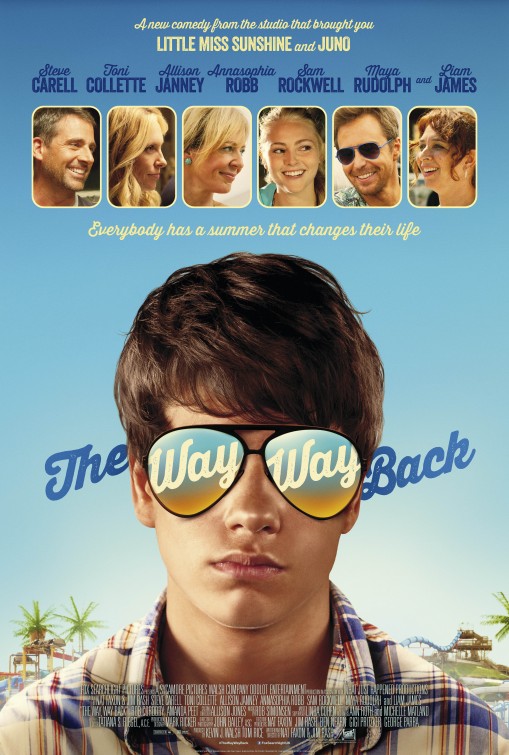 9. The Way Way Back (Nat Faxon & Jim Rash)
Writer/director/performers Faxon and Rash had this screenplay stored up before they were brought on board to work with Alexander Payne on The Descendents for which they won an Oscar. The Way Way Back is a witty, affecting and at times hilarious coming-of-age story about a teenage boy from a troubled family who finds himself in a holiday job at a waterslide park. Sam Rockwell is at his charismatic and funny best, Allison Janney is brilliant as always and Steve Carell, one of the most likeable men in Hollywood, shows he can play a real jerk.
10. Captain Phillips (Paul Greengrass)
Based on a true story, Captain Phillips is an interesting and gripping procedural thriller that is elevated by Greengrass’ strong direction and a fantastic performance from Tom Hanks. For Hanks, this could be the performance that puts him alongside Daniel Day Lewis in the three Oscars club. As the only name in the cast he carries the picture, with the post-trauma scene towards the end of the film being among his best ever work.
Not far off: American Hustle (David O. Russell), Blancanieves (Pablo Berger), Zero Dark Thirty (Kathryn Bigelow), Rush (Ron Howard), Django Unchained (Quentin Tarantino), Prisoners (Denis Villeneuve), Blackfish (Gabriela Cowperthwaite)
The Worst Movie of the Year: Scary Movie 5. It isn’t even close. With seven years passing since the fourth instalment in this lowest common denominator franchise you have to wonder if this was really the best they could come up with? A comedy without laughs and a horror movie without scares, thank God it was mercifully short.
Cinematic Highlight of the Year: This year provided me with a number of opportunities to see great old films on the big screen for the first time. It was wonderful to see The Searchers, Alien and Buster Keaton’s The General as they were intended to be seen, but the one which stands out as the biggest highlight of the year was seeing Alfred Hitchcock’s Dial M for Murder in 3D. While it was shot for that format in 1954, 3D exhibition quickly went out of fashion so it was primarily screened in standard 2D. Seeing it in 3D takes this great film to another level, breathing life into the shot compositions and creating a real sense of space and geography. It was a real treat.
Duncan McLean
Golden Globe Nominations Announced
 We have arrived at the most wonderful time of the year to be a movie buff (unless you are a more high falutin cinephile who likes to think of lists and awards as being trivial and beneath them). December brings with it a flurry of top ten lists and the first round of nominations for the award season. The Hollywood Foreign Press Association has announced its nominees for the 2014 Golden Globe awards. As always the Golden Globes only give a slight indication of how things will pan out come Oscar time, particularly as the Globes divide categories between Drama and Musical or Comedy. However, we can none the less start in earnest to speculate as to who will be in the mix when Oscar nominations are announced on 16th January 2014.
Best Motion Picture – Drama
- 12 Years a Slave
- Captain Phillips
- Gravity
- Rush
- Philomena
If this award were to go to anything other than 12 Years a Slave or Gravity it can be considered quite an upset. It will be interesting to see which way this goes. There was no other film that got quite the overwhelming response that Gravity did, but 12 Years a Slave is also a brilliant and important film which is a much more traditional ‘Best Picture’ type.
My tip: 12 Years a Slave
Best Motion Picture – Musical or Comedy
- Nebraska
- American Hustle
- The Wolf of Wall Street
- Inside Llewyn Davis
- Her
Again, this would appear to be a two horse race between American Hustle and Inside Llewyn Davis, with these two films plus the two favourites from the other best picture category likely to be the four main contenders for the Oscar. The fact that Joel Coen didn’t get a directing nomination might swing things in the favour of David O. Russell’s film.
My tip: American Hustle
Best Director
- Alfonso Cuaron (Gravity)
- Steve McQueen (12 Years a Slave)
- David O. Russell (American Hustle)
- Paul Greengrass (Captain Phillips)
- Alexander Payne (Nebraska)
Where this category is usually dominated by the directors from the best drama field there is a bit more of a mix this year with David O. Russell and Alexander Payne representing the musical or comedy category. While it is yet to be seen if voters consider Gravity to be Best Picture material, there is no doubt that it is a directorial achievement and it is not without precedent to see directors rewarded for amazing technical achievements (see Ang Lee’s Oscar win last year). In all, this is probably the strongest contested field at this year’s Golden Globes.
My tip: Alfonso Cuaron (Gravity)
Best Actor – Drama
- Chiwetel Ejiofor (12 Years a Slave)
- Matthew McConaughey (Dallas Buyers Club)
- Tom Hanks (Captain Phillips)
- Robert Redford (All is Lost)
- Idris Elba (Mandela: Long Walk to Freedom)
An interesting field featuring veterans (Hanks and Redford), breakout performances (Ejiofor and Elba) and someone who is slowly but surely becoming quite an impressive actor (McConaughey). For mine, Redford’s work in All is Lost is the most impressive acting I’ve seen this year, but it also feels like the kind of film that will get overlooked. Don’t be surprised if momentum builds behind Tom Hanks and he’s an unbackable favourite by the time the Oscars come around.
My tip: Tom Hanks (Captain Phillips)
Best Actor – Musical or Comedy
- Bruce Dern (Nebraska)
- Leonardo DiCaprio (The Wolf of Wall Street)
- Christian Bale (American Hustle)
- Oscar Isaac (Inside Llewyn Davis)
- Joaquin Phoenix (Her)
It’s great to see an old dog in Bruce Dern back in the mix and Christian Bale’s amazing fluctuating weight gets him in the frame again, but Joaquin Phoenix was so impressive in Her, performing the majority of the film only with a disembodied voice to play off, so I’d be inclined to go that way.
My tip: Joaquin Phoenix (Her)
Best Actress – Drama
- Cate Blanchett (Blue Jasmine)
- Sandra Bullock (Gravity)
- Emma Thompson (Saving Mr. Banks)
- Judi Dench (Philomena)
- Kate Winslet (Labor Day)
There is a bit of a usual suspects feel to this category with every nominee being a previous Golden Globe and Oscar winner. Cate Blanchett would seem hard to beat in this category unless the voters go left field for something out of left field and opt for Dench.
My tip: Cate Blanchett (Blue Jasmine)
Best Actress – Musical or Comedy
- Meryl Streep (August: Osage County)
- Julia Louis-Dreyfus (Enough Said)
- Amy Adams (American Hustle)
- Julie Delpy (Before Midnight)
- Greta Gerwig (Frances Ha)
The amazing Meryl Streep gets her obligatory nomination here, but this one will likely come down to Amy Adams and Julia Louis-Dreyfus.
My tip: Amy Adams (American Hustle)
Best Supporting Actor
- Michael Fassbender (12 Years a Slave)
- Jared Leto (Dallas Buyers Club)
- Bradley Cooper (American Hustle)
- Daniel Brühl (Rush)
- Barkhad Abdi (Captain Phillips)
Michael Fassbender has done the best work of his career when under the direction of Steve McQueen and his performance as the violent Epps in 12 Years a Slave will likely see him edge out Brühl and Abdi for the honours.
My tip: Michael Fassbender (12 Years a Slave)
Best Supporting Actress
- Lupita Nyong’o (12 Years a Slave)
- Jennifer Lawrence (American Hustle)
- Julia Roberts (August: Osage County)
- June Squibb (Nebraska)
- Sally Hawkins (Blue Jasmine)
Lupita Nyong’o was very impressive in 12 Years a Slave, her first feature film role, and Sally Hawkins earned praise for her work opposite Cate Blanchett in Blue Jasmine, but 2013 has been Jennifer Lawrence’s year and her combination with David O. Russell should see her strike gold again.
My tip: Jennifer Lawrence (American Hustle)
Best Screenplay
- John Ridley (12 Years a Slave)
- Bob Nelson (Nebraska)
- Eric Warren and David O. Russell (American Hustle)
- Jeff Pope (Philomena)
- Spike Jonze (Her)
There are five very good screenplays nominated in this category but none is as bold as Spike Jonze’s for Her. His screenplay takes a scenario which could easily have been silly and makes it incredibly sincere and heartfelt and, as such, despite being an outsider I wouldn’t be at all surprised if he won.
My tip: Spike Jonze (Her)
Best Animated Feature
- Frozen
- The Croods
- Dispicable Me 2
This has to be the least inspiring collection of animated films in recent memory. It doesn’t help that there is no contribution from Pixar or Studio Ghibli, the two most consistently excellent producers of animation in recent years. As such, Disney’s Frozen, an old-fashioned feeling Disney movie, is probably favourite be default.
My tip: Frozen
Best Foreign Language Film
- Blue is the Warmest Color
- The Past
- The Hunt
- The Wind Rises
- The Great Beauty
This category lacks the out and out favourite it had last year in Amour, but there are a number of strong contenders. Blue is the Warmest Color, The Hunt and The Great Beauty have all made a bit of noise, winning numerous awards. It could go to any of those three, though Blue is the Warmest Color is probably the favourite at this stage.
My tip: The Hunt
The Golden Globes will be held on 12th January 2014
Six of the Best… Alfred Hitchcock
Known as ‘The Master of Suspense,’ Alfred Hitchcock was one of the first genuine superstar directors. As well as being a popular success, he is undoubtedly one of the true masters of the cinematic medium. Hitchcock was a central figure in the 1950s revaluation of the popular Hollywood cinema by the critics at Parisian film journal Cahiers du cinema who saw the potential for legitimate artistry in a commercial, studio context. With a career spanning six decades and transitioning from the UK to Hollywood, from silent film to sound, and from black and white to colour, Hitchcock has arguably done more than any other director to shape contemporary commercial filmmaking.
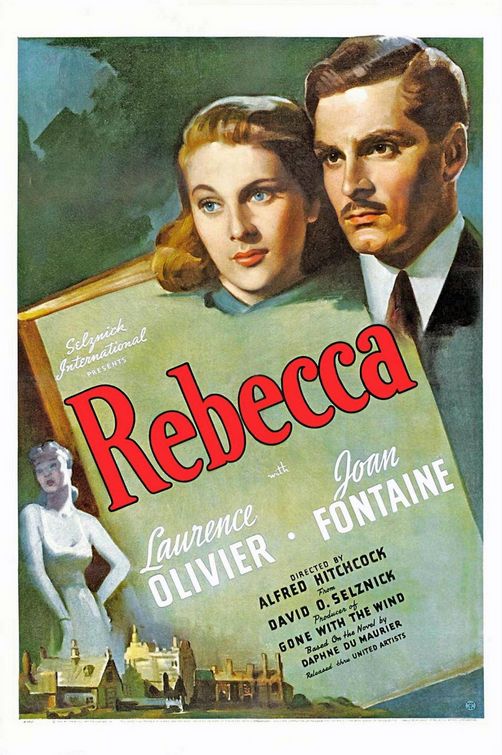 Rebecca (1940)
This 1940 adaptation of Daphne Du Maurier’s novel about a young bride living in the shadow of her husband’s deceased wife was Hithcock’s first American film and the only film he ever made to win an Academy Award for Best Picture. The film, brilliant as it is, is not as unmistakably Hitchcock as his work in the 1950s largely because his combination with producer David O. Selznik, hot off the heels of Gone With the Wind, meant there were two strong authorial presences on the film. Selznik’s influence results in a film with a much more typical classical Hollywood feel. A haunting piece of gothic cinema, George Barnes won an Oscar for his cinematography which featured strong use of deep focus photography a year before Orson Welles famously employed the technique in Citizen Kane. The way in which Hitchcock and Barnes shoot the De Winter mansion, Manderlay, was clearly an influence on Welles’ approach to shooting Xanadu in his masterwork.
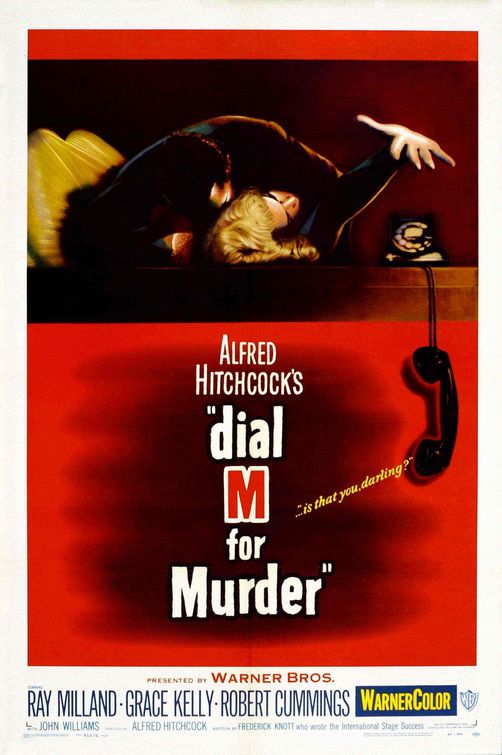 Dial M for Murder (1954)
Adaptations from the stage, particularly those which take place in a single setting, often have a tendency of feeling decidedly uncinematic. The fact that Hitchcock manages to avoid that stagey, theatrical feel in his adaptation of Frederick Knott’s play is in itself an impressive achievement. Already an excellent film, Dial M for Murder becomes an absolute masterpiece when you see it as it was intended to be seen, in 3D. Hitchcock’s inspired use of the 3D format brings the shot compositions to life and creates a real sense of the space and geography of the apartment in which the film almost exclusively takes place. It is a testament to his mastery as a filmmaker that his one 3D film, made 60 years ago, is still one of the finest examples of the potential of the format. Dial M for Murder was also the first of three films Hitchcock would make with Grace Kelly.
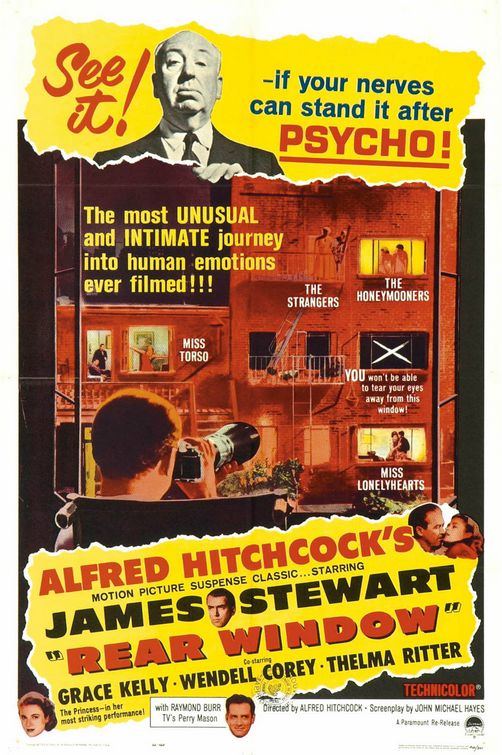 Rear Window (1954)
1954 was clearly a brilliant year for Hitchcock as he followed up Dial M for Murder with one of his most enduring masterpieces, Rear Window. The story of a photographer cooped up in his apartment while his broken leg heals with only watching his neighbours to keep him entertained embraces the voyeuristic appeal of the cinema like no other film before or since. The entire film is from a single point-of-view: that of L.B. Jeffries’ apartment window looking out into an incredible purpose-built New York tenement set. From his apartment we watch different lives unfold before us. More to the point we watch Jeffries watch. Through the like of Miss Lonelyheart, Miss Torso, the songwriter, the fire escape couple, the newlyweds and, of course, the suspicious Lars Thorwald, Hitchcock finds the perfect blend of suspense and comedy and captures the complete spectrum of the joy we take from voyeurism.
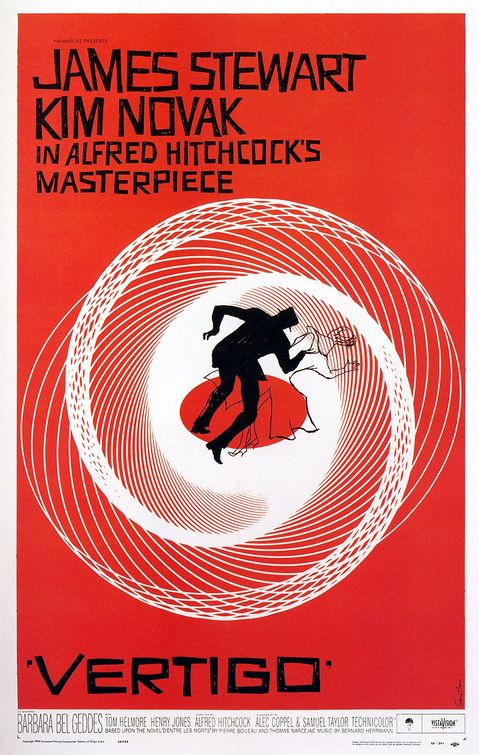 Vertigo (1958)
While it was not initially well-received critically, Vertigo has gone on the become Hitchcock’s most celebrated film. In fact, in 2012 the picture managed to unseat Citizen Kane from the number one position in Sight and Sound’s top ten poll for the first time in 50 years. An incredibly disturbing and unsettling film, it takes one of American cinema’s most loved and likeable figures in James Stewart and makes him disconcertingly maniacal. With Hitchcock being a director renowned for controlling relationships with his leading ladies, the manner in which Scotty seeks to mould, shape and control Judy as he tries to transform her into his dream woman can be read as representative of Hitchcock’s own relationship with women. On the stylistic front, the simultaneous zoom in and pan out used to such great effect in Vertigo has become a much imitated technique (see Jaws).
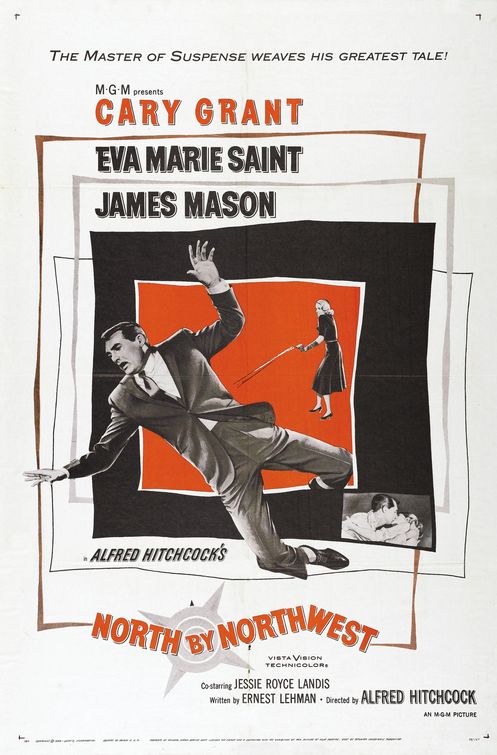 North by Northwest (1959)
North by Northwest is the classic Hollywood blockbuster. It has big names, spectacle, action and thrills, and it exemplifies Hitchcock’s ability to turn out high-quality commercial fare. It is also the best film to come out of Hitchcock’s four-film, eighteen-year collaboration with Cary Grant. The story of an advertising executive who is mistaken for a spy, North by Northwest is one of the more extreme examples of Hitchcock’s fascination with the innocent protagonist swept up in a situation beyond his control. The film also provides some of the most iconic images not only of Hitchcock’s oeuvre but of Hollywood cinema, firstly with Cary Grant being swooped by a crop duster and secondly with the films climactic chase scene on the faces of Mount Rushmore.
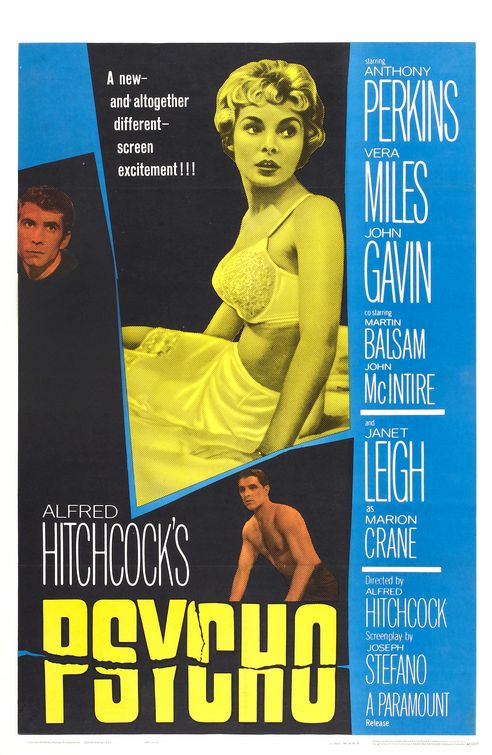 Psycho (1960)
With Psycho Hitchcock took a largely forgettable novel by Robert Bloch and transformed it into the most influential and imitated horror film ever made. Killing off a main character at any point is a bold move, but only a filmmaker of Hitchcock’s stature and self-assurance could get away with killing off his main character in the first third of the film. A masterstroke, it throws convention out the window, turns the movie on its head and tells the audience that anything is possible. To make sure audiences got the full effect, Hitchcock insisted that cinemas enforce a strict policy of not allowing people in once the film had started in case they missed Leigh’s appearance. While Jaws made people afraid to go in the water, Psycho made people afraid to have a shower.
By Duncan McLean
Six of the Best… Jack Nicholson
A three time Oscar winner, with a further nine nominations, Jack Nicholson is one of the American cinema’s most celebrated actors and a movie legend. Starting his career in the B cinema of Roger Corman, rising to prominence in the Hollywood Renaissance of the 1960s and 1970s as one of the era’s most interesting new faces, and establishing himself as the very epitome of the Hollywood movie star, Nicholson is a big personality and a bigger talent. Trying to whittle this legendary career down to six roles requires some tough decision making, and as a result some brilliant roles which easily could have made the list miss out – chief among them Robert Dupea in Five Easy Pieces, Jack Torrence in The Shining and Frank Costello in The Departed – but here it goes…
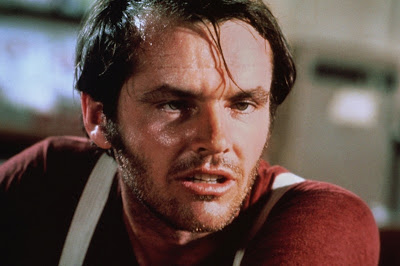
George Hanson
Easy Rider (1969)
With 17 films already under his belt, it was his supporting role in Hopper and Fonda’s iconic road movie Easy Rider that made turned Nicholson into a star. As the alcoholic country lawyer George Hanson, Nicholson was the conduit through which the audience were able to relate to the skittish Billy and aloof Captain America. The performance earned him the first Academy Award nomination of his career and set him up to become one of the New Hollywood’s most important actors.

Jake Gittes
Chinatown (1974)
So proud was Nicholson of his work on the Polanski directed, Towne scripted Chinatown that he has not played another detective since. While drawing on the hard-boiled fiction of Chandler and Hammett, Nicholson’s Jake Gittes is a softer hero than those played by Humphrey Bogart. He is out of his depth, too innocent to deal with the magnitude of society’s corruption and incapable of solving the mystery until it is too late.
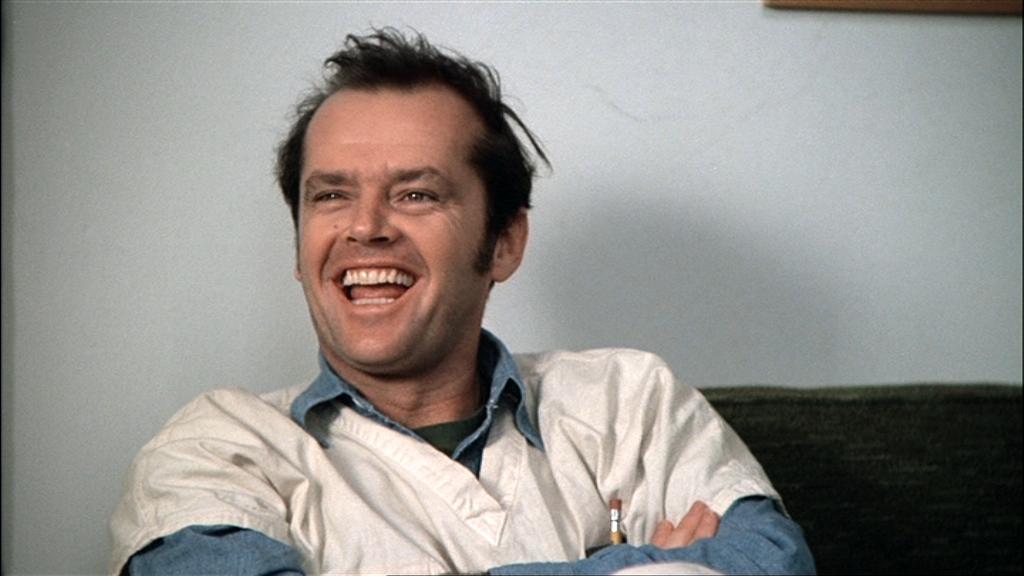
R.P. McMurphy
One Flew Over the Cuckoo’s Nest (1975)
If Easy Rider was the film that made Nicholson a star, One Flew Over the Cuckoo’s Nest was the film that made him an icon. Nicholson brings Ken Kesey’s anti-hero to life, drawing on his own counter-cultural anti-authority persona to make McMurphy a life-affirming force in a lifeless institution, and a worthy nemesis for Louise Fletcher’s chilling Nurse Ratched.
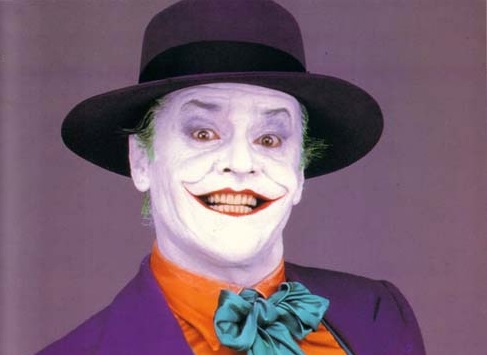
The Joker/Jack Napier
Batman (1989)
The deserved praise heaped on Heath Ledger for his performance as The Joker in The Dark Knight has seemingly resulted in many people forgetting just how good Nicholson was in the same role in Tim Burton’s Batman. Nicholson provides a different interpretation of the famous villain. Where Ledger’s Joker is a psychopath, Nicholson’s is a lunatic. Undoubtedly one of the great scene stealing performances in film history.
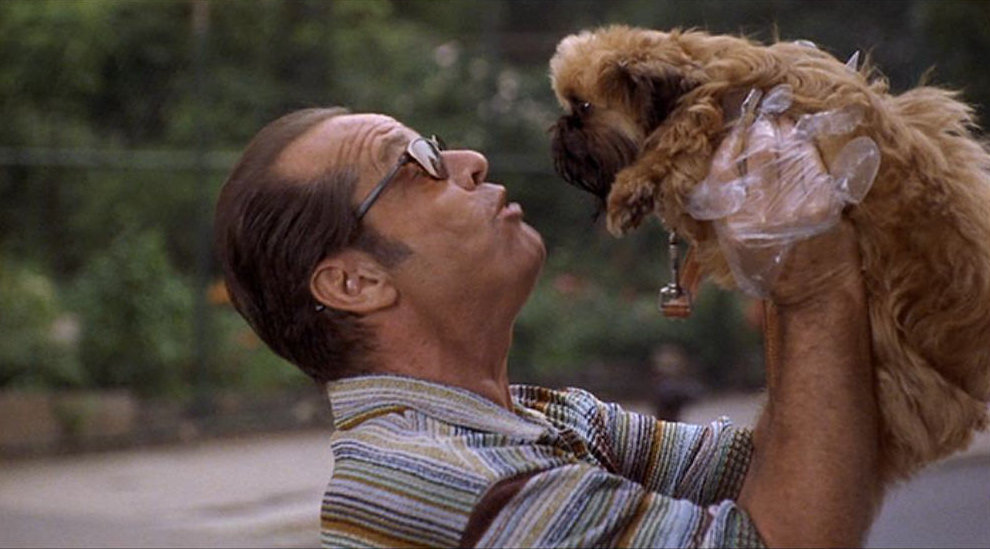
Melvin Udall
As Good as it Gets (1997)
Nicholson has enjoyed a very fruitful partnership with writer/director James L. Brooks, the high point of which was his Oscar winning performance as obsessive compulsive, romance novelist Melvin Udall in As Good as it Gets. Sharp, funny and at times vicious, Jack gets to be Jack. A character and a film that will put a smile on your face, and one of the best romantic comedies of the decade.
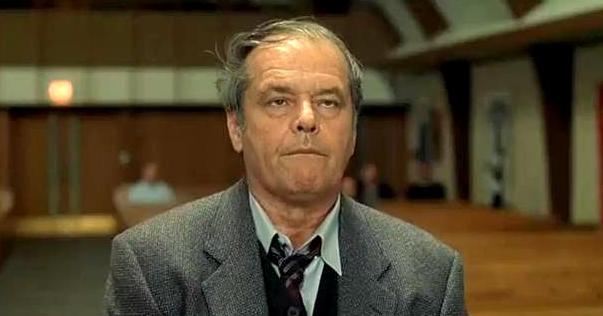
Warren Schmidt
About Schmidt (2002)
Dipping his toe into independent cinema for the first time in decades with Alexander Payne’s About Schmidt, Nicholson produces one of the most interesting and brave performances of his career. Putting aside the over-the-top, sharp-edged persona that had become the norm in recent years, Nicholson embraced his older age, playing a quiet, widower worn-down by life. A wonderful late career reminder of the incredible talent that was the foundation of his superstardom.
By Duncan McLean
Oscars 2013 Recap
The Host
This year the most thankless job in Hollywood went to Family Guy creator Seth McFarlane, in a move which was obviously supposed to give the ceremony a bit of edginess and youth appeal (and on that front it was a success with the viewer numbers in the US up 20% from last year). The reviews of McFarlane’s performance have ranged from lightly positive to downright scathing. It’s a tough job at the best of times, but it was made all the tougher, as he alluded to, by the fact that Tina Fey and Amy Poehler had been so universally praised for the job they did at the Golden Globes a few weeks ago.
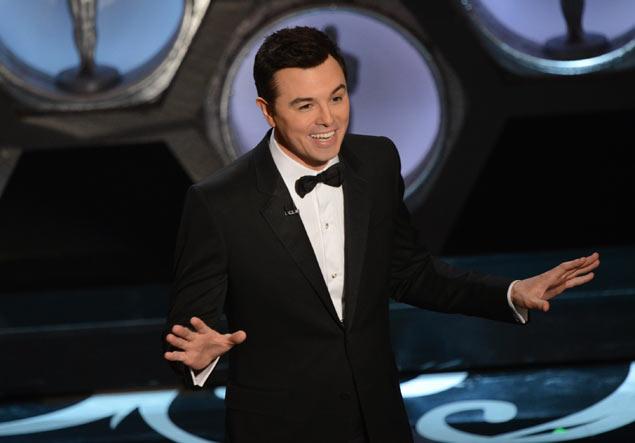
Oscars host Seth McFarlane
McFarlane was a bit hit and miss, as most hosts are, but was largely exactly what anyone who is familiar with him expected him to be. His opening bit, in which he conversed with William Shatner as Captain Kirk who was contacting him from the future to warn him against all the mistakes he was going to make as a host, came in at 19 minutes and was just way too long. There was a good idea there, but it was just stretched too far.
The humour in McFarlane’s television and film work comes from two sources: crossing the line of good taste and being inappropriate, and very specific pop-culture referencing. Both were on display on Oscar night. While it was apparent that he was reining himself in to some extent, McFarlane was always going to try and push things a little bit. Sometimes it worked and sometimes it crossed the line. The joke about no actor being able to get inside the head of Abraham Lincoln quite like John Wilkes Booth, was in typically poor taste but it got a good laugh. The “We Saw Your Boobs” song in his opening number didn’t go down so well, being just one of a number of incidents which led feminist commentators to accuse the host of misogyny (though as Family Guy co-writer Alec Sulkin pointed out on twitter, it seems slightly ironic to accuse the host of misogyny on a night that was also celebrating fifty years of James Bond).
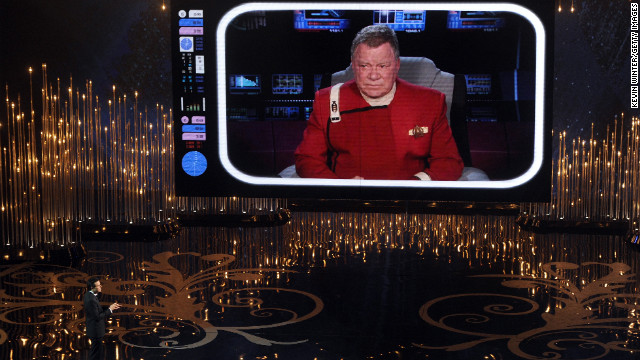
Captain Kirk helps out Seth McFarlane
McFarlane may have been better served to more heavily favour the pop-culture referencing, given he was in a room full of people who live and breathe movies and would therefore understand that kind of referencing and in-joking. His introduction of Christopher Plummer, in which he pointed to a side door to usher in the Von Trapp family singers only to have a young Nazi run in and exclaim “They’re gone!” went down a treat. A bit more of that sort of stuff and a bit less of jokes about nine-year-old Quvenzhané Wallis being a potential future girlfriend for George Clooney, and he may have got a more generally positive response.
The Presenters
This year it was really pleasing to see a bit of class return to the Academy Awards on the presenter front. The Oscars are an institution and an important part of maintaining that sense of grandeur is having big names presenting awards. In recent years the really big names have been notably absent, but this time around the presenters included screen legends such as Christopher Plummer, Michael Douglas, Jane Fonda, Meryl Streep (because she wasn’t actually up for an award this year) and Jack Nicholson. Their presence brought a bit of prestige to the event. That being said, I want to have one whinge. Jack Nicholson was brought out to present the Best Picture award, but had to hand over to Michelle Obama who appeared via a live video cross from the White House. Michelle Obama is a good get for the Academy, however, in this situation I don’t think she trumps Jack Nicholson (especially not on video). Jack is one of Hollywood’s absolute living legends, and being in the twilight of his career and not doing a lot of publicity means we don’t really see much of him. Michelle Obama tends to appear on the nightly news just about every day, so I felt that her presence was a waste of valuable Jack time.
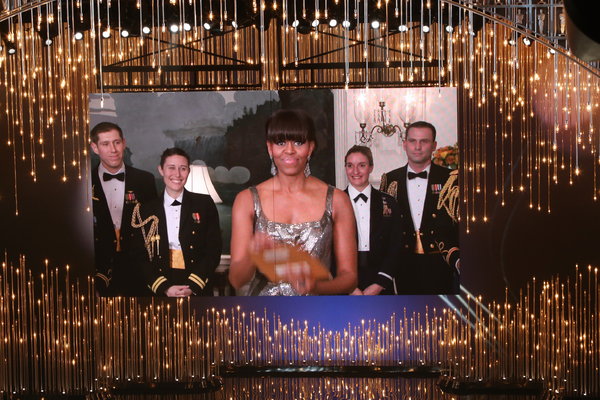
Not even Barack is as in love with Michelle Obama as the woman on her left
As always, the presenters were a bit hit and miss in their attempts at pre-announcement banter. Paul Rudd and Melissa McCarthy take the cake for least funny seemingly adlibbed jokes, and Kristen Stewart and Daniel Radcliffe have no business being on stage at an Academy Award ceremony at this point in their careers (Stewart was her usual grumpy self but at least this time had the excuse of an injured foot).
Moment of the night from a presenters point of view was Mark Wahlberg who had to present the Best Sound Editing category in which there was a tie. Clearly taken aback by what he was reading, Wahlberg felt he needed to convince the crowd that he wasn’t having them on, so in classic Boston fashion stated “No BS. We have a tie.” When I was saying before that the presenters brought back a bit of class to the event, I wasn’t so much thinking about Marky Mark.
The Awards
Despite the fact that this was one of the more open Academy Awards in recent history it ended up being a night almost entirely devoid of surprises on the awards front. Argo followed on from its dominance of the lead up awards to claim Best Picture. Daniel Day Lewis cemented his position as one of the all-time greats with his win for Lincoln making him the first man to win the Best Actor award on three occasions. Jennifer Lawrence tripped over on her way up to collect her Best Actress award. Christoph Waltz’s magic relationship with Quentin Tarantino continued as he claimed his second Best Supporting Actor Oscar from two collaborations. Anne Hathaway won the one award which was such an absolute lock you could have bet your house on it. In fact, the only major award in which the bookies’ favourite didn’t walk away with the statue was Best Director, in which Ang Lee pipped Steven Spielberg (but that category was a shambles from the moment Ben Affleck and Kathryn Bigelow were left off the nominations list).
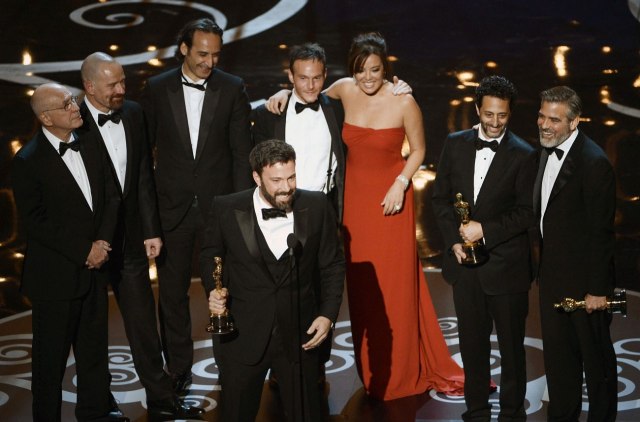
Argo takes out Best Picture
The speeches are always the least interesting part of an awards night. After the excitement of finding out who wins you then have to sit through a couple of minutes of them listing names of people you don’t know. In a nice, if not overly subtle, comic touch, the decision was made to replace the usual play-them-off music with the theme from Jaws, with John Williams’ ominous tones letting rambling recipients know that their time was up. As is always the case, there is a bit of a double standard when it comes to playing them off, with winners of lesser awards being cut while Quentin Tarantino was able to finish his speech, walk away from the microphone and then come back to say one more thing and have the music stop for him.
Christoph Waltz spoke beautifully, Adele spoke horribly (but that is more to do with the fact that her speaking voice is every bit as ghastly as her singing voice is wonderful). Daniel Day Lewis got big laughs for his revelation that he and presenter Streep had, after much thought, decided to switch roles, as he was originally meant to play Margaret Thatcher and she Abraham Lincoln. But for mine, best line of the night goes to Argo producer Grant Heslov who, standing between co-producers George Clooney and Ben Affleck, opened his acceptance speech with “I know what you’re thinking… three sexiest producers alive.”
The Musical Numbers
The “theme” for this year’s ceremony was a celebration of movie musicals, seemingly because Les Misérables had been nominated for Best Picture and because it was ten years since the last time a musical won Best Picture (Chicago). It was a bit of a shame, therefore, that a number of the musical numbers for the evening were a bit flat.
Both Shirley Bassey, singing ‘Goldfinger,’ and Adele, singing ‘Skyfall,’ appeared to be singing within themselves, not really punching the big notes, except for the last “Gold” which Dame Shirley hammered. The cast of Les Misérables came out to sing a number, an awkward mash-up of ‘Suddenly’ and ‘One Day More’ designed to give everyone a bit to sing, even if they are not in that scene, without going on too long, which just ended up sounding a bit messy.
While there was nothing spectacular about Barbara Streisand’s performance of ‘Memories’ as part of the In Memoriam section, it was still a reasonably big deal to see her on stage. But Jennifer Hudson was the absolute standout for the night and really brought the house down with her rendition of ‘And I Am Telling You I’m Not Going’ from Dreamgirls, appropriately receiving a standing ovation.
As it turns out, after it was all said and done the moment of the night didn’t even happen as part of the ceremony, but in the interviews after. Jack Nicholson, obviously agreeing with me that Michelle Obama got in the way of valuable Jack time, decided that he would interrupt Jennifer Lawrence’s interview with ABC. Classic Jack…
by Duncan McLean
 Doctor of Movies
You must be logged in to post a comment.