How Does Oscars Voting Work?

Oscar Statuette

Every year when the Oscar nominations are announced there is much made of the surprises and snubs. Everyone puts in their two cents worth about what they got right and what they got wrong, and then it all happens again when the awards are presented. But very few people actually know how the process works. How are the nominees selected? How are the winners determined? Allow me to try and shed some light on the mechanisms of the Academy Awards. Continue reading

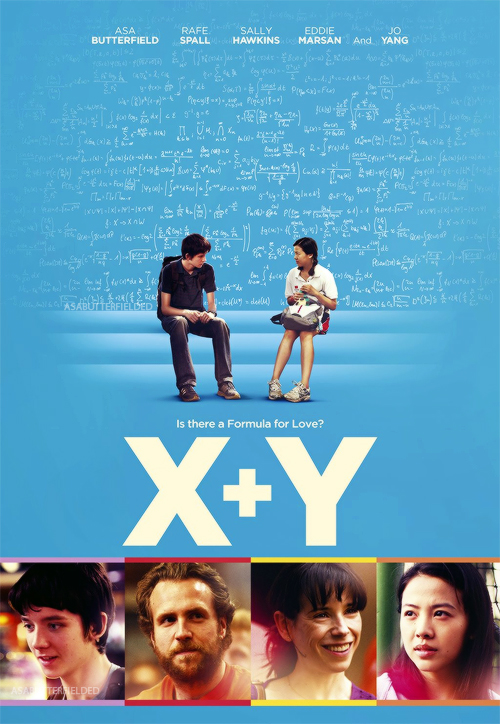
Review – X+Y (2014)

Director: Morgan Matthews

Starring: Asa Butterfield, Sally Hawkins, Rafe Spall, Eddie Marsan, Jo Yang

X+YIn 2007, Morgan Matthews directed a 90 minute documentary about the weird and wonderful young competitors at the International Mathematical Olympiad (IMO) called Beautiful Young Minds. The subject matter obviously left its mark on the director as seven years later he would return to it for his feature film debut X+Y.

X+Y tells the story of Nathan Ellis, an autistic boy who lives with his mother Julie in Yorkshire. Diagnosed at a young age, Nathan’s social difficulties were accelerated when his father, with whom he shared a special bond, was killed in a car accident. Nathan’s interest is mathematics and with Julie incapable of meeting his appetite for maths – whenever she tries he frequently reminds her that she is not clever enough – she engages former child prodigy Martin Humphreys to tutor him. Together, Nathan and Martin set their sights on the IMO in Cambridge. Continue reading

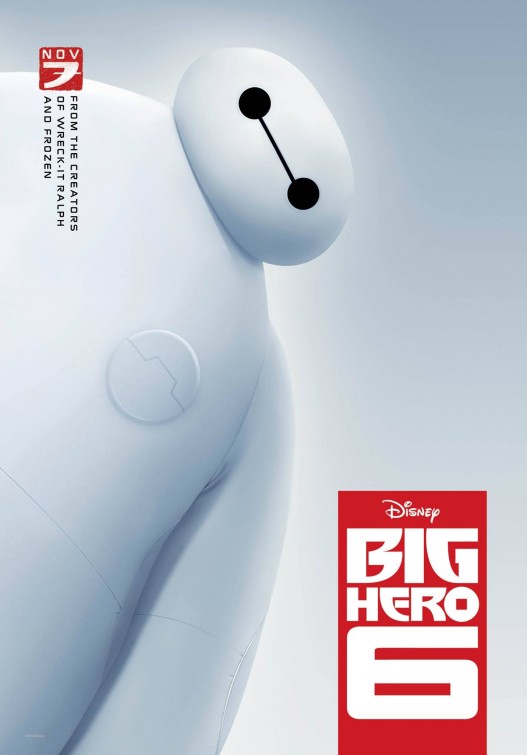
Review – Big Hero 6 (2014)

Directors: Don Hall & Chris Williams

Starring: Ryan Potter, Scott Adsit, Daniel Henney, T.J. Miller, Jamie Chung, Damon Wayans Jr., Genesis Rodriguez, James Cromwell, Alan Tudyk

Big Hero 6Smart is cool and education is exciting as science nerds become self-made superheroes in Disney’s latest animated feature, Big Hero 6.

Fourteen-year-old Hiro Hamada is a robotics genius who, having lost his parents when he was very young, is wasting his prodigious talent hustling people at underground bot-fights. After an inspiring visit to the laboratory of his equally brilliant brother Tadashi at San Fransokyo Tech, Hiro is determined to gain entry to the university and study under the legendary Prof. Callaghan. But there is an accident at the university expo, with a fire taking the lives of both Tadashi and Callaghan. However, despite losing his brother Hiro is not alone. Tadashi has left behind Baymax, a giant, inflatable, robotic Personal Healthcare Companion he designed, and Baymax becomes Hiro’s carer and friend. When Hiro spots a mysterious man in a Kabuki mask using microbots, the very invention Hiro had been displaying at the expo on that fateful night, he starts to suspect that foul play may have been involved in the fire. After a few strategic upgrades to Baymax, Hiro and Tadashi’s friends set out to get to the bottom of what really happened. Continue reading

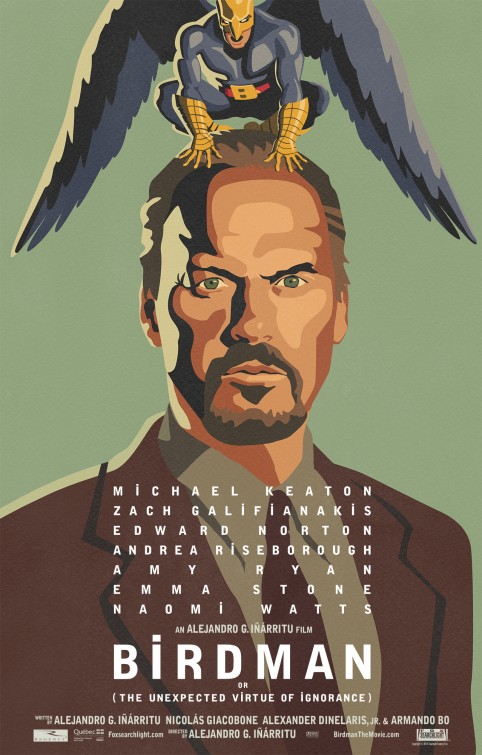
Review – Birdman (2014)

Director: Alejandro G. Iñárritu

Starring: Michael Keaton, Zach Galifianakis, Edward Norton, Andrea Riseborough, Amy Ryan, Emma Stone, Naomi Watts

BirdmanAs someone who watches a lot of films, there is nothing quite so exciting as when you see something you have never seen before, an entirely original cinematic vision. There is simply no other way to describe Birdman – full title Birdman or (The Unexpected Virtue of Ignorance) – the new black comedy from Mexican director Alejandro González Iñárritu (the director of Babel, 21 Grams and Amores Perros who has here rebadged himself Alejandro G. Iñárritu).

Birdman centres on Riggan Thomson, a middle aged movie star who is living in the shadow of the superhero character he played in three blockbusters in the early 1990s. Birdman has become Riggan’s tormentor. As he slowly but surely breaks down, it is Birdman’s voice he hears personifying all of his insecurity and self-doubt. In an effort to regain his significance and artistic integrity, Riggan has gone all in, writing, directing and starring in a Broadway adaptation of the Raymond Carver short story What We Talk About When We Talk About Love. Days before opening night, an accident serendipitously befalls Riggan’s weak co-star and the opportunity arises to introduce Broadway superstar Mike Shiner into the cast. Continue reading

Review – American Sniper (2014)

Director: Clint Eastwood

Starring: Bradley Cooper, Sienna Miller

American SniperChris Kyle was the deadliest sniper in US military history, with 160 kills across four tours of duty in Iraq. For the Iraqi insurgents he was enemy number one – there was a $180,000 reward for killing him – for the US military he was their guardian angel. Knowing he was looking over them made them feel invincible. Kyle was a man that became a US military legend. Unfortunately, Clint Eastwood’s American Sniper is more concerned with showing us the legend than the man.

As a child Kyle’s father taught him there are three kinds of people in the world: sheep who won’t stand up for themselves and will be abused, wolves who seek to bully and harm others, and sheep dogs who are blessed with the gift of aggression and use it to protect the weak and innocent. Chris Kyle is a sheep dog. Inspired by the embassy bombings in East Africa he joins the Navy SEALS and before long finds himself in Iraq. As he grows in standing his missions become more specialised. Having been assigned to team to take out the infamous Al Qaeda operative known as ‘The Butcher,’ he also becomes obsessed with capturing an Iraqi sniper named Mustafa whose skills rival his own. Continue reading

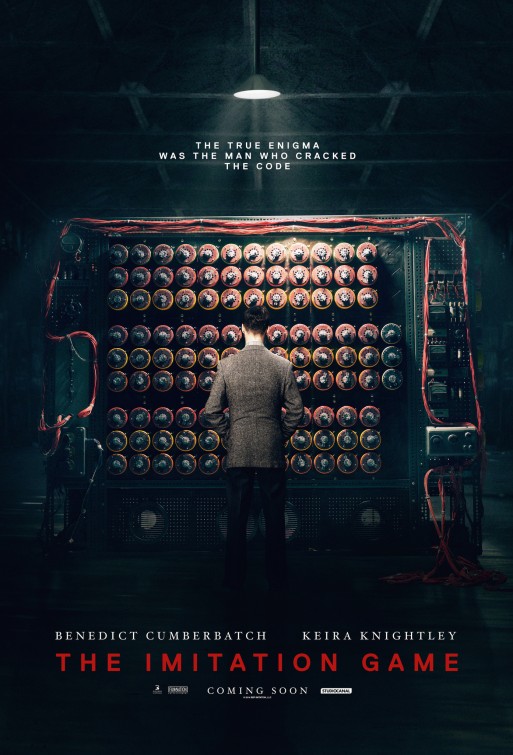
Review – The Imitation Game (2014)

Director: Morten Tyldum

Starring: Benedict Cumberbatch, Keira Knightley, Matthew Goode, Mark Strong, Charles Dance, Rory Kinnear

Imitation GameUsed by the Nazis in the Second World War to obscure their communications, the Enigma Machine was the greatest encryption device in history. With 159,000,000,000,000,000,000 different combinations and a code that reset every evening, it appeared uncrackable. But a small group of British mathamaticians, linguists, chess champions and crossword enthusiasts did manage to achieve the impossible and their efforts are believed to have shortened the war by more than two years and saved up to 14 million lives. This amazing achievement was kept a military secret for 50 years, but now comes to the screen in The Imitation Game.

In 1939, MI6 brought together a small team of Britain’s best and brightest in Bletchley Park to try and decipher the Enigma Machine’s code. Among them was Professor Alan Turing. An infuriating character, Turing was brilliant but arrogant and horribly condescending. While the rest of the team immerse themselves in the futile work of trying to decipher the daily codes, Turing wants to invent a machine to crack Enigma. Continue reading

The Doctor of Movies’ Top 10 of 2014

Grand Budapest Hotel1. The Grand Budapest Hotel (Wes Anderson)

Wes Anderson has for two decades now been the most distinctive cinematic voice in America, and this 1930s-style caper film is the most complete realisation yet of his aesthetic. Anderson first-timer Ralph Fiennes is not known for comedy, but he is tremendous here in leading an all-star cast. In a time when so many comedies are built around rambling improvisation it, there is something really striking about the meticulously crafted nature of The Grand Budapest Hotel. With a Russian Doll structure, the film is beautifully designed and precisely shot. A real treasure.
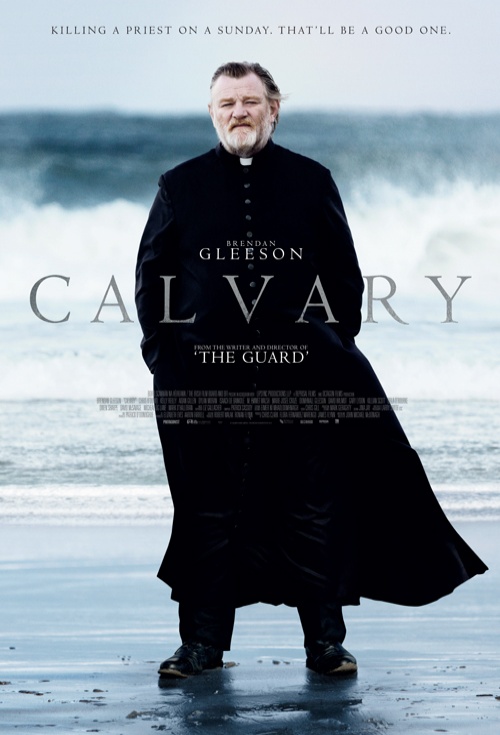
Calvary2. Calvary (John Michael McDonagh)

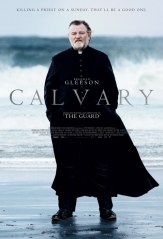
Irish director John Michael McDonagh managed to one-up his brilliant debut feature, The Guard, with this poignant, powerful and yet still very funny film about a rural Irish priest who receives a death threat in the confessional. What starts as a black comedy transitions into a quite profound modern passion play, with Brendan Gleeson delivering what is for mine the year’s best performance as Father James Lavelle, a good man who must bear the sins of the institution that he represents, an institutation that has failed both the wider community and himself.
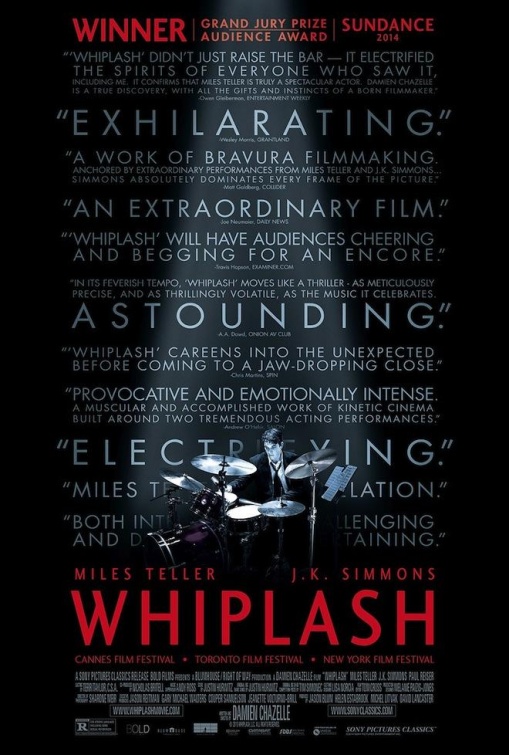
Whiplash3. Whiplash (Damien Chazelle)

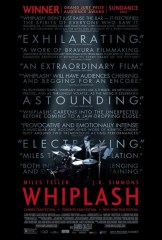
Where so often movies about music focus on passion, soul, creativity and love for the art, Damien Chazelle’s debut feature chooses to explore the determination, single-minded obsession and dangerous perfectionism that goes into the pursuit of greatness. This emotionally and psychologically brutal film features a powerful and controversial depiction of the student mentor relationship as a determined young drummer is brought to the brink by a borderline psychotic conductor. JK Simmons is surely a short price favourite to walk away with a Best Supporting Actor Oscar early next year.
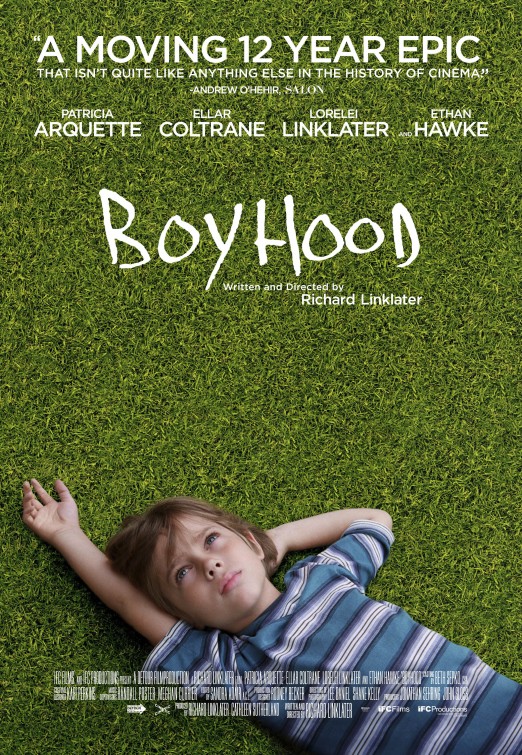
Boyhood4. Boyhood (Richard Linklater)

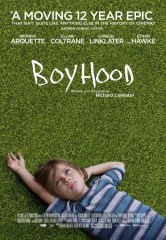
There has never been a film quite like Boyhood. Writer-director Richard Linklater shot the film over a twelve year period, following the same boy (Ellar Coltrane) as he grew from a six year old into a young adult. Incredibly ambitious and effectively executed, the film manages to not only explore the evolving family dynamic as this family grows up together, but also to navigate the cultural and political changes the world experienced over the twelve years of production. Managing to be at the same time epic in scope and incredibly intimate, Boyhood is a truly unique cinematic experience.
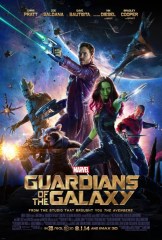
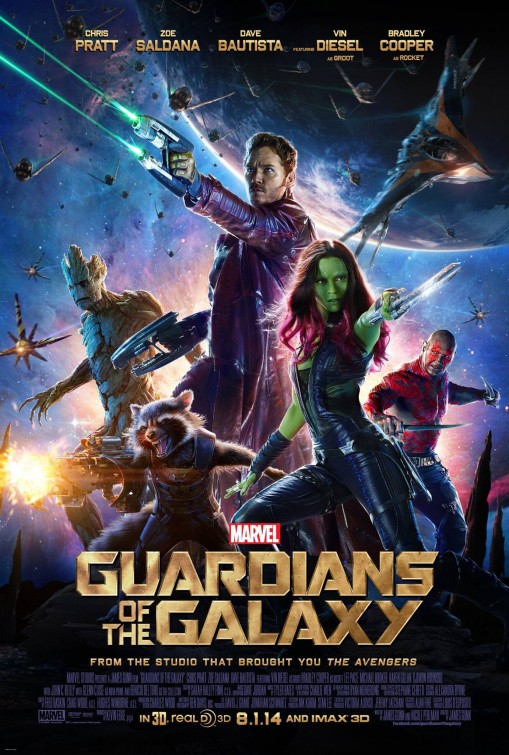
Guardians of the Galaxy5. Guardians of the Galaxy (James Gunn)

How hot are Marvel Studios right now? In what looked like a questionable step following the success of The Avengers, they announced they would be bringing a minor comic book about a motley crew of space adventurers that includes, among others, a talking raccoon and a walking tree, and they have turned it into the most exciting, fun and fresh blockbuster in decades. Rather than repeating the formula of The Avengers, James Gunn has gave Guardians of the Galaxy a completely different style and tone. This 1980s style sci-fi adventure is Marvel’s funniest film and has made a legitimate movie star out of Christ Pratt.
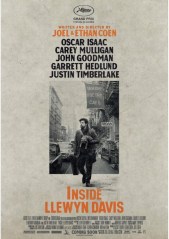
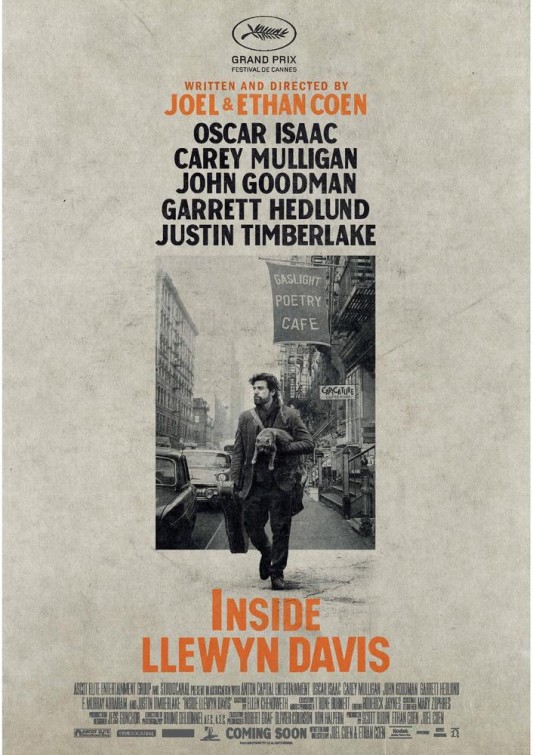
Inside Llewyn Davis6. Inside Llewyn Davis (Joel & Ethan Coen)

While it lacked the mainstream potential of True Grit and No Country for Old Men, Inside Llewyn Davis saw the Coen brothers in top form. This character study of a neurotic, arrogant but undeniably talented folk musician offered significant insight into the mind of an artist while poking gentle fun at the earnestness of the Greenwich Village folk music scene. Bruno Delbonnel’s cinematography is stunning, with its muted colour palate of greys, greens and browns making the film feel almost black-and-white. The soundtrack, arranged by T-Bone Burnett is outstanding.
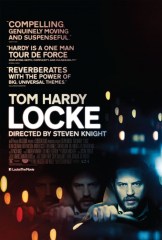
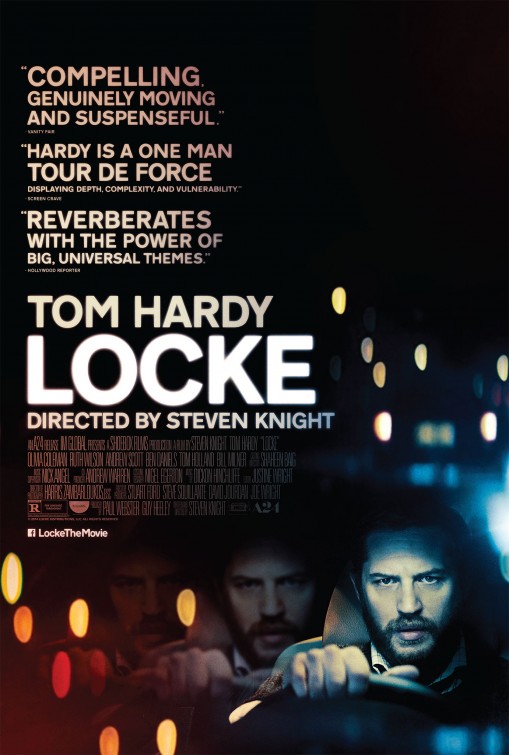
Locke7. Locke (Steven Knight)

One man in a car making phone calls. Who’d have thought that could be the basis of the year’s best thriller? Steven Knight’s variation on the one-man play breaks with formula and bravely rethinks how to tell a story on screen. Carried by a compelling performance from Tom Hardy – one of the few actors in the world who can carry a film on their own for ninety minutes – this minimalist piece of filmmaking reimagines the very nature of what is cinematic.
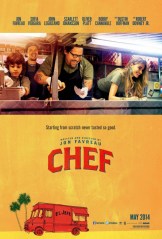
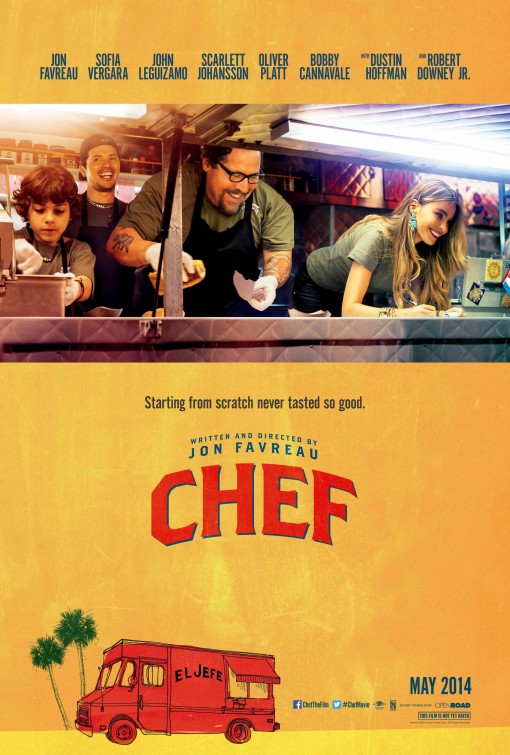
Chef8) Chef (John Favreau)

Jon Favreau got back to his indie roots in 2014 with his passion project Chef, the food porn film of the year. With its simple story, Chef is a completely endearing celebration of food, cooking, creativity, passion and family, with many critics seeing more than a hint of autobiography in chef Casper’s quest to rediscover his creative spark. Vibrant and alive with the Cuban inspired flavours of the food and the music, Chef is a joyous film and not to be seen on an empty stomach.
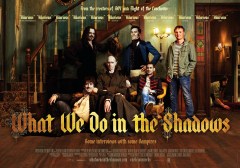
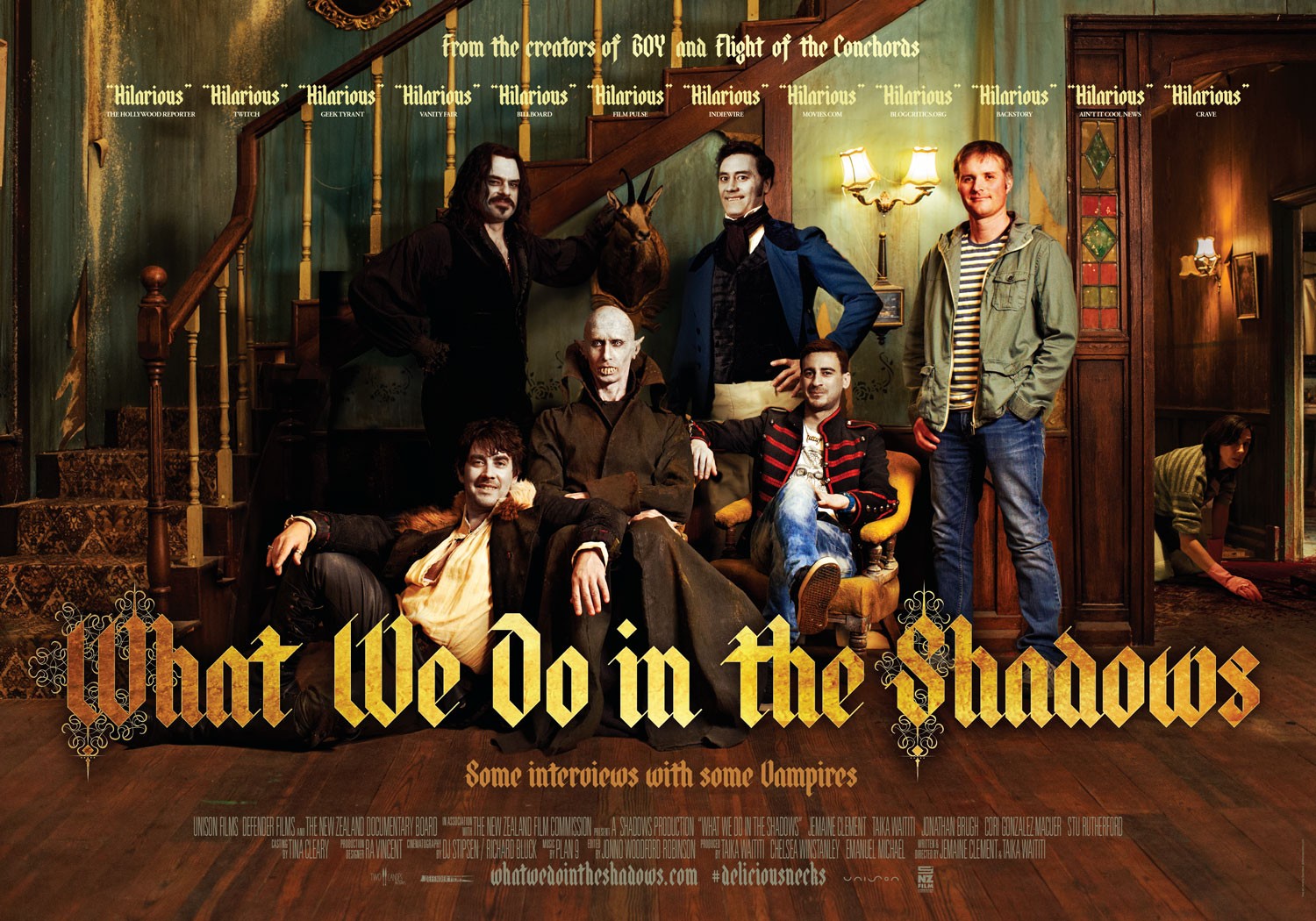
What We Do in the Shadows9) What We Do in the Shadows (Jermaine Clement & Taika Waititi)

With What We Do in the Shadows Kiwi duo Taika Waititi and Jermaine Clement take a subject matter, vampires, with which popular culture is teetering on the edge of overload, and a form, the mockumentary, that is every bit as tired and combine them to create a vibrant, original and downright funny movie. Juxtaposing the extraordinary with the mundane, the film follows a trio of vampire flatmates living in Wellington. The New Zealand sense of humour brings a slightly different sensibility to the film than we’d get from an American or British equivalent.
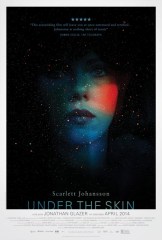
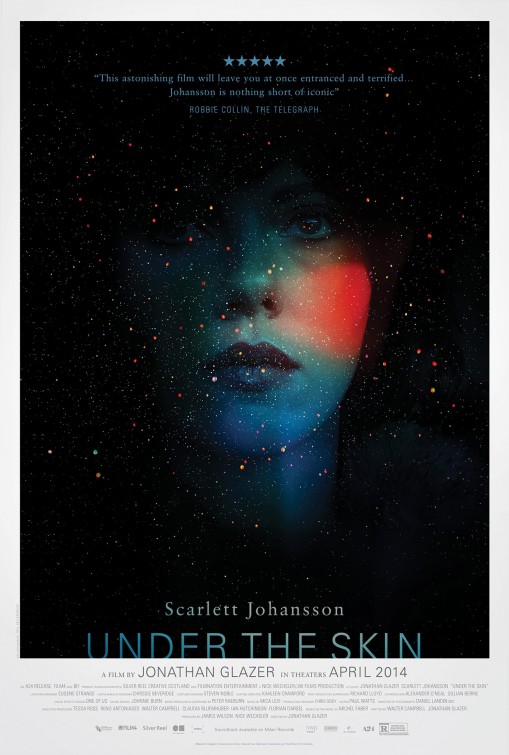
Under the Skin10) Under the Skin (Jonathan Glazer)

This year saw two films in which Scarlett Johansson got a bit cerebral. While Lucy was among the year’s worst films, Under the Skin was among its best. This odd film sees Johansson driving around Glasgow and the Scottish highlands, picking up men and then… well it’s best not to give away too much. A most peculiar and entrancing film, when you get to the end of Under the Skin you won’t quite know what you’ve seen but you’ll know you’ve seen something.

The Next Best (alphabetical): The Dark Horse (James Napier Robertson), Dawn of the Planet of the Apes (Matt Reeves), Frozen (Chris Buck & Jennifer Lee), The Lego Movie (Phil Lord & Christopher Miller), Nightcrawler (Dan Gilroy), The Wolf of Wall Street (Martin Scorsese)

The Worst Movie of the Year:
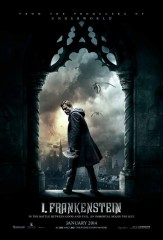
I, FrankensteinI, Frankenstein (Stuart Beattie)

200 years after being brought to life, Frankenstein’s monster finds himself in the middle of an ongoing war between demons and gargoyles for… You know what? It’s not worth going on. This diabolical film which recasts Frankenstein’s monster as an action hero is utter nonsense and would have Mary Shelley rolling in her grave.

Other stinkers: Grudge Match (Peter Segal), Love, Rosie (Christian Ditter), Lucy (Luc Besson), My Mistress (Stephan Lance), Non-Stop (Jaume Collet-Serra), They Came Together (David Wain)

by Duncan McLean

What were your best and worst films of the year? Post in the comments section and let us know.

Review – The Hobbit: The Battle of the Five Armies (2014)

Director: Peter Jackson

Starring: Martin Freeman, Richard Armitage, Ian McKellen, Luke Evans, Evangeline Lilly, Lee Pace, Aidan Turner, Orlando Bloom, Ryan Gage, Cate Blanchett, Hugo Weaving, Christopher Lee

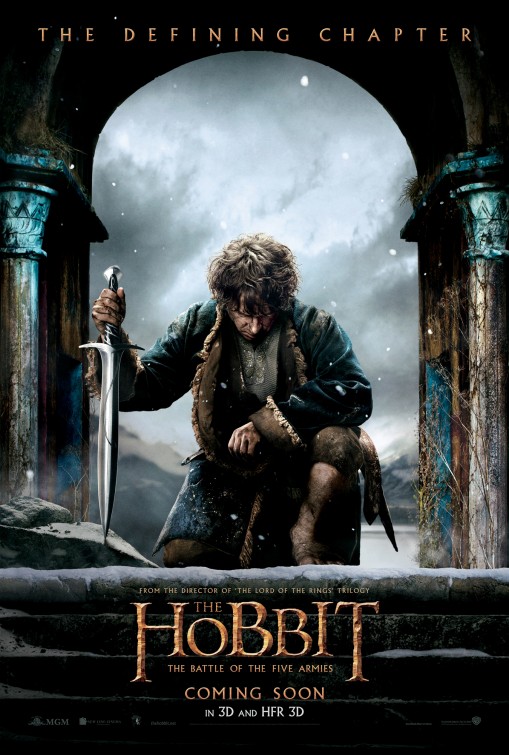
Hobbit - The Battle of Five ArmiesAfter 13 years and five films which have between them grossed US$4.9 billion internationally, we have reached the final instalment in Peter Jackson’s adventures in Middle Earth, The Hobbit: The Battle of the Five Armies.

There is no time for a “previously on The Hobbit” recap as this final instalment gets straight into the action, picking up directly from the moment that The Desolation of Smaug ended, with Laketown under attack from the awakened dragon. While some ingenuity from Bard the Bowman brings the downfall of Smaug, Thorin and his companions hole up in the halls of Erebor, fortifying the entries to protect their gold. But the news of Smaug’s death spreads quickly and with Erebor and its stores of gold no longer under the dragon’s protection it is up for grabs. So armies of dwarves, elves, men and orcs – with a fifth to come later – arrive on the scene to stake their claim on the mountain and its treasure.

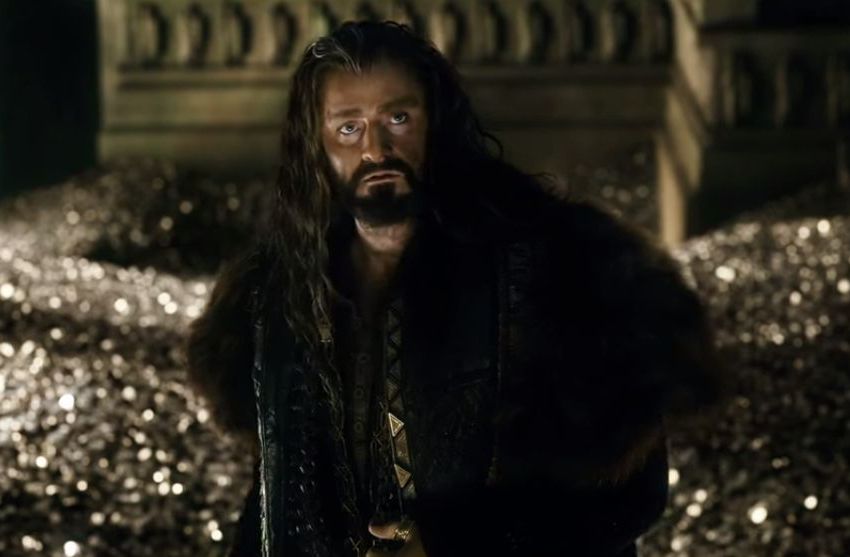
Despite being the titular character, in this final instalment Bilbo Baggins is relegated to a supporting role. The Battle of the Five Armies is Thorin’s film. This is a tale of the corrupting power of greed. Once Thorin finds himself King Under the Mountain and inside the treasure stores of Erebor, he is overcome with ‘dragon sickness,’ an intense paranoia and protectiveness of his gold. His integrity is sacrificed as he questions the loyalty of his companions, and his unwillingness to keep his word in reimbursing the people of Laketown for their assistance is central to the descent into war. This shift in character focus is a bit unfortunate as Bilbo remains the most interesting character in the film, thanks largely to Martin Freeman’s wonderfully understated performance. Richard Armitage on the other hand does his fair share of scenery chewing as Thorin, particularly in those scenes where he is suffering from ‘dragon sickness.’

The travelling company reached their destination towards the end of The Desolation of Smaug, so where the first two instalments were journey films The Battle of the Five Armies has a different feel to it. It is a war movie. Smaug (who remains the crowning achievement of the film’s CGI team) is defeated in the first fifteen minutes of this film and the rest of its runtime is devoted to preparations for battle and the battle itself. As such, we see a shift in the prominence of different characters. Those interchangeable dwarves thankfully take a backseat in this film, with the spotlight more focussed on those characters who can fight: Bard, Fili and Kili, the elven trio of Tauriel, Legolas and Thranduil. The battle itself commences at about the 70 minute mark and accounts for the majority of the second half of the film.

Thorin Oakenshield (Richard Armitage), King Under the Mountain

Thorin Oakenshield (Richard Armitage), King Under the Mountain

At 144 minutes, The Battle of the Five Armies is the shortest of all the Middle Earth films by quite some margin. And importantly, given how long the first two Hobbit films felt, it moves quite quickly. It doesn’t feel like a two and a half hour movie. This action heavy film really is all go, to the point that some elements even feel a bit rushed. That said, with the battle taking an hour of screen time as we cut back and forth between different skirmishes and characters, battle fatigue will become an issue for some viewers. The Battle of the Five Armies also doesn’t make the same errors that the final instalment of the Lord of the Rings trilogy did in dragging out its ending.

The Battle of the Five Armies will again be released in High Frame Rate 3D – the film is recorded and projected at 48 rather than 24 frames-per-second – and it is still a terrible way to see a film. The peculiar high-definition movement looks like a cross between a computer game and digital video and is very unforgiving on costumes and makeup.

When Jackson first decided to venture back into Middle Earth for The Hobbit the original plan was to divide it into two films, and with the benefit of hindsight you can’t help but feel that would have been the right call. However, while some will see it as a cynical money grab, in the wash-up I’m more inclined to see this undeniably flawed trilogy as the work of a devoted fan who was so enamoured with the material and the world that he had helped create that his desire to spend as much time as possible there perhaps clouded some of his better judgement.

Rating: ★★★

Review by Duncan McLean

Have you seen The Hobbit: The Battle of the Five Armies? Leave a comment and let us know what you thought.

Review – The Water Diviner (2014)

Director: Russell Crowe

Starring: Russell Crowe, Olga Kurylenko, Yilmaz Erdogan, Jai Courtney, Dylan Georgiades, Cem Yilmaz, Ryan Corr

Water DivinerNext year marks the centenary of the Gallipoli campaign, a First World War campaign which is for many a formative moment in our national history as it marked the first time that Australians fought as ANZACs rather than as part of the British military. With such a significant milestone on the horizon it is no surprise that we are seeing a return of Gallipoli to our screens, both big and small, with the latest offering being Russell Crowe’s directorial debut, The Water Diviner.

In 1919, in the aftermath of the Great War, Australian farmer Joshua Connor travels to Gallipoli to recover the bodies of his three sons who never returned from the campaign. All three were lost on the same day, 7th August, 1915. But after recovering two of the bodies he discovers that one of his boys was taken prisoner by Turkish soldiers, and with the help of Major Hasan of the Turkish army he attempts to trace the whereabouts of his remaining son.

The Great War marked the first time that attempts were made to recover and identify the bodies of fallen soldiers. The film’s story was inspired by a single line in a letter from a Colonel in the Imperial War Graves Unit which noted that an Australian man came to Gallipoli searching for his sons’ graves. However, from there the film takes some obvious dramatic license in telling this ‘true story.’ The title The Water Diviner is a reference to Joshua’s ability to locate the groundwater needed to run his farm in the punishing climate of the outback. Divining water is one thing – as strange as it sounds there are plenty of people who swear by the effectiveness of dowsing, as it is also known – but watching Joshua use this same method to locate the spot where his sons’ bodies are buried in the battlefield is quite a leap for an audience to take.

The Gallipoli campaign received its definitive cinematic treatment in 1981 with Peter Weir’s Gallipoli, but with The Water Diviner Crowe manages to bring a new perspective to this much mythologised moment in Australia’s history. The Water Diviner offers a far greater focus on the Turkish experience of the battle than has previously been offered to Australian audiences. This engaging of a different perspective starts as simply as acknowledging that the Turks don’t even call the site Gallipoli. Major Hasan reminds us that while 10,000 ANZACs fell there, 70,000 Turks lost their lives. On top of this, even in 1919 the war was not yet over for the Turks. As the rest of the world breathed a sigh of relief, the Turks were fiercely defending their territory as the Greeks carved away at the Ottoman Empire. As we watch the uneasy cooperation between Allied and Turkish military in the aftermath of the war we see both sides coming to terms with what has occurred. As Lt-Col Hughes concedes, “I don’t know if I forgive any of us.”

Alongside this exploration of Turkey in the aftermath of the war is an entirely unnecessary romantic subplot which sees Joshua making eyes at Ayshe, the woman who runs the hotel he is staying at in Istanbul. She is also grieving having lost her husband in the war, a fact she has not yet confessed to her son Orhan. This rather trite romantic subplot is nowhere near as interesting or engaging as the rest of the film and results in an uncomfortable clashing of tones, with one story being quite sombre and serious and the other being at times light and whimsical.

As a directorial debut, The Water Diviner does not blow you away, but it represents the sort of competent handling of the material you would expect from a man who has been an active collaborator for much of his 25 years as an actor. While some of its narrative elements are a bit naff, The Water Diviner’s invitation to consider the sacrifices made on both sides of this conflict makes it a notable contribution to the ever expanding exploration of the Gallipoli campaign.

Rating: ★★★

Review by Duncan McLean

Have you seen The Water Diviner? Leave a comment and let us know what you thought.

Review – Exodus: Gods and Kings (2014)

Director: Ridley Scott

Starring: Christian Bale, Joel Edgerton, Ben Kingsley, Aaron Paul, John Turturro, Sigourney Weaver, Maria Valverde

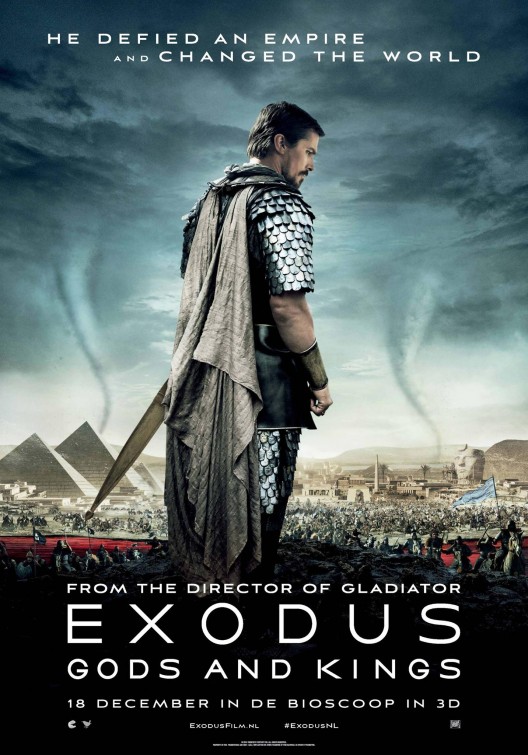
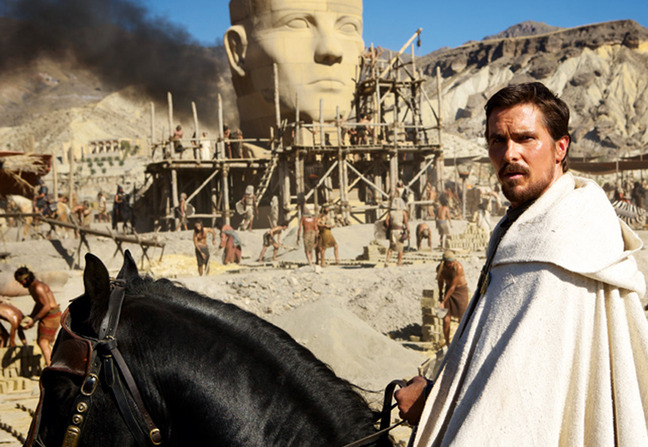
Exodus - Gods and KingsThe Biblical epic used to be a staple genre of Hollywood in the 1950s and 1960s, with films like The Ten Commandments and The Greatest Story Ever Told being amongst the biggest productions in Hollywood. Over the last fifty years, with the marketplace becoming increasingly secular, the Biblical film has largely disappeared from the mainstream. It is therefore a peculiarity that 2014 has seen not one but two major films based on Old Testament narratives, first Darren Aronofsky’s Noah and now Ridley Scott’s Exodus: Gods and Kings.

While timing dictates that there will be comparisons made between Noah and Exodus: Gods and Kings, they are very different films. While Aronofsky’s film is very much a think piece, Scott’s is much more of a modern incarnation of the traditional Biblical epic – it is a big movie and all the main characters sport British accents. It has been 14 years since Scott breathed life into the swords-and-sandals epic with Gladiator, and Exodus: Gods and Kings employs a similar size and scale. The story of the son of Hebrew slaves raised as an Egyptian prince, who after a period of exile returns with the God of Israel behind him to free his people from 400 years of bondage provides opportunities for real spectacle with the various plagues, the cavalry’s pursuit of the Hebrews and the pièce de résistance, the parting of the Red Sea.

Christian Bale’s Moses is an interesting character. An intelligent and eloquent man, this Moses is not a spiritual man. As an Egyptian, he puts no stock in the advice of the mystics the Pharaoh consults. As a Hebrew, he is scolded by his wife for sowing seeds of doubt in their son’s mind. So when he encounters God at the burning bush, he must first confront the notion that there is a God before considering that God has a task for him. If Moses has faith in anything it is in his own abilities. As an experienced military general, he sets out to win his people’s freedom by training up their militia for guerrilla warfare, only to have God step in with a much faster and more drastic plan. As this plan escalates we see Moses becoming increasingly uncomfortable with the extent of the catastrophe. The question about Moses that isn’t quite answered, though, is what is his motivation? While he is shown to be a just man, he doesn’t have a particular devotion to the Hebrew people. Similarly, he is not presented as an obedient servant of God. We never really know why he is doing what he is doing, other than that is how the story goes.

Moses (Christian Bale)

Moses (Christian Bale)

Exodus: Gods and Kings has a peculiar relationship with the spiritual elements of the story, which is an odd statement to make about a Biblical film, but perhaps not surprising given the director’s agnosticism. The film toys with, without committing to, the idea that Moses’ interactions with God could be delusions. His first encounter with God, who is given the form of a mysterious 11 year old boy, occurs after he has been hit on the head and knocked unconscious during a landslide. Later we see him talking to God, and are then shown the point of view of other characters who see Moses seemingly in animated conversation with himself. This decision to give God the form of a child is also an interesting one. Obviously the booming voice from on high like in Cecil B. DeMille’s The Ten Commandments doesn’t cut the mustard anymore, but giving God the form of a child means that at those moments when God is shown to be angry and vengeful, it comes across as petulant. The film takes an awkward middle ground between embracing the idea that these events were miraculous and seeking to explain them as naturally occurring phenomena. There is no daily ultimatum to Rhamses to “Let my people go” between each plague. Instead the plagues are shown to be naturally escalating one to the next. The blood in the Nile kills all the fish and drives the frogs to the land, when the frogs die that brings the flies, the flies then bring the disease which kills the livestock and the boils which infect the people. Similarly, Moses plays no direct role in parting the Red Sea. Rather the water retreats as it would before a tsunami.

I don’t believe in criticising a film like this for deviating from its Biblical source material. As with any biographical or historical film, deviation in itself is not a problem if it has purpose. A filmmaker needs to be afforded some poetic license in their attempts to turn these well-known but often bare-bones stories into full and vibrant pieces of cinema. But the potentially lucrative Christian market at which this film is targeted can be a tough market to please. Noah was attacked earlier this year for deviating from the Biblical account even though it did so for a specific purpose, with Darren Aronofsky having a clear vision for that film and for the message that he was using the Noah narrative to communicate. Exodus: Gods and Kings, on the other hand, deviates seemingly without rhyme or reason and is sure to ruffle some feathers. This is indicative not of a Biblical accuracy problem, but of a basic story problem. It doesn’t seem to know what story it wants to tell.

There are numerous angles you can take in telling the story of Moses and the Exodus, but Exodus: Gods and Kings does not seem to have settled on any one particular approach. Four writers have been credited on the film – Adam Cooper, Bill Collage, Jeffrey Caine and Steve Zaillian – and this might go some way to explaining this narrative uncertainty. The result is not really a story of faith nor is it a story of a people. It is not quite a story of Moses’ development into a leader. The closest it comes to a focus is in being a story of two brothers, Moses and Rhamses – an interpretation that takes on particular significance when we see the film is dedicated to Ridley Scott’s late brother Tony – but even then it doesn’t completely invest in this take on the story.

Ultimately, the key test that Exodus: Gods and Kings fails is the “why” question. If you are going to remake a movie or revisit a story, particularly a story that has been told and retold as many times as that of Moses and the Exodus, there should be a reason. There should be something new you want to say, a new idea, a new interpretation, a new point of emphasis. But as much as Scott’s film nails the big spectacle elements – the plagues, the parting of the Red Sea, even just the recreation of ancient Egypt are all top notch – it lacks a clear central message and ends up just being a bit of a mess.

Rating: ★★

Review by Duncan McLean

Have you seen Exodus: Gods and Kings? Leave a comment and let us know what you thought.