Review – Nebraska (2013)

Director: Alexander Payne

Starring: Bruce Dern, Will Forte, June Squibb, Bob Odenkirk
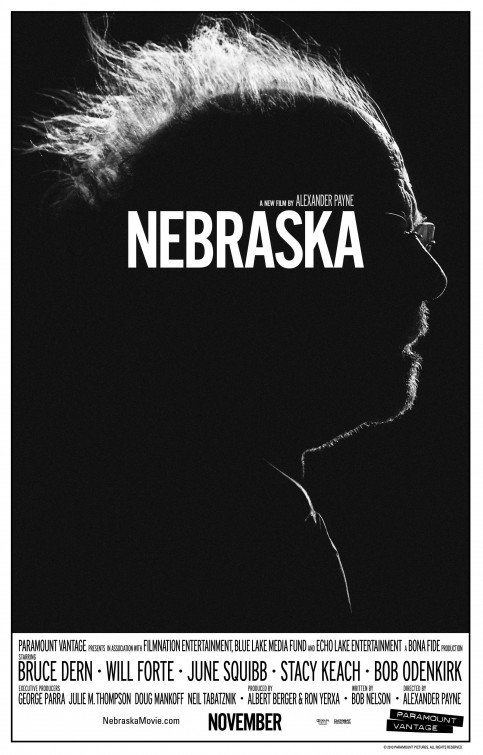
NebraskaThe road movie has always been a form that resonates with America, perhaps because it is such a large country, and one of its most interesting voices of late has been independent filmmaker Alexander Payne. Starting with a widower journeying to his daughter’s wedding in About Schmidt, and then a pair of middle aged men on a tour of the Californian wine country in Sideways, Payne likes to venture out on the road with unabashedly ordinary characters. He is at it again with a father and son in Nebraska.

After receiving an unsolicited piece of junk mail, ageing alcoholic Woody Grant is convinced that he has won one million dollars in a sweepstakes and needs to get to Lincoln, Nebraska – over 800 miles from his home in Billings, Montana – to collect his winnings. While his wife, Kate, and adult sons, David and Ross, are all too aware that this is a scam, there is no convincing Woody, and eventually David decides that the only way to put an end to it is if he takes Woody to Lincoln himself. On their way they stop off in Woody’s hometown of Hawthorne where the news that he has struck it rich spreads like wildfire, bringing all manner of friend and relative out of the woodwork to stake their claim for their piece of Woody’s expected winnings.

With its Middle American locations shot in beautiful widescreen black-and-white by Phedon Papamichael, Nebraska moves at a slow, almost melancholy pace. Road movies don’t need to be defined by momentum, and this one feels no compulsion to be. We know from the very beginning that the thing they are journeying towards, Woody’s million dollars, will not be there in the end, so the film is free to meander. Instead, as the old cliché goes, the journey becomes more important than the destination. At its heart, Nebraska is the story of a father and his son, or rather of a son and his father. For despite it being Woody’s image that appears on the poster, this is David’s story. It is David through whose subjectivity we encounter this tale. Woody is not a talkative or relational man, and it becomes apparent that for the entirety of his sons lives he never has been. Woody has always been removed from his sons. For Ross, this is the cause of much anger and resentment, but for David it is just the source of disappointment. This journey provides David with the opportunity to spend some time with his father, and through the stories he hears from the people of Hawthorne he comes to gain some understanding of this man who for his whole life has been a mystery.

The veteran character actor Bruce Dern has stumbled upon the role of his career at the age of 77. Woody is headstrong but vague. Is that vagueness a result of his years of alcohol abuse, or is he retreating into his own mind and memories? He is a character who, aware that he is in his twilight years, is determined leave his mark on the world. There is a lack of contentment in him and it is in this regard that Dern really brings something to the character that a more celebrated name couldn’t have. While it is Dern who is deservedly getting all the plaudits, Will Forte is also brilliant. The casting of Forte as David, the more subtle of the two leads, was a brave move that paid off. As a Saturday Night Live alumnus, Forte is best known as a comedic performer and a particularly unsubtle one at that, but he brings a real humanity to David and the perfect amount of uncomfortableness to his interactions. Outside of the two leads, it is June Squibb, as Woody’s fed-up, eye-rolling wife Kate who makes the biggest impact. Payne had previously used Squibb as the wife of Jack Nicholson’s character in About Schmidt, but in that film she died early on. Here she makes it through to the end and the film benefits greatly from her presence. It is Squibb, rather than the more obvious Forte or Odenkirk, who provides the films comic relief. In particular, the matter-of-fact accounts she shares with David about all the men from the old town who had tried to get into her pants are very funny.

A film reminiscent of small town films like The Last Picture Show, Nebraska blends humour and humanity with the result being a heartfelt, poignant and even uplifting film.

Rating – ★★★★

Review by Duncan McLean
Review – The Wolf of Wall Street (2013)

Director: Martin Scorsese

Starring: Leonardo DiCaprio, Jonah Hill, Margot Robbie, Kyle Chandler, Rob Reiner, Matthew McConaughey, Jean Dujarden

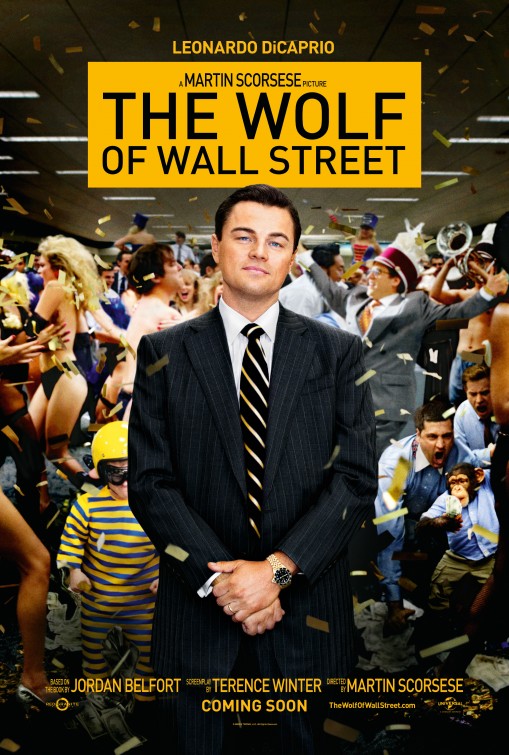
Wolf of Wall StreetIn recent years, with films like The Departed, Shutter Island and Hugo, Martin Scorsese has ventured into the world of narrative-driven filmmaking. However the films upon which his lofty reputation is based – films like Mean Streets, Goodfellas and Casino – were never so concerned with narrative. They were films that created a world and dropped us into it, introducing us to the people, the language and the rituals of that place and time. They had an almost anthropological feel to them. Scorsese’s latest film, The Wolf of Wall Street, is a return to this type of storytelling. It has that old-fashioned Scorsese flavour to it with one additional ingredient, humour.

The Wolf of Wall Street is a biting satire of a culture that values personal gratification above all else and gives little thought to the consequences. The film explores the rise and fall of stockbroker Jordan Belfort. We meet Jordan on his first day working at L.F. Rothschild where he starts at the bottom of the ladder. On the very day that he gains his trading license, 19th October 1987, the stock market crashes and he finds himself out of a job. He starts to rebuild by selling “penny stocks,” hustling suckers who can’t afford it into buying worthless stocks at huge margins. Things really take off when he founds his own firm, the evocative but meaninglessly named Stratton Oakmont, and employs the same tactics with blue chip stocks to land much bigger fish. The film doesn’t require you to understand how their operation works, it doesn’t even try and explain it, just to know that it was all quite illegal. With Jordan and his team of hucksters making a lot of money very quickly it was only a matter of time before they caught the eye of the FBI.

Based on the confessional memoir of the real-life Jordan Belfort, The Wolf of Wall Street is told entirely from Jordan’s point of view. It is DiCaprio’s voiceover narration that guides us through the film and he regularly turns to the camera to directly address the viewer. It is in this subjectivity that the root of much of the film’s controversy lies. As in the past, when sections of the audience have accused Scorsese’s film of celebrating gangsters, The Wolf of Wall Street has been attacked for the way in which it indulges in the extravagant excess of these characters lives, an excess which is funded by illegal practices. Despite being a cautionary tale, it is not a didactic or judgemental one. With Belfort himself showing no genuine remorse or contrition for the effects of his actions, the subjectivity of the film likewise does not judge him or apologise for him. The victims of Jordan’s crimes are as invisible to us as they are to him. Instead, the character of Jordan Belfort, through telling his own story, tries to charm, schmooze and woo us as viewers into siding with him despite our understanding of the despicable selfishness of his lifestyle.

The Wolf of Wall Street is a confronting film in its examination of a completely amoral life of excess. Much has been said about the over the top sex, drugs and in particular language of this film – it was well documented that it had set a new record with 506 variations of the F-word – but arguably the more confronting aspect of the lifestyle on display is its misogyny. Whether The Wolf of Wall Street is a misogynistic film, a film about a misogynistic world, or a bit of both is open to discussion. Regardless, it is an intensely male film in which women, regardless of their relationship or role, are regarded primarily as commodities and sexual objects. There is only one female character, Joanna Lumley’s Aunt Emma, who has a level of authority equal to that of the male characters.

Leonardo DiCaprio is one of the finest actors going around at the moment, but this fifth collaboration with Martin Scorsese has afforded him the opportunity to display his versatility. Much of his success in the past has come from playing tortured loners, but Jordan is the ultimate people person. He thrives on the energy of having people around him and being the centre of attention. So DiCaprio is called upon to play the extravert in a way we don’t regularly see. The bigger surprise though is the ease with which he handles the film’s comic material. DiCaprio has always radiated seriousness as an actor, but here he gets to have some fun. In doing so he shows a surprising talent for physical comedy, bordering on slapstick, which very few would have imagined was in his repertoire.

DiCaprio is ably supported by a strong cast. Jonah Hill continues to show he has serious acting chops, while his background in improvisational comedy adds to the spontaneity of some exhanges. The relatively unknown Australian Margot Robbie turns heads as Belfort’s trophy wife more than holds her own in a number of scenes with DiCaprio. Rob Reiner threatens to steal the movie at times as Belfort’s short-tempered father, and cameos from the likes of Matthew McConaughey, Jean Dujarden and Jon Favreau add colour to intricately constructed world.

While The Wolf of Wall Street is undoubtedly Scorsese’s funniest movie, it is by no means a comedy. It is a drama with humour – there are plenty of laughs while Jordan is living the high life, but when things turn bad its gets serious. While it won’t be to everyone’s’ liking, it is arguably Scorsese’s best film in two decades.

Rating – ★★★★☆

Review by Duncan McLean

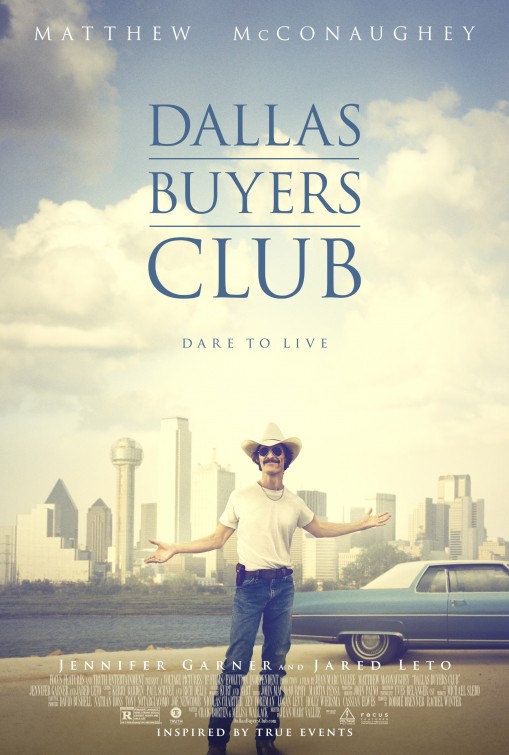
Review – Dallas Buyers Club (2013)

Director: Jean-Marc Vallée

Starring: Matthew McConaughey, Jennifer Garner, Jared Leto, Denis O’Hare, Steve Zahn

Dallas Buyers ClubThe AIDS virus is a truly terrifying disease. In the 1980s, at the height of the AIDS crisis in America, that terror was compounded by a lack of knowledge and understanding of the disease. To be told you were HIV positive was tantamount to being given a death sentence. It is from this desperate context that Jean-Marc Vallée’s powerful independent film Dallas Buyers Club brings us the true story of the most unlikely of crusaders.

After a workplace accident lands him in hospital, electrician and part-time rodeo cowboy Ron Woodroof is informed that his blood tests have revealed him to be HIV positive. With the hospital participating in a trial of a new wonder drug, AZT, Ron bribes a hospital employee to sneak him the medication. When the AZT doesn’t appear to be doing the trick, he ventures across the border into Mexico where he is able to get his hands on a number of alternative treatments which have not been approved for use in the USA. Seeing an opportunity to make some money, Ron starts smuggling the unapproved medications into the country and, with the help of his transgender business partner Rayon, founds the Dallas Buyers Club, where a monthly fee gets you all the medication you need. The beauty of the Club is it keeps his hands clean. He isn’t selling drugs. He’s selling memberships. Ron quickly becomes the last hope for Dallas’s many AIDS sufferers and starts to face strong opposition from the authorities.

What differentiates Dallas Buyers Club from the standard AIDS narrative is its protagonist. Woodroof is anything but a sympathetic character. He is a whoring, drug-taking, brawling, cheating bigot. The first words we hear from him are a homophobic slander of Rock Hudson, shortly after the actor’s death from AIDS. Upon being diagnosed, Woodroof seems angrier with the doctor’s implication that he might have engaged in homosexual activity than he is about the fact that he is HIV positive. Ron is just as prejudiced against other AIDS sufferers as other people are against him. He founds the Club not out of any sense of charity or desire to help others, but out of simple opportunism. The Club presents him with the opportunity to get his medication and make some money on the side. The film’s drama comes from watching the way this degenerate is transformed by his circumstances and the people around him to the point that he can become an activist and voice for this marginalised community. Craig Borten and Melisa Wallack’s excellent screenplay makes that transition subtle while still apparent, and most importantly believable.

Sympathetic he may not be, but Ron Woodroof is engrossing and much of the credit for that has to go to the performance of Matthew McConaughey. Over the last couple of years McConaughey has gone from being a run-of-the-mill movie star hunk to one of the most interesting actors working in Hollywood and his performance here is undoubtedly the best of his career. Having lost approximately 20kgs in preparation for the role, his emaciated appearance is confronting, but Woodroof retains some of that McConaughey charisma, incorporating it into this unattractive package and keeping us hooked on him. But McConaughey doesn’t carry the film alone. His achievement is matched and maybe even exceeded by that of his co-star, Jared Leto. In his first feature film in five years, Leto is brilliant as Ron’s transgender business partner and, eventually, friend Rayon. Leto gives Rayon a real grace and sensitivity, successfully grounding a character that could so easily have been a caricature.

Dallas Buyers Club is a special film that manages to be uplifting without being sentimental and insightful without being preachy.

Rating – ★★★★

Review by Duncan McLean
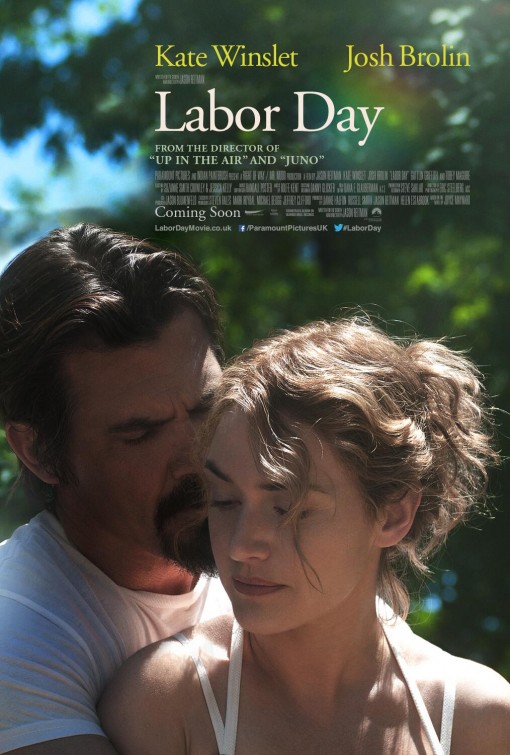
Review – Labor Day (2013)

Director: Jason Reitman

Starring: Kate Winslet, Josh Brolin, Gattlin Griffith

Labor DayTold through the eyes of the 13 year old Henry, Labor Day is the story of a five day love affair that took place on the Labor Day long weekend of 1987 between his mother, Adele, and a fugitive who sought refuge in their home, Frank. Crippled by her depression and anxiety, Adele rarely ventures outside. On their monthly shopping trip for supplies, they are accosted by a wounded Frank, who demands they take him back to their home so he can hide until nightfall. With his wound not allowing him to leave as soon as planned, Frank sets about making himself useful by performing the household duties that haven’t been seen to since Adele’s husband walked out. A bond is formed between them and, for a fleeting moment, the family feels whole again.

Labor Day is a movie which doesn’t manage to live up to its early promise and represents the first real misstep in the career of talented writer-director Jason Reitman (Juno, Up in the Air). While it is based on a novel by Joyce Maynard, the schmaltz gets dialled up so high you could be forgiven for thinking you were watching another Nicholas Sparks adaptation – the centrepiece of the film is a palpably sensual scene reminiscent of the pottery scene in Ghost in which Frank and Adele make a peach pie together. The introduction of Frank into the lives of Adele and Henry creates an intriguing situation, but the story that unfolds is just too simplistic. While they talk as though they are aware of the seriousness of their situation, they sure don’t act like it.  If the police are combing the streets trying to find him, what is he doing up a ladder clearing out the gutters? Why do they spend so much time on the back porch or in the yard? Why don’t they at least close the curtains? That the lovers live in this dream world means that film lacks energy and because everything seems to be so easy, so convenient, the plot twists which are required in order to create drama then feel forced rather than arising naturally out of the story.

Stockholm syndrome is a psychological phenomenon in which hostages have been known to empathise with, and in extreme cases fall in love with, their captors, and if all kidnappers were as perfect as Frank it wouldn’t be hard to see why. Having just escaped from a lengthy prison stay he has no issues relating to people, even complex and sensitive people like Adele, Henry and their disabled neighbour Barry. He easily steps into the routine of normal life, cooking up a meal for the family on his first night with them. With his handyman skills and wealth of wisdom he becomes a substitute father and husband overnight. Despite the fact he is convicted of murderer – don’t worry, that gets explained – not for one moment do we think he is going to hurt either of them. Were his character just slightly more complicated it would have gone a long way to helping the film become something quite interesting.

Kate Winslet is magnificent as always, creating a believable and sincere character in Adele. Josh Brolin does well considering the limitations of his character, and the two make for a pleasing pairing. Ultimately, however, this is a film which you are either going to go with or you aren’t. Labor Day is a sweet little love story about two people who have been living in their own prisons and find freedom in each other, but to really enjoy it requires a willingness to overlook more than a few faults.

Rating – ★★☆

Review by Duncan McLean

Six of the Best… Post-Classical Westerns

The Western is the great American cinematic form, a uniquely American genre. More than that, some have suggested that it stands alongside jazz as America’s great contribution to the arts. It is America’s equivalent of the Greek tragedy, where filmmakers replay and reimagine stories of America. The Western genre was at its height in Hollywood’s studio era, from the 1930s to the 1950s. Its conventional storylines and reusable sets and props made it one of the backbone genres of the mass production machine that was studio era Hollywood. Before World War II, at a time when the major studios were churning out approximately 500 films a year, B-grade Westerns accounted for 15% of all Hollywood production. As well as these quick and cheap B-movies the studio era gave us great Westerns such as Stagecoach (1939), Red River (1948), High Noon (1952), Rio Bravo (1959), The Man Who Shot Liberty Valance (1962) and the greatest of them all, The Searchers (1956). But by the 1960s the classical Western was starting to grow tired, audiences were growing tired of it, and the genre went out of fashion in Hollywood for a while in the 1970s and 1980s. While the Western has never quite re-established itself as a prominent genre in post-classical Hollywood, there have been a number of notable and interesting films that have employed the Western form. Here are six of the best of them…

Butch Cassidy and the Sundance KidButch Cassidy and the Sundance Kid (1969)

George Roy Hill’s Butch Cassidy and the Sundance Kid is a disarmingly likeable film, and possibly the greatest buddy movie ever. Butch and Sundance are part of the notorious Hole in the Wall Gang, but are forced to go on the run after a botched train robbery. With an unshakeable posse on their tail, they head for South America to start afresh as Bolivian bandits. Butch and Sundance are the perfect pairing. Butch is a charismatic, smooth-talking, sharp-minded leader. Sundance is cool, quiet and deadly. Paul Newman and Robert Redford (who would again team up with Hill in 1973 for The Sting) give the film genuine star power, while William Goldman’s Oscar-winning screenplay gives it its charm, humour and intelligence. The final freeze frame is one of the iconic shots in American film.

Wild BunchThe Wild Bunch (1969)

In addition to Butch Cassidy and the Sundance Kid, 1969 saw the release of another film about the Hole in the Wall Gang, Sam Peckinpah’s The Wild Bunch, and they could hardly have been more different. The Wild Bunch is a key film in the history of screen violence. Changes to American film censorship regulations in 1968, with a move from the all-encompassing Production Code to a ratings system, allowed for greater representations of violence on screen and Peckinpah took full advantage. The film is a masterpiece of excess and spectacle, with approximately 90,000 rounds of blanks fired in the production. The film’s final shootout is truly something to behold. But rather than spectacle for spectacle’s sake, violence penetrates this film at a thematic level. The Wild Bunch is a film about violence, about the passing on of violence from one generation to the next,  as demonstrated through the evolving roll of children throughout the narrative.

Little Big ManLittle Big Man (1970)

Little Big Man is a comic Western saga which continued director Arthur Penn’s engagement with the strong counter-culture movement of the time. It tells the life story of 121 year old Jack Crabb, played by Dustin Hoffman. Having been captured by the Cheyenne as a child, Crabb spends his life jumping back and forth between living as a native American and as a frontiersman, and thus experiences both sides of a very transformative period in America’s history. Little Big Man provides a debunking of the classical Western myth, portraying the pacification of the West as an act of genocide. The Cheyenne people are shown to be a kind and peaceful people, and Penn’s dramatization of an attack on their camp by Custer’s Cavalry is an obvious commentary on the Vietnam War at a time before Hollywood films were ready to openly discuss the conflict.

UnforgivenUnforgiven (1992)

Throughout the 1970s and 1980s, the lowest point for the Western as a film genre, it was Clint Eastwood who almost single-handedly kept it alive. Unforgiven is both a love letter and farewell from actor-director Clint Eastwood to the genre that made him a star. Set in the 1880s, when the days of the frontier were fading and a new world was rising, William Munny is of the old world. A retired gunman and a widower with two children, he is coaxed to pick up his gun once more by his old friend Ned to go after a bounty put up by a group of prostitutes in the town of Big Whiskey. Rather than a Wild West romp, Unforgiven is a dark and melancholy film. Where once Eastwood played a part in romanticising the West, here he shows it for its grim reality. Beautifully shot in Alberta, Canada, and featuring a tremendous cast including Eastwood, Morgan Freeman and Gene Hackman in an Oscar winning performance as sheriff Little Bill. Eastwood dedicated the film to directors Sergio Leone and Don Siegel.

Assassination of Jesse James by the Coward Robert FordThe Assassination of Jesse James by the Coward Robert Ford (2007)

The second feature film from Australian writer-director Andrew Dominik, The Assassination of Jesse James by the Coward Robert Ford is an epic Western with an almost art-film sensibility. The film uses the story of the final chapter of the life of one of the American West’s most iconic characters to show us the active process of the mythologising of the West. The young Robert Ford has grown up on the tales of the legendary exploits of Jesse James, so when he has the opportunity to join the James gang for their last robbery he idolises James. Theirs is a strange relationship built on Ford’s intense devotion, which can really only end one way. While this slow-paced, contemplative film is probably a bit longer than it needs to be, it is beautifully shot by Roger Deakins and features some very interesting performances from Casey Affleck and Brad Pitt.

True Grit 2010True Grit (2010)

Adapted from Charles Portis’ novel, the story of True Grit has a beautiful simplicity to it which has been missing from the Western in recent decades. Despite this old-fashioned quality, the direction of the Coen brothers and the beautiful cinematography, again from Roger Deakins, gives the film a modern feel and aesthetic. Hailee Steinfeld’s debut performance as Mattie Ross, the young girl who sets out with a hired Marshall to catch her father’s murderer, is simply brilliant with the role being undoubtedly one of the great young female characters. When the story was previously brought to the screen in 1969, John Wayne won his only Oscar for his portrayal of the drunken US Marshall Rooster Cogburn, but rather than simply imitate Wayne’s performance, Jeff Bridges brings his own characterisation to the part.

It technically isn’t a movie so wasn’t included in the six but no conversation about the Western genre in recent years would be complete without…

Deadwood

Deadwood (2004-2006)

Created by David Milch, for three 12 episode seasons HBO’s gritty series Deadwood was arguably the best show on television and the best single piece of work the Western genre had seen in decades. Set in the 1870s, the show followed the development of the town of Deadwood, annexed from the Dakota Territory, from a basic camp into a thriving, organised, but incredibly uncivilised and corrupt community. Marvellously written, the show’s dialogue was at the same time almost Shakespearean in its poetry and the most horrendously coarse thing you’ll ever hear. Ian McShane’s Al Swearengen, owner of the Gem Saloon and puppet-master over the citizens of Deadwood, was one of the great television characters of that decade. Tragically the show was cut short after three seasons, and while there was talk of two television movies being made to complete the story they never eventuated.

By Duncan McLean

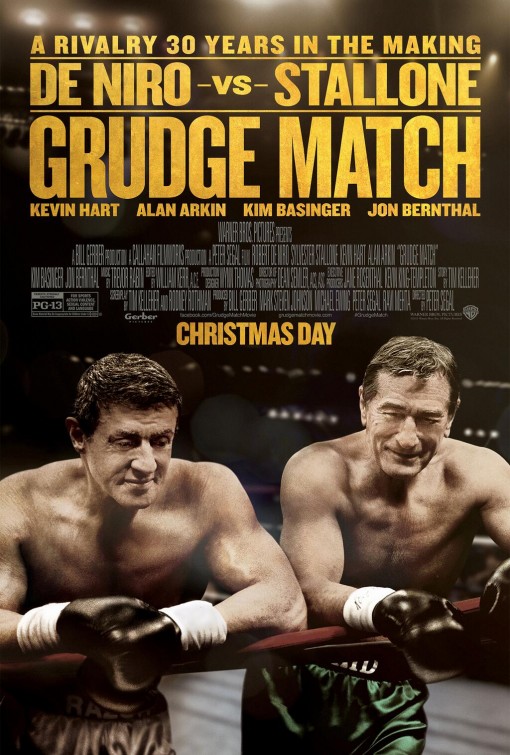
Review – Grudge Match (2013)

Director: Peter Segal

Starring: Robert DeNiro, Sylvester Stallone, Kim Basinger, Kevin Hart, Alan Arkin, Jon BernthalGrudge Match

Hollywood has a history of mashing together popular franchises in the search of blockbuster success. We’ve had AVP: Alien vs. Predator and Freddy vs. Jason. Back in the 1940s you had Abbott and Costello Meet Frankenstein. The same mindset is at play in Peter Segal’s Grudge Match, which may as well have been called ‘Rocky vs. Raging Bull.’ Of course, technically it is not a mash up as it presents new and original characters. But in casting Sylvester Stallone and Robert De Niro in the leads, the filmmakers have inherited the audience’s associations with the legendary pugilists they have previously portrayed. It’s an odd pairing because despite both being about boxing, the two films couldn’t be more different. Rocky is an uplifting sports movie about a likeable underdog who finally gets his shot. Raging Bull is an art-house film about a damaged man whose anger and violence destroys his life. There is a reason there are six Rocky movies and only one Raging Bull.

But this isn’t Balboa vs La Motta. It is Henry ‘Razor’ Sharp vs. Billy ‘The Kid’ McDonnen. Razor and The Kid enjoyed one of the great sporting rivalries in their prime. They met twice in the ring for one victory a piece, with each loss being the only defeat of that fighter’s career. But the third and deciding bout never happened because in the lead up to the anticipated fight Razor shocked the world by announcing his retirement. Thirty years go by before a down-and-out, motor-mouthed promoter manages to coax them back in the ring for the grudge match the world has been waiting to see.

Grudge Match clearly wants to trade off the legacies of Rocky and Raging Bull. So we first meet The Kid doing a rather pathetic nightclub show which is reminiscent of the final act of Raging Bull, and we have the obligatory scene in a meat locker where Razor shapes up to punch a beef carcass before being told not to. There is also a key plot point relating to Razor and the final fight which comes straight out of Rocky II. But as much as it tries to get you to think of those movies, you are also very aware that what you are watching isn’t them. Nowhere is that more apparent than in the training montage which feels eerily quiet without the brass of ‘Gonna Fly Now’ blaring over the soundtrack.

Rather than being a straight up sports movie Grudge Match is a comedy, and that doesn’t help it. The jokes aren’t good enough to make the film genuinely funny, but they are constant enough to be a distraction. Some of the jokes are also in surprisingly poor taste. While De Niro has settled into a career as a comic actor, and Kevin Hart and Alan Arkin are right at home, the comedy format doesn’t make the best use of Stallone. Sly is a better actor than many people give him credit for. He has a real ability to elicit sympathy for a character – it’s part of what made the Rocky franchise work – and in the more dramatic scenes of Grudge Match he acts rings around De Niro. But he struggles with comedy. His sense of timing and his delivery aren’t as strong as his co-stars and the material isn’t good enough to compensate for that.

All of the film’s plot complications feel unnecessarily forced and the final fight, despite being the thing the whole movie has built towards, doesn’t quite crescendo the way that it should. In the end this movie feels as tired as its two aging stars must have after going ten rounds. The most interesting part of the movie comes in the final credits where there is a short scene between Mike Tyson and Evander Holyfield.

Rating – ★☆

Review by Duncan McLean

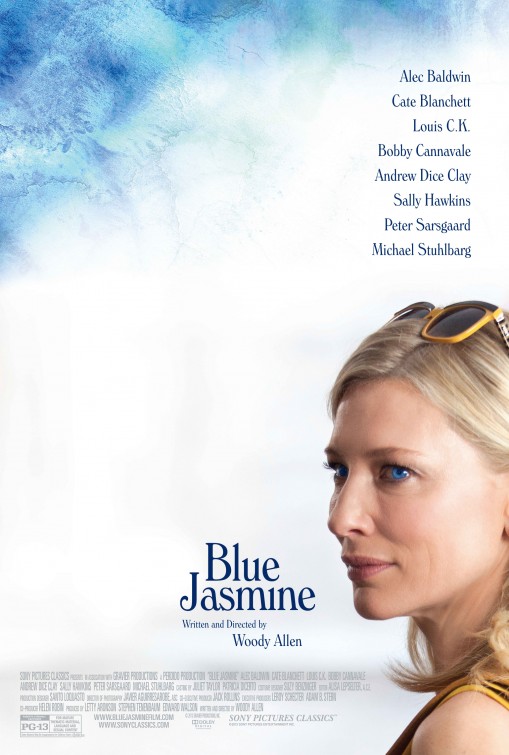
Review – Blue Jasmine (2013)

Director: Woody Allen

Starring: Cate Blanchett, Sally Hawkins, Bobby Cannavale, Andrew Dice Clay, Peter Sarsgaard, Louis C.K., Alden Ehrenreich

Blue JasmineThere are two types of Woody Allen films: those which are just for the Woody Allen fans and those which are for everyone. I suppose there is also a third group: those which kind of miss the mark and fail to please anyone, but that is forgivable for a filmmaker who has made at least one movie a year for the last four decades. His latest film, Blue Jasmine, is one for everyone due in no small part to a lead performance from Cate Blanchett that is really something quite special.

In a classic tale of riches to rags, we first encounter Jasmine as she arrives in a San Francisco to move in with her working class sister, Ginger. A former New York socialite, Jasmine lost everything – her home, her money, her lifestyle and her mind – when her investment banker husband was jailed for some Bernie Madoff-style dealings. While Jasmine formulates a plan to get her life back on track –she takes a computer course with the ultimate aim of studying interior design online – she causes considerable chaos in Ginger’s life.

Indebted to Tennessee Williams’ A Streetcar Named Desire, Jasmine, the latest in a long line of brilliant female characters written by Allen, is our Blanche DuBois. She is a delusional woman forced to move into her sister’s working class life, surrounded by brutish men and pining for her lost life of privilege. As with Blanche, we find ourselves simultaneously drawn to and repelled by Jasmine. On one level we sympathise with her. She has had the rug pulled out from underneath her and is clearly damaged. But as much as she is a victim of her husband’s crimes, she is also a victim of her own self-delusions. Whether it is turning a blind eye to her husband’s shonky dealings and infidelities or changing her name from Jeanette to Jasmine and devising a colourful story about how her mother gave it to her, Jasmine seems content both to be deceived and to deceive herself, and as such has no problem with being false in her engagement with other people.

While the supporting cast of Sally Hawkins, Alec Baldwin, Bobby Cannavale and Andrew Dice Clay is quite excellent, really, this film is all about Cate Blanchett. She is already an Oscar winner and considered among the finest actresses of her generation, but Blue Jasmine may just represent her best work to date. Blanchett’s performance is layered and multifaceted. Jasmine is at once fragile, vulnerable, arrogant and cruel. The film’s narrative structure jumps back and forward in time between Jasmine’s current situation in San Francisco, and her old life in New York, which means that rather than watching the progressive deterioration of a character, we are jumping back and forth to different points in that deterioration. We see in New York Jasmine evidence of the same insecurity and fragility which will overwhelms and then defines her in San Francisco.

Blue Jasmine doesn’t feel like a normal Woody Allen film. The working class setting doesn’t allow for the rapid, pseudo-intellectualism one usually associates with his dialogue, and while there are moments of humour, this is a serious story. But while it isn’t typical, it is none the less Allen – and Blanchett – in top form.

Rating – ★★★☆

Review by Duncan McLean

Five Oscar Nomination Surprises

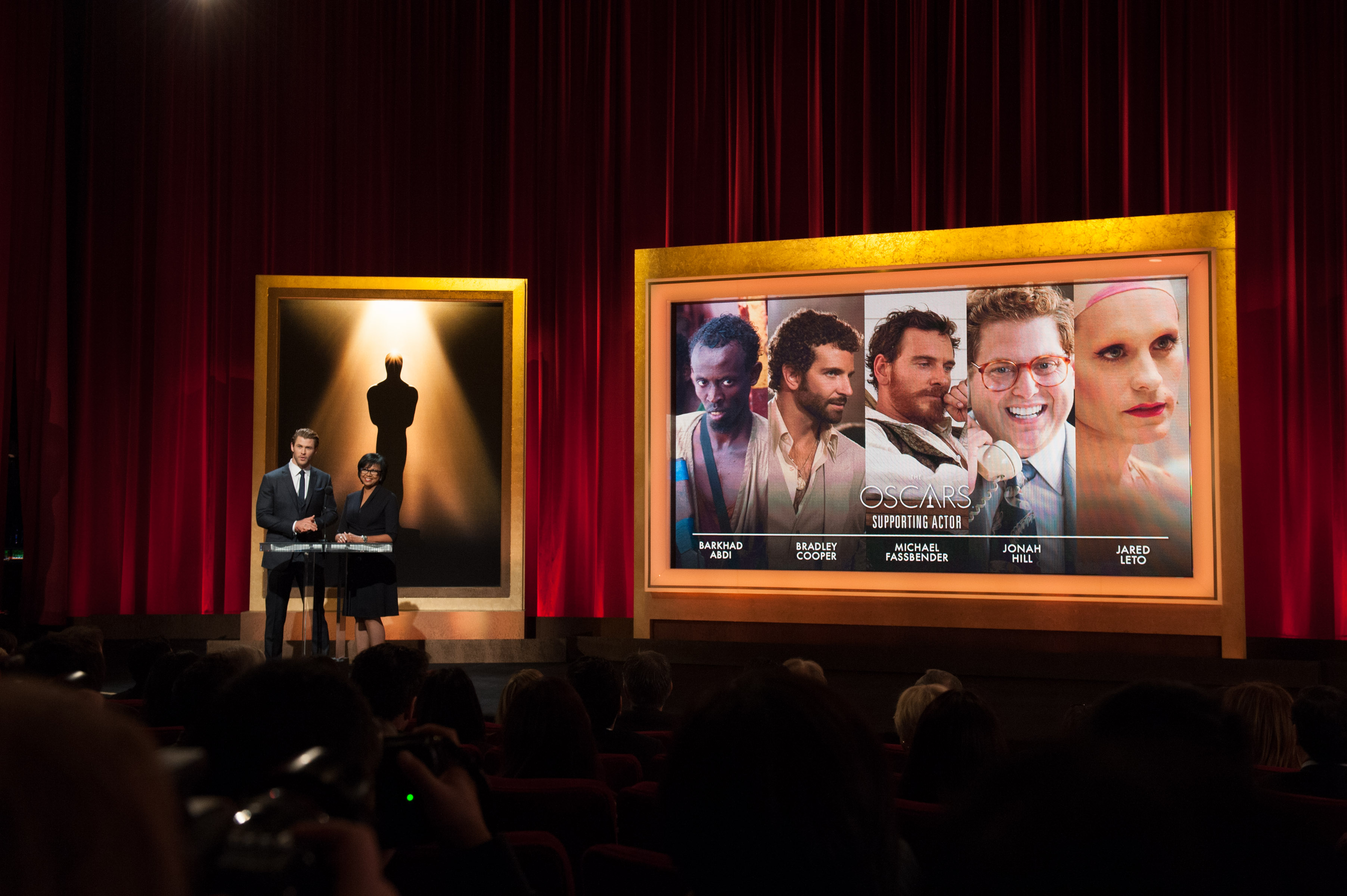
Chris Hemsworth and Academy President Cheryl Boone Isaacs announce the nominations for the 86th Academy Awards

Chris Hemsworth and Academy President Cheryl Boone Isaacs announce the nominations for the 86th Academy Awards

Bright and early on 16th of January the President of the Academy of Motion Picture Arts and Sciences, Cheryl Boone Isaacs, was joined by actor Chris Hemsworth to announce the nominations for the 86th Academy Award to be held on 2nd March. A full list of the nominees can be found here. While there was plenty that we saw coming, as usual the Academy did throw us a few curve balls. This year has been heralded as quite a good year for Hollywood in a critical sense. While some years you would struggle to find five worthy nominees in each category, this year there seemed to be an abundance. As a result most of the surprises have come in the form of omissions rather than inclusions. Here are my picks for the five biggest…

1) The near complete shutout of Inside Llewyn Davis

The Coen brothers have become Academy favourites in recent years and their latest film, Inside Llewyn Davis, has been a critical darling and was expected to be a serious contender. As such, it was a surprise to see it miss out on a Best Picture nomination. This is made all the more significant by the fact the Academy chose only to nominate nine films when there are ten spots available. So it didn’t miss out in favour of something else. It was simply not chosen. Not only did it miss out on a spot in the main category, it was almost completely frozen out, missing out on nominations in the directing, screenwriting and lead acting categories where it would have been considered a chance. In only receiving two nominations (for cinematography and sound editing) Inside Llewyn Davis probably trumped Saving Mr. Banks as the big loser out of the nomination announcements.

2) No Best Actor nod for Tom Hanks

Probably the biggest individual surprise omission was Tom Hanks missing out on a nomination for his performance in the title role of Captain Phillips. A two-time Best Actor winner, Hanks’ was considered by many to be the frontrunner in this category. A win would have put him alongside Daniel Day Lewis as the only men to win three Best Actor Oscars. But as it is that will have to wait for another year.

3) No Best Actor nod for Robert Redford

Robert Redford is a bone fide Hollywood legend but has never won the coveted gold statue. His performance in JC Chandor’s All is Lost, where he played the sole character in the picture, was simply remarkable and left many thinking it put him in the mix for Best Actor – in situations like this the Academy has been known to give someone an award almost as a pseudo-lifetime achievement award. But Redford failed to receive a nomination, with the suggestion being that the film’s distribution company, Roadside Attractions, didn’t campaign as hard as they could have.

4) Blackfish misses out on a Best Documentary nod

Surprises don’t tend to get noticed as much in the documentary categories simply because not as many people have seen them. But in this case, plenty of people have seen Blackfish. The doco exposing the unacceptable living conditions and treatment of the performing Orcas living in Seaworld parks was well received critically and commercially and would have been expecting a nomination.

5) David O. Russell does it again

I don’t know if you can really call this a surprise, but it is definitely historically notable. For the second consecutive year a David O. Russell film has managed to score nominations for Best Picture, Director and Screenplay and all four acting categories. It has only happened 13 times in 86 Oscars ceremonies, so to do it twice, let alone in consecutive years, is impressive to say the least. It seems if you want to get nominated for an Oscar your best bet is to get yourself in a David O. Russell film.

By Duncan McLean

Review – Jack Ryan: Shadow Recruit (2014)

Director: Kenneth Branagh

Starring: Chris Pine, Kevin Costner, Keira Knightley, Kenneth Branagh

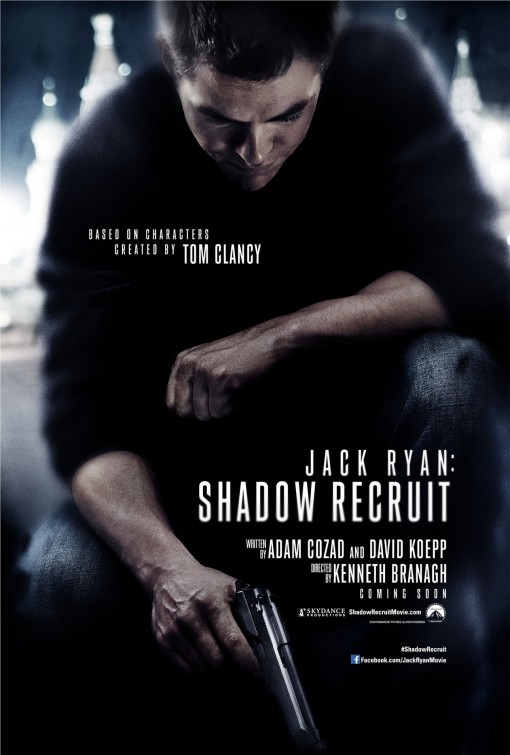
Jack Ryan Shadow RecruitIt has been over a decade since Tom Clancy’s Jack Ryan, the hero of The Hunt for Red October, Patriot Games, Clear and Present Danger and The Sum of All Fears and the man who is to financial analysts what Indiana Jones is to archaeologists, last appeared on our screen. So therefore it is time for a reboot and that is exactly what we get in Jack Ryan: Shadow Recruit.

As reboots are want to do, Jack Ryan: Shadow Recruit takes us back to the beginning for an origins story. After being badly injured in a helicopter attack while serving in Afghanistan, Jack Ryan is recruited by the CIA to work covertly as a financial analyst on Wall Street. There he uncovers a Russian plot to crash the US economy with a terrorist attack. So Ryan finds himself upgraded to operational status and on his way to Moscow to try and work out when and where this attack is going to occur before it’s too late.

Clancy wrote Jack Ryan as a Cold War hero, but Jack Ryan: Shadow Recruit – the first Ryan film not to be directly based on a Clancy novel – recreates him as a hero for the post-9/11 world. It is the attacks on the World Trade Center which compels the young Ryan to abandon his PhD study in London and join the Marines. While in keeping with Clancy’s novels the antagonists in the film are from Russia, it prefers to play off contemporary fears of terrorism and economic meltdown rather than old Cold War tensions.

Having previously been played by Alec Baldwin, Harrison Ford and Ben Affleck, it is Chris Pine’s turn to step into the role. However, despite this being the fifth Ryan film, audiences don’t have the same clear expectations of the character as they do for someone like a James Bond, so the pressure on Pine stepping into the role is not as intense. That said, he does a good job. Unlike his brash, impulsive Captain Kirk, Pine imbues his intellectually brilliant Ryan with a certain vulnerability that is fitting of an agent at the beginning of his career who is not yet battle-hardened.

Pine is surrounded by an impressive supporting cast. Kevin Costner continues his recent career resurgence as a quality supporting actor in his role as the stoic William Harper, the CIA agent who recruits Ryan. As Ryan’s girlfriend, Keira Knightley gets slightly more to work with than the usual love interest character, with some of the scenes between the two of them being quite touching. Kenneth Branagh, who is also directing here, makes for a steely villain as the Russian Viktor Cherevin.

Jack Ryan: Shadow Recruit largely follows the spy thriller playbook established by the James Bond and, more recently, Jason Bourne franchises. In this globetrotting film we move between London, New York and Moscow, and are given regular action sequences, whether helicopter attacks, hand-to-hand combat or car chases. However, the quick cutting shaky-cam used in the action scenes does take audience disorientation to a new level.

While Jack Ryan: Shadow Recruit is a contemporary reboot engaging with contemporary concerns there is something wonderfully old-fashioned about it. It is a classic espionage film. It is still Americans against Russians, it still comes down a race against a ticking time bomb, and it is still quite a lot of fun.

Rating – ★★★☆

Review by Duncan McLean

Review – The Hobbit: The Desolation of Smaug (2013)

Director: Peter Jackson

Starring: Martin Freeman, Ian McKellen, Richard Armitage, Ken Stott, Aiden Turner, Evangeline Lilly, Orlando Bloom, Luke Evans, Benedict Cumberbatch

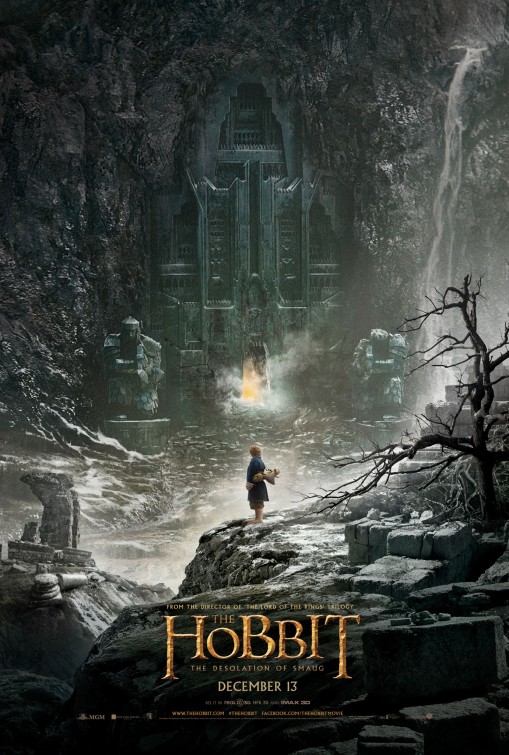
Hobbit - Desolation of SmaugMuch has been written about Peter Jackson’s decision to expand Tolkien’s The Hobbit into a trilogy of films, with more than a few considering it a cynical, opportunist move. After the first instalment, An Unexpected Journey, confirmed the fears of many, underwhelming and feeling unnecessarily drawn out, The Desolation of Smaug faced a tougher task. It is two-and-a-half hours of act two, with no beginning and no end.

The film starts with a flashback: a meeting in a busy pub between Gandalf and Thorin, in which the wizard convinces the aspiring dwarf king to take a hobbit thief named Bilbo Baggins on his quest to reclaim the abandoned kingdom and gold of Erebor. Fast-forward and we pick up where An Unexpected Journey left off, with our band of brothers continuing their journey towards the Lonely Mountain. On their way they will be persued by Orcs, trapped by giant spiders, taken prisoner by the woodland elves of Mirkwood and gain allies in the people of Lake-town, all before finally reaching their destination and coming face to face with the terrible dragon, Smaug.

The good news is that The Desolation of Smaug is a vastly superior film to its prequel – though, of course, that doesn’t take much. While it is still a long film, clocking in at 161 minutes, it doesn’t feel stretched. Unlike the first film in which every individual scene felt too long, the pacing is much better this time around. This film has more momentum, more drive.

Expanding a book that is significantly shorter than The Lord of the Rings into a trilogy of films that is every bit as long naturally requires some additions. While An Unexpected Journey was largely true to the source material, in The Desolation of Smaug this new material starts to come into play. Some of the additions come from unpublished Tolkien manuscripts like “The Quest of Erebor” while others are original ideas from the screenwriters. The most notable of these original ideas is the introduction of a new character, the female head of the Mirkwood Elven guard Tauriel. The introduction of Tauriel has two purposes. Firstly, she allows for a love triangle between herself,  the handsome dwarf, Kili, and Legolas – whose inclusion in the film is another example of artistic license, and, who appears to be Benjamin Buttoning, with Orlando Bloom ten years older than when he first played the part despite the character supposedly being 50 years younger. Secondly, she brings a feminine energy to a film that is otherwise a bit of a sausagefest.

The storyline is by nature episodic as our heroes progress from one location and situation to the next. It is a movie of sequences and set pieces with two specific highpoints. The first is an exhilarating chase sequence which sees the dwarves travelling down a rapid river from Mirkwood in barrels while being pursued by orcs and elves, who battle each other on the river banks. The second is the introduction of the title character, Smaug. Voiced by the world’s busiest actor, Benedict Cumberbatch, Smaug is a both an impressive piece of visual design and a complete and engaging character.

Like An Unexpected Journey before it, The Desolation of Smaug has been shot in High Frame Rate 3D – meaning the camera rolls at 48 frames per second rather than the standard 24 frames – and as with the first film it is difficult to see the purpose of it (outside of the extra couple of dollars you pay at the box office to see it in that format). The resulting aesthetic is very strange. At times it feels like you are watching a videogame, at other times a digital home video. The higher definition is also incredibly unforgiving when it comes to costumes, makeup and digital effects which all look more artificial in the HFR format.

While its only being the middle of the story robs the climactic scenes of some of their power – we have to cut away from Smaug, Bilbo and the dwarves in the halls of Erebor in order to keep tabs on what is going on with other characters – The Desolation of Smaug is a step in the right direction for Jackson’s franchise. Retaining the sense of adventure which differentiates this series from the darker The Lord of the Rings trilogy, this second instalment finds the sense of momentum that was missing from its prequel.

Rating – ★★★

Review by Duncan McLean