Review – Between the Devil & the Deep Blue Sea (2011)

Director: David Schmidt

Starring: Jessie Taylor, Ali Reza Sadiqi

Between the Devil and the Deep Blue SeaArguably the biggest political and humanitarian issue facing Australia over the last decade is that of asylum seekers, or “boat people” as they are un-affectionately known. The discourse over this issue is made up of voices from all sides; the left and the right, shock-jocks, politicians, activists and journalists. But the one group of voices that we consistently don’t hear from are the boat people themselves. David Schmidt’s documentary Between the Devil & the Deep Blue Sea seeks to make those voices heard, to humanise this issue and in doing so explore the question of what compels a person to become a boat person.

Young Melbourne lawyer Jessie Taylor and her friend and interpreter Ali Reza Sadiqi, himself a refugee, travel to Indonesia, the doorstep to Australia for asylum seekers, in order to meet with the men, women and children contemplating making the dangerous journey. Their stories expose us to not only the horrifying situations they are fleeing from – situations made all the more horrifying when they are being explained to you by children – and hopeless inefficiency of the official channels they are trying to follow.

Mostly the film is made up of on-location talking-head footage, but we also get to see footage taken inside a detention centre by a concealed camera Taylor wore under her headscarf. For mine though, the most harrowing image of the film is that of a rickety smugglers boat packed with people being pummeled against the rocks by rough seas.

The filming took place over two years, which means that we are able to get an idea of the progress of the journey. The picture finishes by taking us through all of the people we have heard from in the preceding hour with on-screen titles informing us which have since been resettled in Australia, which have had their claims denied, which are now missing and which have drowned at sea.

Schmidt doesn’t do anything too stylistically complex. He doesn’t experiment with the documentary form. But a film like Between the Devil & the Deep Blue Sea doesn’t need to. By far the most powerful way you can present an issue like this is to simply put the faces of the asylum seekers on the screen and let them tell their story. Any artifice would run the risk of detracting from their impact. Schmidt is smart enough to understand this and thus keeps it relatively simple.

Between the Devil & the Deep Blue Sea is not in cinematic release but has been touring around the country. Visit www.deepblueseafilm.com for more information on how you can see this potent, insightful and important documentary.

Rating – ★★★☆

Review by Duncan McLean

Review – Snitch (2013)

Director: Ric Roman Waugh

Starring: Dwayne Johnson, Barry Pepper, Jon Bernthal, Susan Sarandon, Michael K. Williams, Rafi Gavron, Melina Kanakaredes, Nadine Velazquez, Benjamin Bratt

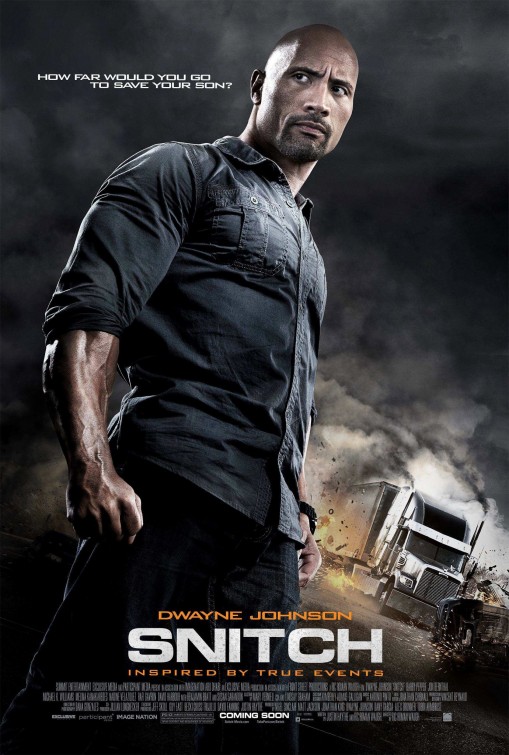
SnitchSnitch, the new movie for Dwayne ‘The Rock’ Johnson, is not quite what you expect it to be. Johnson plays John Matthews, owner of a trucking freight company and father of a young man who has been arrested for intent to deal drugs. While his involvement in the process was nothing more than reluctantly agreeing to accept a Fed-Ex package for a friend, the mandatory minimum laws mean that he is facing at least ten years in prison. His only hope of reducing his sentence is to give up information which leads to the conviction of other drug dealers, but he doesn’t know any.

About half-an-hour into this movie I am wondering what on earth ‘The Rock’ is doing there. This seems like the part for a dramatic actor, not an action hero. But then it starts to become clear. Matthews goes to the U.S. Attorney’s office with a proposal. While his son might not be able to name any drug dealers, what if Matthews can go out and find some? A deal is struck and John Matthews is now an undercover drug-dealer hunter. With his access to semi-trailers an attractive proposition for dealers it doesn’t take long before Matthews is deeper involved than either he or the U.S. Attorney ever imagined he would be.

As an action movie, Snitch is less in the Arnold Schwarzenegger/Sylvester Stallone tradition, where you would expect a wrestler-turned-actor to make their home, and more in Mel Gibson/Harrison Ford vein. The film even culminates in a semi-trailer chase sequence which is reminiscent of Mad Max 2, minus the post-apocalyptic wasteland. Instead of being non-stop explosions and whammies, director Ric Roman Waugh, whose background is as a stuntman, delivers a film with decent narrative pacing and balance and a surprising amount of genuine emotion. The problem this presents though is that Dwayne Johnson as your leading man sometimes lacks the dramatic range to pull off some of the film’s more human moments.

You don’t often hear this said about an action movie, but Snitch has a really interesting musical score. Composed by Brazil’s Antonio Pinto, the score consists primarily of strings and percussion, and prominently features a single cello, which gives the sound a real Deadwood feel. The music ends up being the most surprising and original aspect of the film.

Waugh and Johnson, who is also one of the film’s producers, appear to have intended for this film to be seen as a political comment about the problems with the mandatory minimum system – the film finishes with captions giving figures comparing mandatory minimum drug sentence lengths to those of murder and rape convictions – but I don’t know that many viewers will engage with the movie on that level. However, if you are capable of suspending your disbelief and accepting the storyline before you, you will find Snitch to be a reasonable action film.

Rating – ★★

Review by Duncan McLean

Oscars 2013 Recap

The Host

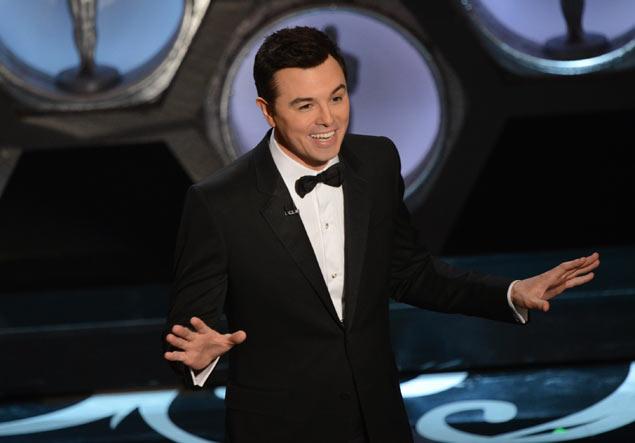
This year the most thankless job in Hollywood went to Family Guy creator Seth McFarlane, in a move which was obviously supposed to give the ceremony a bit of edginess and youth appeal (and on that front it was a success with the viewer numbers in the US up 20% from last year). The reviews of McFarlane’s performance have ranged from lightly positive to downright scathing. It’s a tough job at the best of times, but it was made all the tougher, as he alluded to, by the fact that Tina Fey and Amy Poehler had been so universally praised for the job they did at the Golden Globes a few weeks ago.

Oscars host Seth McFarlane

Oscars host Seth McFarlane

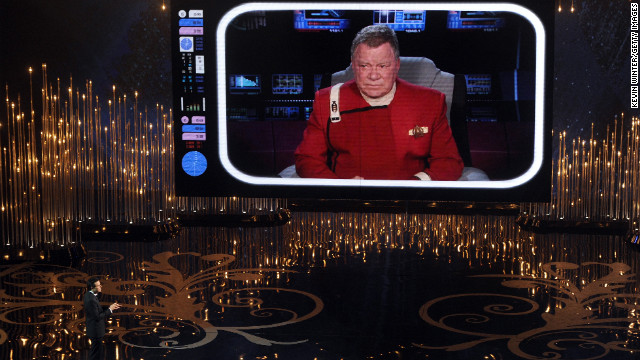
McFarlane was a bit hit and miss, as most hosts are, but was largely exactly what anyone who is familiar with him expected him to be. His opening bit, in which he conversed with William Shatner as Captain Kirk who was contacting him from the future to warn him against all the mistakes he was going to make as a host, came in at 19 minutes and was just way too long. There was a good idea there, but it was just stretched too far.

The humour in McFarlane’s television and film work comes from two sources: crossing the line of good taste and being inappropriate, and very specific pop-culture referencing. Both were on display on Oscar night. While it was apparent that he was reining himself in to some extent, McFarlane was always going to try and push things a little bit. Sometimes it worked and sometimes it crossed the line. The joke about no actor being able to get inside the head of Abraham Lincoln quite like John Wilkes Booth, was in typically poor taste but it got a good laugh. The “We Saw Your Boobs” song in his opening number didn’t go down so well, being just one of a number of incidents which led feminist commentators to accuse the host of misogyny (though as Family Guy co-writer Alec Sulkin pointed out on twitter, it seems slightly ironic to accuse the host of misogyny on a night that was also celebrating fifty years of James Bond).

Captain Kirk helps out Seth McFarlane

Captain Kirk helps out Seth McFarlane

McFarlane may have been better served to more heavily favour the pop-culture referencing, given he was in a room full of people who live and breathe movies and would therefore understand that kind of referencing and in-joking. His introduction of Christopher Plummer, in which he pointed to a side door to usher in the Von Trapp family singers only to have a young Nazi run in and exclaim “They’re gone!” went down a treat.  A bit more of that sort of stuff and a bit less of jokes about nine-year-old Quvenzhané Wallis being a potential future girlfriend for George Clooney, and he may have got a more generally positive response.

The Presenters

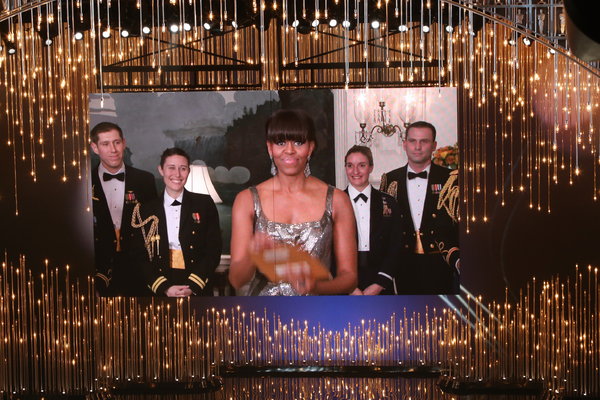
This year it was really pleasing to see a bit of class return to the Academy Awards on the presenter front. The Oscars are an institution and an important part of maintaining that sense of grandeur is having big names presenting awards. In recent years the really big names have been notably absent, but this time around the presenters included screen legends such as Christopher Plummer, Michael Douglas, Jane Fonda, Meryl Streep (because she wasn’t actually up for an award this year) and Jack Nicholson. Their presence brought a bit of prestige to the event. That being said, I want to have one whinge. Jack Nicholson was brought out to present the Best Picture award, but had to hand over to Michelle Obama who appeared via a live video cross from the White House. Michelle Obama is a good get for the Academy, however, in this situation I don’t think she trumps Jack Nicholson (especially not on video). Jack is one of Hollywood’s absolute living legends, and being in the twilight of his career and not doing a lot of publicity means we don’t really see much of him. Michelle Obama tends to appear on the nightly news just about every day, so I felt that her presence was a waste of valuable Jack time.

Not even Barack is as in love with Michelle Obama as the woman on her left

Not even Barack is as in love with Michelle Obama as the woman on her left

As always, the presenters were a bit hit and miss in their attempts at pre-announcement banter. Paul Rudd and Melissa McCarthy take the cake for least funny seemingly adlibbed jokes, and Kristen Stewart and Daniel Radcliffe have no business being on stage at an Academy Award ceremony at this point in their careers (Stewart was her usual grumpy self but at least this time had the excuse of an injured foot).

Moment of the night from a presenters point of view was Mark Wahlberg who had to present the Best Sound Editing category in which there was a tie. Clearly taken aback by what he was reading, Wahlberg felt he needed to convince the crowd that he wasn’t having them on, so in classic Boston fashion stated “No BS. We have a tie.” When I was saying before that the presenters brought back a bit of class to the event, I wasn’t so much thinking about Marky Mark.

The Awards

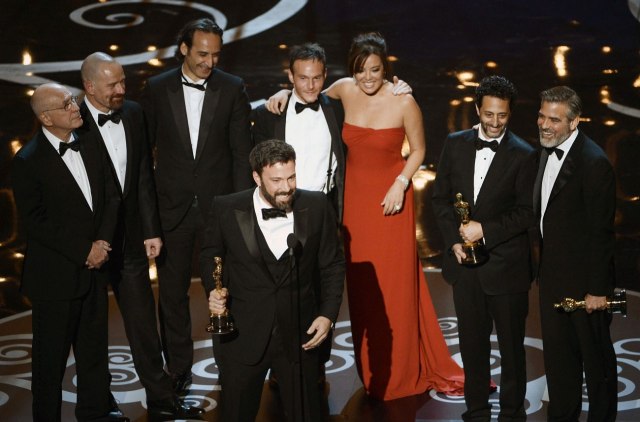
Despite the fact that this was one of the more open Academy Awards in recent history it ended up being a night almost entirely devoid of surprises on the awards front. Argo followed on from its dominance of the lead up awards to claim Best Picture. Daniel Day Lewis cemented his position as one of the all-time greats with his win for Lincoln making him the first man to win the Best Actor award on three occasions. Jennifer Lawrence tripped over on her way up to collect her Best Actress award. Christoph Waltz’s magic relationship with Quentin Tarantino continued as he claimed his second Best Supporting Actor Oscar from two collaborations. Anne Hathaway won the one award which was such an absolute lock you could have bet your house on it. In fact, the only major award in which the bookies’ favourite didn’t walk away with the statue was Best Director, in which Ang Lee pipped Steven Spielberg (but that category was a shambles from the moment Ben Affleck and Kathryn Bigelow were left off the nominations list).

Argo takes out Best Picture

Argo takes out Best Picture

The speeches are always the least interesting part of an awards night. After the excitement of finding out who wins you then have to sit through a couple of minutes of them listing names of people you don’t know. In a nice, if not overly subtle, comic touch, the decision was made to replace the usual play-them-off music with the theme from Jaws, with John Williams’ ominous tones letting rambling recipients know that their time was up. As is always the case, there is a bit of a double standard when it comes to playing them off, with winners of lesser awards being cut while Quentin Tarantino was able to finish his speech, walk away from the microphone and then come back to say one more thing and have the music stop for him.

Christoph Waltz spoke beautifully, Adele spoke horribly (but that is more to do with the fact that her speaking voice is every bit as ghastly as her singing voice is wonderful). Daniel Day Lewis got big laughs for his revelation that he and presenter Streep had, after much thought, decided to switch roles, as he was originally meant to play Margaret Thatcher and she Abraham Lincoln. But for mine, best line of the night goes to Argo producer Grant Heslov who, standing between co-producers George Clooney and Ben Affleck, opened his acceptance speech with “I know what you’re thinking… three sexiest producers alive.”

The Musical Numbers

The “theme” for this year’s ceremony was a celebration of movie musicals, seemingly because Les Misérables had been nominated for Best Picture and because it was ten years since the last time a musical won Best Picture (Chicago). It was a bit of a shame, therefore, that a number of the musical numbers for the evening were a bit flat.

Both Shirley Bassey, singing ‘Goldfinger,’ and Adele, singing ‘Skyfall,’ appeared to be singing within themselves, not really punching the big notes, except for the last “Gold” which Dame Shirley hammered. The cast of Les Misérables came out to sing a number, an awkward mash-up of ‘Suddenly’ and ‘One Day More’ designed to give everyone a bit to sing, even if they are not in that scene, without going on too long, which just ended up sounding a bit messy.

While there was nothing spectacular about Barbara Streisand’s performance of ‘Memories’ as part of the In Memoriam section, it was still a reasonably big deal to see her on stage. But Jennifer Hudson was the absolute standout for the night and really brought the house down with her rendition of ‘And I Am Telling You I’m Not Going’ from Dreamgirls, appropriately receiving a standing ovation.


As it turns out, after it was all said and done the moment of the night didn’t even happen as part of the ceremony, but in the interviews after. Jack Nicholson, obviously agreeing with me that Michelle Obama got in the way of valuable Jack time, decided that he would interrupt Jennifer Lawrence’s interview with ABC. Classic Jack…

by Duncan McLean

Best Picture Breakdown

This year’s Best Picture race is one of the most open in recent memory, with no film being expected to dominate proceedings and take home a swag of awards. Obviously this means that it is going to be trickier than usual to tip the winner. When it comes to tipping Oscar winners it is important to remember that you are tipping who you think will win the award, not necessarily who you think should win the award. For that reason, sometimes it is more difficult to accurately tip award winners when you have seen a number of the films, because your own tastes and opinions tend to cloud your judgement. So what follows is a simple for and against for each of the nine nominees for this year’s Best Picture award. Then you can weigh up the arguments, see which you think is the most convincing, and then blindly guess the same way you do every year.
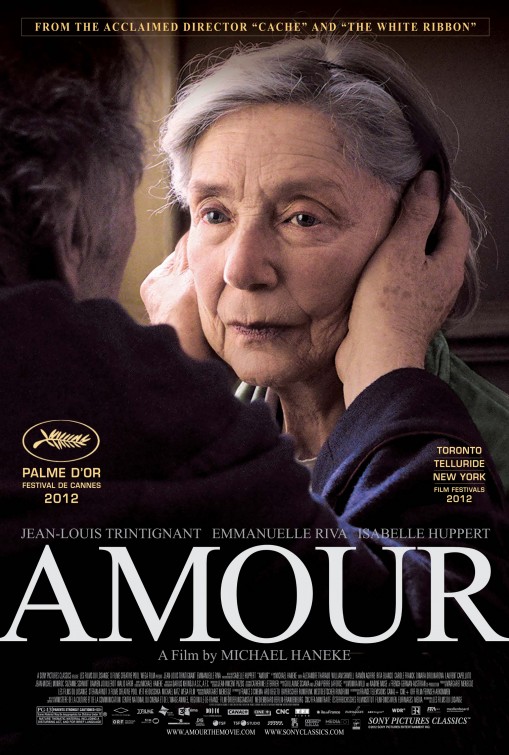
Amour

Amour

Five Nominations

Notable Awards: Cannes Film Festival Palme d’Or, BAFTA Best Film Not in the English Language, Golden Globe Best Foreign Language Film, European Film Awards Best Film, National Board of Review Best Foreign Film, National Society of Film Critics Awards USA Best Film

Why Amour will win: Amour is only the ninth foreign language film in 85 years to even get a nomination for the big award, and the fact that it has five nominations all up, including for Director (with Cannes Film Festival darling Michael Haneke making the cut ahead of the likes of Tarantino, Bigelow and Affleck) and Screenplay, two categories which usually go with a Best Picture win, suggests that the Academy sees this film as a legitimate contender, rather than just rewarding it with an also-ran nomination. And hey, a French film took home Best Picture last year. So it can happen.

Why Amour won’t win: You want to know how many times a foreign language film has won Best Picture at the Oscars? Zero. It has never happened. The closest you can get to foreign language winners are The Godfather Part II, The Last Emperor and Slumdog Millionaire which all won Best Picture and contained sequences of dialogue in Sicilian, Mandarin and Hindi respectively.
 

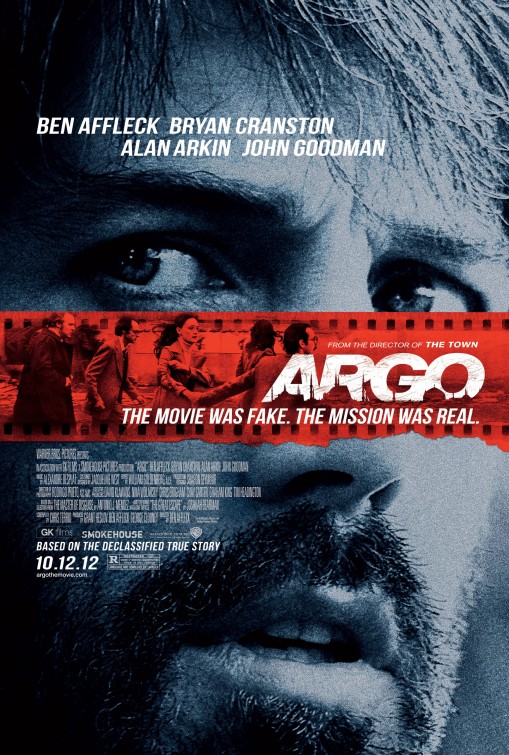
Argo

Argo

Seven Nominations

Notable Awards: Golden Globe Best Drama, BAFTA Best Film, DGA Outstanding Directorial Achievement in Motion Pictures, SAG Best Ensemble Cast in a Motion Picture, AFI Movies of the Year, National Board of Review Top Films

Why Argo will win: Momentum. After initial fears that Affleck missing out on a Best Director nod meant the film wasn’t really in the running, in recent weeks Argo has firmed as the favourite after taking out a number of lead up awards. Winning the Golden Globe isn’t always the best guide to picking the Oscar winner, but winning the Directors Guild of America Award is. Despite there being two best picture awards at the Golden Globes, one for drama and one for musicals or comedy, only four times in the last ten years has the winner of one of those two awards gone on to win Best Picture at the Oscars. On the other hand, nine out of the last ten films to pick up the Outstanding Directorial Achievement in Motion Pictures award at the DGA awards have gone on to win Best Picture at the Oscars that year (the only one to miss out was Brokeback Mountain which was pipped for the Oscar in a bit of a surprise by Crash in 2006). Hence the reason a number of eyebrows were raised when Ben Affleck won that award this year.

Why Argo won’t win: The big red flag next to Argo is the fact that Ben Affleck did not receive a nomination for Best Director. Across the previous 84 Academy Award ceremonies, only three times has a film won the top award despite its director failing to receive a best director nomination, with Driving Miss Daisy in 1990 being the only example since the early 1930s. Of course, in the last couple of years the Best Picture field has expanded from five nominees to up to ten. So whereas once it was the norm for the five Best Picture nominees to provide the five Best Director nominees, under the new system there will always be at least four or five Best Picture nominees that won’t be represented in the directing field. The temptation is to see those films which don’t also get a Director nod as the also-rans in the field.
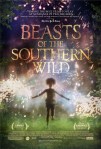
 

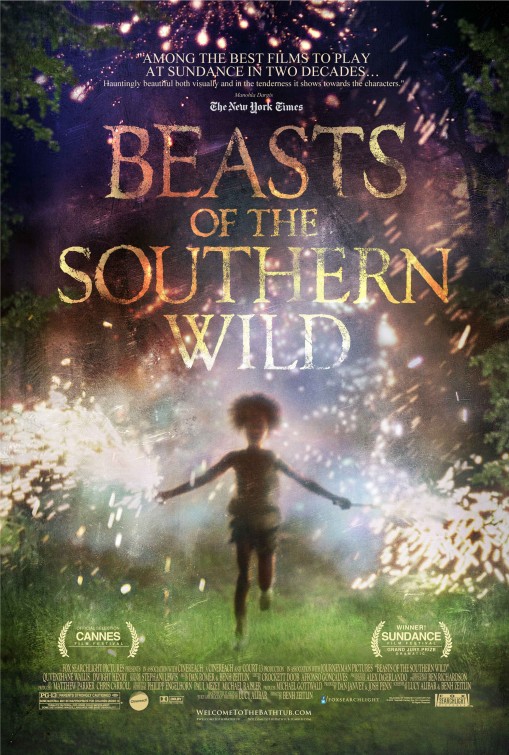
Beasts of the Southern Wild

Beasts of the Southern Wild

Four Nominations

Notable Awards: Sundance Film Festival Grand Jury Prize, AFI Movies of the Year, NBR Top Films

Why Beasts of the Southern Wild will win: The Beasts of the Southern Wild is the little film that could. The surprise hit of the year, it came out of nowhere to feature prominently in a number of Best Films of 2012 lists. It definitely stands out in the field as something totally different. A small budget, artistic premise, a six-year-old leading lady and a debut director (both of whom have been nominated in their respective categories). Could the Academy voters get swept up in the fairytale of it all? It’s also not unheard of for a directorial debut to win Best Picture. Sam Mendes’ American Beauty, Kevin Costner’s Dances with Wolves and James L. Brooks’ Terms of Endearment are the most recent to have done it.

Why Beasts of the Southern Wild won’t win: Small indie films win festival awards, they don’t win Academy Awards.
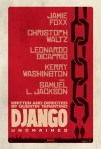
 

Django Unchained1

Django Unchained

Five Nominations

Notable Awards: AFI Movies of the Year, NBR Top Films

Why Django Unchained will win: There is the feeling that Tarantino has been working his way towards Academy recognition. He is one of the most influential filmmakers of the last twenty years and the Academy don’t want to find themselves in the same situation that they had with Martin Scorsese where it wasn’t until almost forty years into his career, and after helming a number of films regarded as all-time greats, that he finally won a Best Picture and Best Director award. Inglourious Basterds got close. Could Django Unchained be the film the Academy recognises (even though Tarantino himself failed to get a nomination)? Also, Django Unchained really stands out in the field for its appeal to the youth demographic. The Academy Award ceremony has been trying hard for the last couple of years to appeal to the youth demographic, to maintain relevance and combat a declining viewership. Could the same thinking enter the voting process?

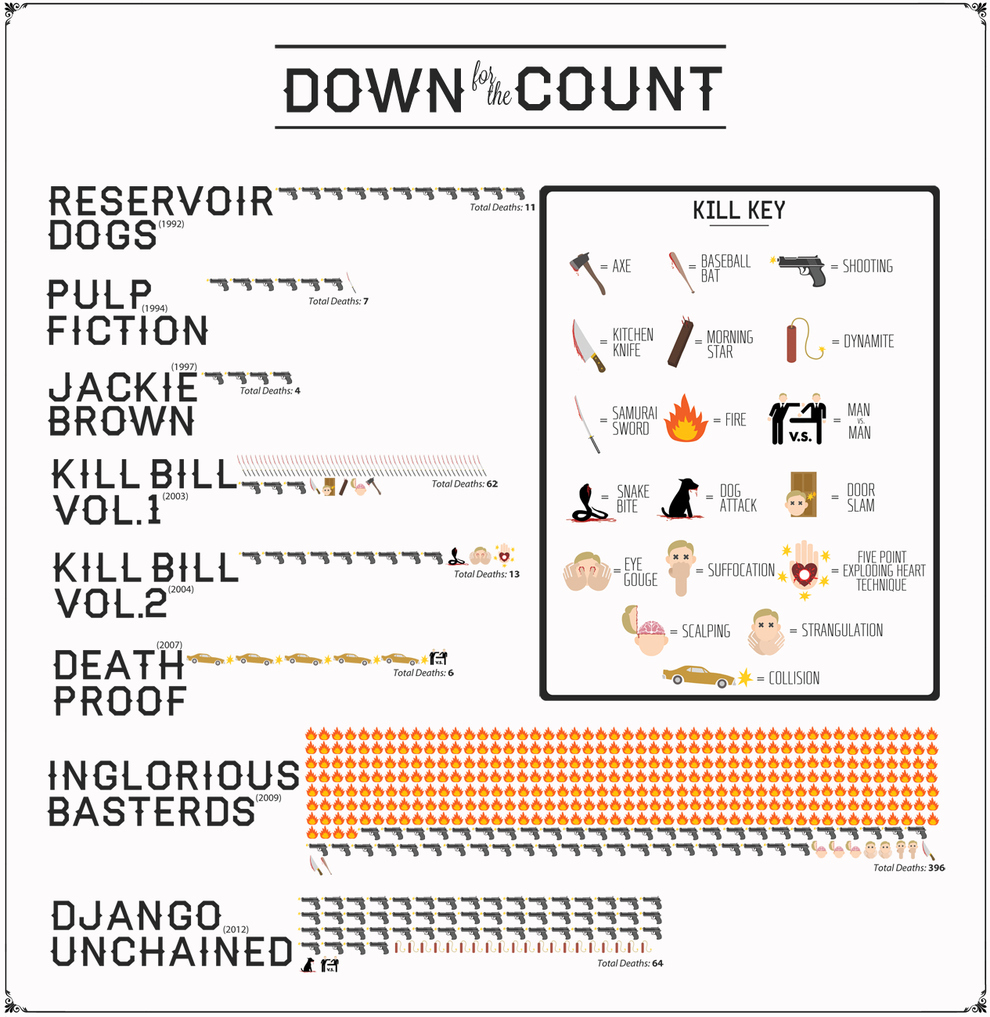
Why Django Unchained won’t win: Tarantino’s eighth feature film seemed to be firming as a real Oscar contender until the Sandy Hook Elementary School shooting happened. It changed the story. After that event rather than slavery or spaghetti westerns Tarantino found himself, once again, forced to talk about excessive violence in his cinema. He then failed to receive a Best Director nomination, and unlike Argo and Zero Dark Thirty which have maintained their relevance in this race despite missing Director nominations, Django Unchained seems to have fallen by the wayside. You could also argue that Django Unchained isn’t as good as Inglourious Basterds was and it is competing in a stronger field. So if the Academy wasn’t willing to favour Tarantino in 2010 it doesn’t look like they will in 2013.
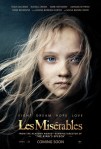
 

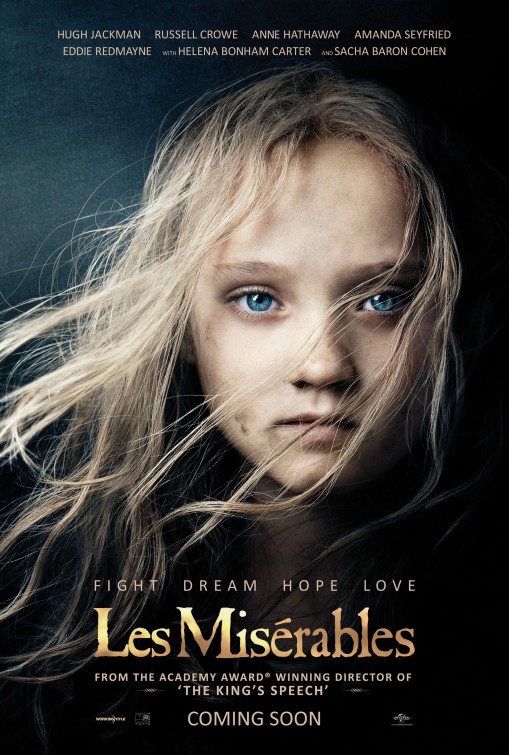
Les Miserables Poster

Les Misérables

Eight Nominations

Notable Awards: Golden Globe Best Musical or Comedy, AFI Movies of the Year, NBR Top Films

Why Les Misérables will win: Les Misérables seems like an obvious contender. You have one of the most popular stage musicals in history being finally brought to the screen with an all-star cast (two of whom have been recognised with acting nominations) by an Oscar-winning director. Tom Hooper followed up his surprise success with The King’s Speech by opting for this very ambitious project. It is a significant upping of scale from his previous films and could help with the perception of him progressing and evolving from his previous success. The other X-factor for the film was the unconventional approach to shooting the musical numbers, with the actors singing live on set rather than lip-synching to pre-recorded songs. Could this experimental approach, which allows much more performative freedom to the actors, be deemed as worthy of recognition from the Academy?

Why Les Misérables won’t win: In the 1960s there were four musicals that walked away with the Best Picture award: West Side Story, My Fair Lady, The Sound of Music and Oliver! In the 44 years since Oliver! won only one musical has the award, Chicago in 2002. That is a roundabout way of saying that musicals don’t tend to fare well in recent times. And Les Misérables isn’t even just a musical, it’s practically an opera. Also, Russell Crowe.
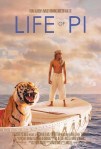
 

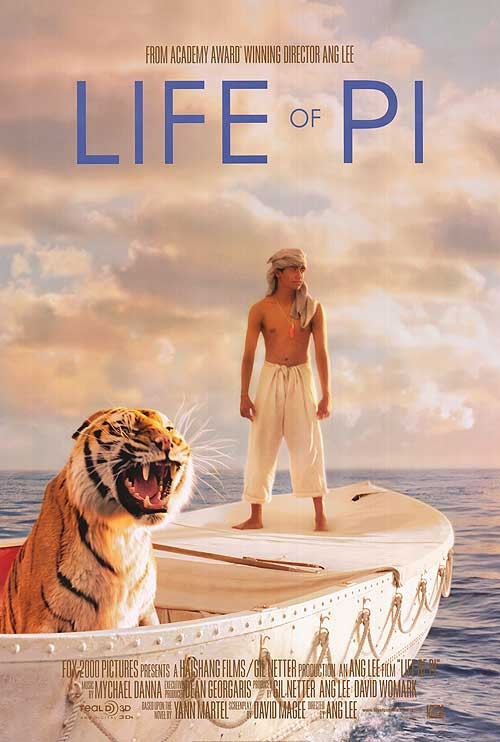
Life of Pi

Life of Pi

Eleven Nominations

Notable Awards: AFI Movies of the Year

Why Life of Pi will win: Ang Lee, an Academy favourite, has taken a much-loved book which many thought was unfilmable and brought it to life, at the same time as showing the industry the potential of digital and 3D technologies. Life of Pi is tipped to be a major player in the Visual Effects and Cinematography fields, but the fact that the film also received nominations for Best Adapted Screenplay and Best Director suggests it is seen as more than just a technically impressive film. For a film which is at best being talked about as an outside chance, it is worth noting that Life of Pi has earned more nominations than any film other than Lincoln.

Why Life of Pi won’t win: With the film being tipped to do so well in the technical categories, there is the danger Academy voters will see Life of Pi’s primary achievement being technical, that it is first and foremost a beautiful looking film. Very rarely do films come out on top in the Best Picture category on the grounds of being amazing technical achievements. Titanic ? Maybe Lord of the Rings?
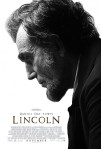
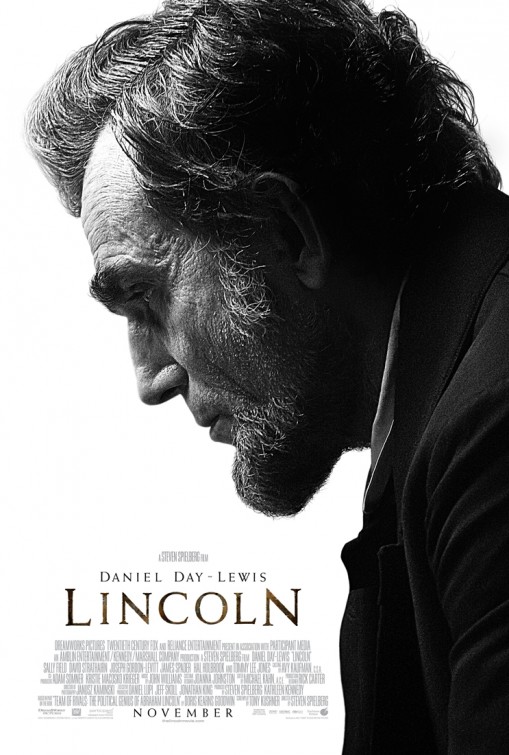
Lincoln

Lincoln

Twelve Nominations

Notable Awards: AFI Movies of the Year, NBR Top Films

Why Lincoln will win: Do I have to spell it out for you? A period drama about America’s most worshiped president, directed by the world’s biggest director, with an all-star cast led by arguably the finest actor of his, or any, generation. How could it not win?

Why Lincoln won’t win: For all the above reasons, Lincoln feels almost too good to be true. In the eyes of many people it just smells like Oscar bait, and sometimes the Academy reacts against that. Also, this film more than any other in the category had to deal with the weight of serious expectation when it came out. It is a fantastic film, but everyone expected it to be. Has it done enough to exceed people’s expectations and win voters over, or will the high expectations it had to deal with mean it gets overlooked in favour of one of the more “surprising” films.
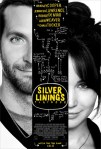
 

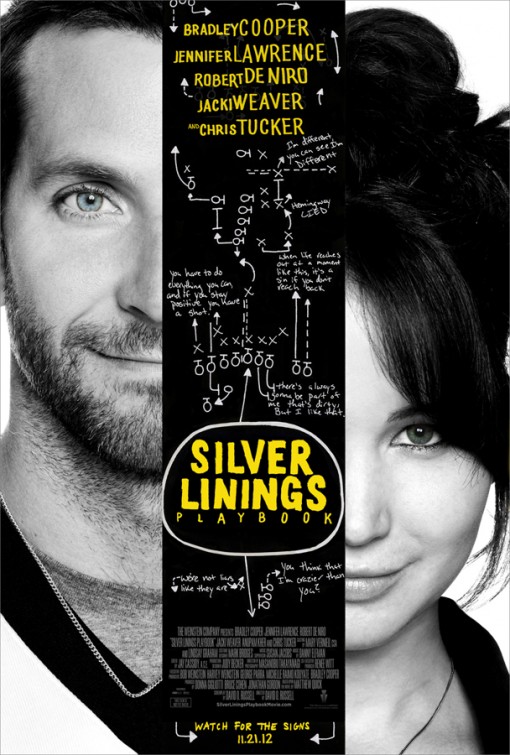
Silver Linings Playbook

Silver Linings Playbook

Eight Nominations

Notable Awards: NBR Top Films

Why Silver Linings Playbook will win: While it’s eight nominations is not the most by any candidate this year, it is the categories they came in which is significant. Usually we talk in terms of the ‘Big Five’ categories (Picture, Director, Actor, Actress, and one of the Screenplay categories). In also getting nominations in the Supporting Actor and Actress categories, Silver Linings Playbook is the first film in 32 years (since Warren Beatty’s Reds in 1981) to get nominations in the Big Seven categories. It suggests that the Academy sees this as being an excellent achievement across the board. It also should be noted that the last three films to receive nominations in the big five categories (Million Dollar Baby, American Beauty, The English Patient) all went on to win Best Picture.

Why Silver Linings Playbook won’t win: While it feels unfair to pigeonhole Silver Linings Playbook as a romantic comedy, when it boils down to it that is what it is, a brilliantly written romantic comedy. And unfortunately for David O. Russell, comedies don’t traditionally fare well in this category. In the last thirty years the only two films which could be described as comedies to have won Best Picture are Shakespeare in Love in 1998 and The Artist in 2012. Also, despite scoring nominations across the big seven categories, it is really only Jennifer Lawrence who is considered among the favourites. So it is entirely possible that Silver Linings Playbook could be staring down a shutout.
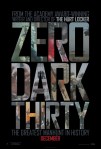
Zero Dark Thirty

Zero Dark Thirty

Five Nominations

Notable Awards: NBR Best Film, AFI Movies of the Year

Why Zero Dark Thirty will win: Before it had even been released, Zero Dark Thirty had already won the New York Film Critics film of the year award, and early on it was seen as Lincoln’s primary competition for the Best Picture Oscar. In recent times its momentum has plateaued a bit, particularly with Bigelow failing to receive a Best Director nomination, but still remains among the serious contenders. The film is a harsh and unimpassioned look at the hunt for bin Laden and, as such, has an immediate political significance. As yet we haven’t seen an Oscar go to a film dealing directly with the events of 9/11 and its aftermath, but none of them have been as good as this one and perhaps the closure to the story that comes from the death of bin Laden means voters are ready.

Why Zero Dark Thirty won’t win: While Zero Dark Thirty is seen as one of the real contenders it has had to deal with some controversy surrounding the perceived messages it sends about the use of torture as an interrogation method. Is the film pro-torture? The Oscars are not a ceremony that tends to court controversy. There is nothing particularly edgy about the Academy. The hint of something being divisive could frighten off the voters.

——-

So with all that in mind, I think the nominees can be broken up into four categories…

The Contenders: Argo, Lincoln, Zero Dark Thirty

The Potential Dark Horses: Life of Pi, Silver Linings Playbook

The Outsiders: Amour, Django Unchained

Thanks for Coming: Beasts of the Southern WildLes Misérables

by Duncan McLean

Review – The Intouchables (2011)

Directors: Olivier Nakache, Eric Toledano

Starring: François Cluzet, Omar Sy, Anne Le Ny, Audrey Fleurot

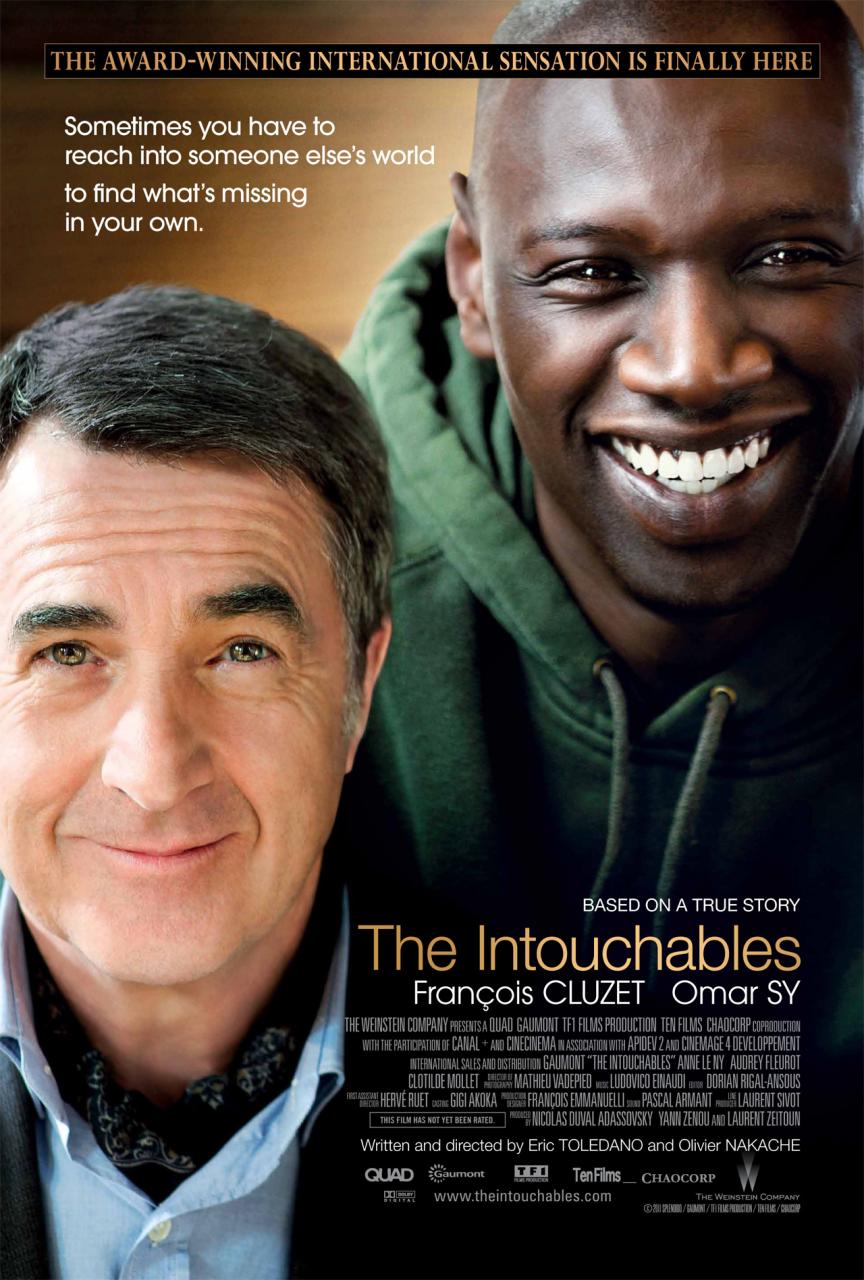
IntouchablesOne of the biggest surprises in the world of cinema last year was the amazing success of the French film Intouchables. The story of an unlikely friendship between an aristocratic quadriplegic, Philippe, and the young, black man from the projects, Driss, who he hires as his caretaker became the second highest grossing film in the history of the French cinema after only eight weeks in cinemas. And armed with the hybrid English/French title The Intouchables (I assume they wanted to avoid being mixed up with Brian De Palma’s  The Untouchables), it would go on to conquer the world, taking almost $300 million at the international box office and becoming one of the year’s most loved films.

The Intouchables is an uplifting experience. Based, loosely, on a true story (though we’ve seen similar concepts before in films like Driving Miss Daisy and Scent of a Woman), this story of a friendship that transcends socio-economic, class and race barriers makes you see the potential for good in humanity. That’s why people have responded so strongly to it. That’s why people love it.

The success or failure of a buddy movie invariably comes down to the chemistry between the two protagonists, and The Intouchables has it in spades. Both François Cluzet and Omar Sy put in magnificent performances. Cluzet, who is a dead ringer for Dustin Hoffman, has the added hurdle of being restricted to only acting from the neck up, but he manages to brilliantly embody the frustrations of a man trapped in a useless body. Sy, a French comedian, is very charismatic as Driss, who brings some colour and life into Philippe’s world.  Sy won best actor at the César Awards, France’s equivalent to the Oscars, edging out not only Cluzet, but also Jean Dujardin for his work in The Artist which would go on to win him an Oscar.

There has been an interesting discrepancy between the public response to this film, which has been huge, and the critical response, which has been lukewarm. As an example of this, if you go to The Intouchables’ IMDb page you will see the film has an impressive user rating of 8.6/10, but right next to it is its Metacritic rating (a rating devised from the positivity or negativity of reviews in major American publications) which is only 57/100. The primary reason I can see for this is that as you watch The Intouchables you can feel your buttons being pushed. It is a very calculated film in how it goes about engaging you emotionally. Of course, every film manipulates your emotions. The filmmaker uses the tools at their disposal to try and elicit a certain emotional response from the viewer. The key, though, is to do it subtly, so the viewer feels the emotion without feeling the manipulation (George Lucas once said, “Emotionally involving an audience is easy. Anybody can do it blindfolded. Get a little kitten and have some guy wring its neck”). At times The Intouchables lacks that subtlety. There are scenes, moments and events which you can tell are there solely to make you feel something. For most casual viewers, that doesn’t really matter, but for a cynical critic who spends their life watching and analysing films, seeing it so blatantly could be off-putting.

As lovely, positive and compassionate as this film is, there is one thing which I feel cannot pass without comment. Beneath the film’s feel-good qualities, you find something quite troubling: how much it indulges in racial stereotyping. As loveable a character as Driss is, and as much as the film encourages to like him, it doesn’t change the fact that we are presented with a black character who is unemployed (seemingly by choice), uncultured, a thief, a drug user, prone to using physical aggression to intimidate people, irreverent, lecherous and, of course, a great dancer (not all stereotypes are negative). All of this in a world full of white people who are largely none of those things. Now you may be tempted to point to the fact that the film is “based on a true story” and argue therefore that if that is what he was like then that is what he was like. The problem with that argument is that it doesn’t appear that that is what he was like. At the end of the film we are shown a short glimpse of the real life men who the characters of Philippe and Driss are based on and, guess what? The man who inspired Driss is not black. He is an Arab named Abdel Sellou from the former French colony of Algeria. This prompts some awkward questions, particularly in a film as calculated in the way it engages with your emotions as The Intouchables is. Even if it is an accurate portrayal, with Sellou being exactly like Driss is portrayed in the film, the decision was still made at some point to recast him as a black man, with his blackness then becoming a key aspect of his identity in the film. Why? Was a black character deemed more marketable than an Arab character? Did they feel there was more comedy in a black character than an Arab character? Was it just that they wanted to cast Omar Sy? I don’t know the answer to the question, just that is it a troubling question that presents itself.

While some people may avoid French films, expecting them to be too arty and weighty, The Intouchables is really accessible. Awkward potential racism aside, it is a delightful story of the most unlikely of friendships. It is feel-good, warm-the-cockles-of-your-heart filmmaking at its finest.

Rating – ★★★★

Review by Duncan McLean

Review – The Magic of Belle Isle (2012)

Director: Rob Reiner

Starring: Morgan Freeman, Emma Fuhrmann, Virginia Madsen, Madeline Carroll, Nicolette Pierini, Ash Christian, Fred Willard, Kenan Thompson, Kevin Pollak

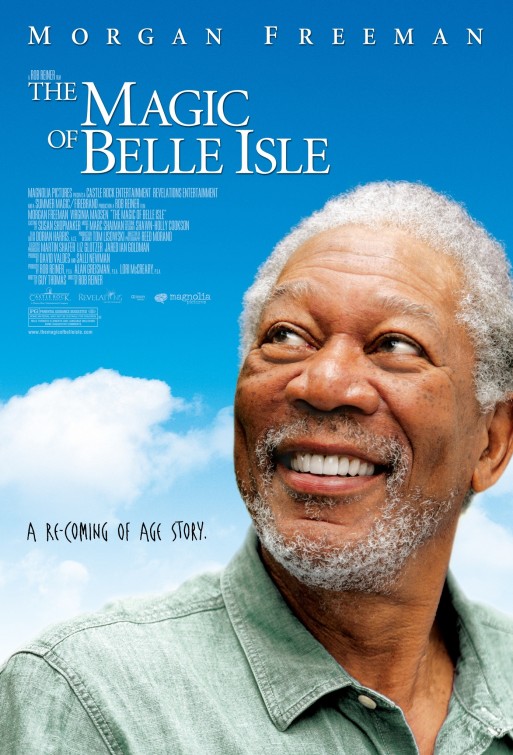
Magic of Belle IsleMonte Wildhorn is a grumpy old man. Once a respected author of Western epics, he has not written a word since the death of his wife. Instead, the wheelchair-bound curmudgeon has devoted himself fulltime to his drinking. One summer his nephew organises him a summer house in the small town of Belle Isle for him to stay at and clear his head. The house comes with a dog and neighbours – a recent divorcee and her three young daughters. As the summer goes on, Monte lets down his guard and with the help of some new friends this old and broken man rediscovers the will to write, to live and to love.

The Magic of Belle Isle is a reunion for Morgan Freeman and director Rob Reiner, who previously worked together on The Bucket List, another exploration of growing old. Reiner is, unfortunately, not the filmmaker he was in the late 1980s and early 1990s when he put together one of the most impressive and diverse bodies of work you’ll see from a Hollywood director. What was impressive about Reiner at his peak was his versatility. In an eight year period between 1984 and 1992, Reiner directed the greatest mockumentary ever made, This is Spinal Tap; a great coming-of-age tale, Stand by Me; a much loved children’s fantasy story, The Princess Bride; one of the best romantic comedies of its era, When Harry Met Sally; a Stephen King horror/thriller, Misery; and a courtroom drama, A Few Good Men. Not only is that a streak of great diversity, it is a streak of really high quality filmmaking. In recent times though, Reiner seems to have lost that versatility or at least lost the desire to try different things. He now tends to favour overly sentimental schmaltz (see the aforementioned The Bucket List), and this is more of the same. The Magic of Belle Isle is pretty uninspiring work from a once-impressive filmmaker.

But being uninspiring doesn’t mean the film is unenjoyable. Morgan Freeman possesses everybody’s favourite speaking voice and his character, being an author, is quite eloquent. So, one of the real pleasures of this film is simply listening to Morgan Freeman saying some quite lovely things. The relationships that Monte forms with the adventurous nine-year-old next door, a local young man with a mental illness and the old Labrador he reluctantly finds himself responsible for, are all fun to watch develop.

The Magic of Belle Isle can be sickly-sweet and predictable, but it is still warm and affectionate. Despite its present day setting it feels like it takes place in a simpler time, when people actually had time for one another. It is a lovely, feel-good story, simply told. It is not going to challenge you or make you think and it probably won’t stay with you, but for the hour-and-three-quarters that you spend with it you will be smiling.

Rating – ★★★

Review by Duncan McLean

Silver Linings Playbook Featurette

Found this great half-hour featurette on Silver Linings Playbook. Among other things it touches on David O. Russell’s personal connection to the material, the film’s important message about mental illness, and the brilliant performances from the ensemble cast. Well worth a look if, like me, you loved the movie.


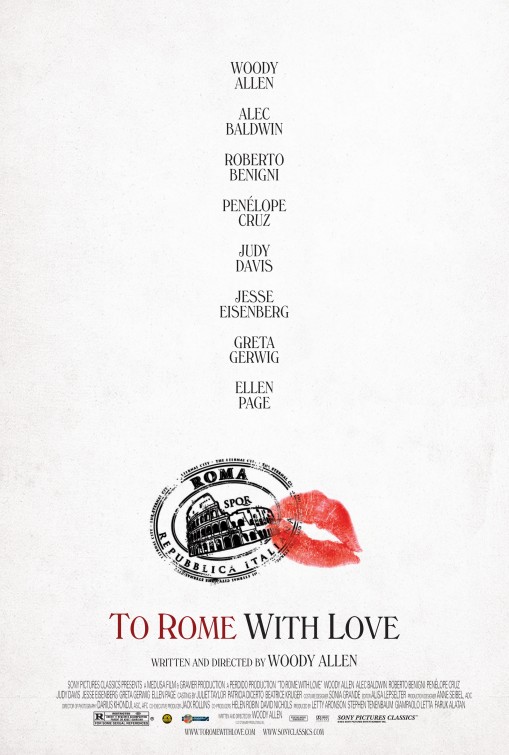
Review – To Rome with Love (2012)

Director: Woody Allen

Starring: Woody Allen, Alec Baldwin, Roberto Benigni, Penélope Cruz, Judy Davis, Jesse Eisenberg, Ellen Paige

To Rome with LoveThe most New York-centric of filmmakers for the first forty years of his career, in the last decade Woody Allen has discovered the rest of the world. At least, he’s discovered Europe. In recent years he has made films set in London (Match Point), Barcelona (Vicky Christina Barcelona) and Paris (Midnight in Paris). And now, with To Rome with Love, we get Woody Allen’s ode to the Eternal City.

Midnight in Paris was a great success, it was far and away Allen’s biggest box office earner, it earned an Oscar nomination for Best Picture, and it introduced a whole new audience to Woody Allen’s filmmaking. It also put a great deal of expectation on his next film, which at a glance looked like it followed the same formula. As it turns out, To Rome with Love is a much more typical Woody Allen film, and unfortunately it fails to reach the heights of his previous effort.

The film consists of four separate but interwoven storylines, with varying degrees of absurdity. There is the record producer who discovers an amazing opera singer who can only sing in the shower; the ordinary man who, for no apparent reason, becomes incredibly famous overnight; the man who is forced to spend the day pretending that the prostitute who came into his hotel room by accident is actually his wife; and the young man who is falling for his girlfriend’s best friend while his spirit guide, an older version of himself that he meets in the street, tries to convince him it is a bad idea. This format of separate story threads is reasonably common now, but in the better executions of it we expect the threads to connect somehow, either through their narratives becoming intertwined or through some thematic consistency. But that doesn’t happen here. The only connection is that they are all taking place in Rome.

All four storylines are based on funny little ideas, but none of them really has the substance to become a full story in its own right, though some do better than others. Because Allen doesn’t seem to know where to take them, the movie really loses its way and fizzles out towards the end. A filmmaker who makes as many films as Woody Allen does – roughly one a year for almost fifty years – is going to be a bit hit and miss, and this is one of the misses.

But despite all that, what really carries this film is the city of Rome itself. Allen has a tourist’s eye for the city and as such it never becomes just another city, just another location. It is always Rome, the Eternal City. So when storylines start to wear thin, or when jokes fall a bit flat (as happens more than a couple of times), Rome, in all its beauty, is still engrossing.

Rating – ★★☆

Review by Duncan McLean

Review – Zero Dark Thirty (2012)

Director: Kathryn Bigelow

Starring: Jessica Chastain, Jason Clarke, Kyle Chandler, Jennifer Ehle, Mark Strong, Chris Pratt, Joel Edgerton, James Gandolfini

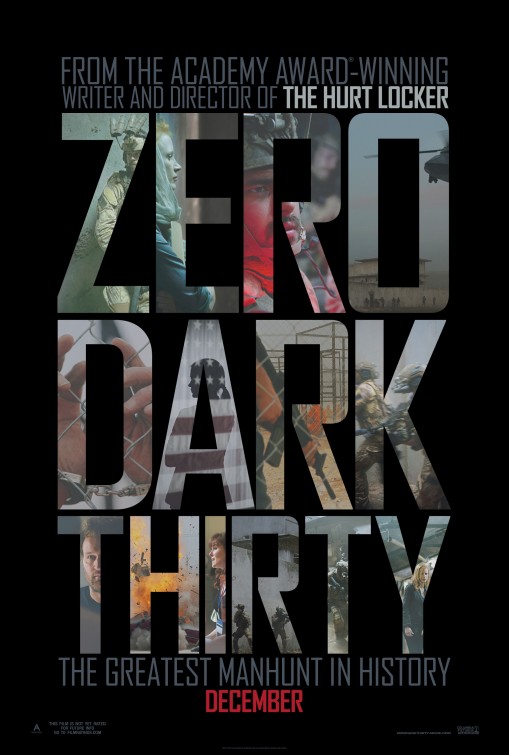
Zero Dark Thirty“We got him.” Those were apparently the words President Obama uttered as confirmation came through that Osama bin Laden had been killed at 12:30am (‘zero dark thirty’ in military speak) on the 2nd May 2011 as part of a successful raid on a fortified compound in Abbottabad, Pakistan. Less than two years later, Academy Awards winning director Kathryn Bigelow has brought the story of that mission to the big screen. She was able to turn the movie around so quickly because it was already in development at the time bin Laden was killed, though significant rewrites were required as it was originally intended to be about the unsuccessful decade-long manhunt.

Maya is a young CIA analyst assigned to the operation to find bin Laden. When interrogation of a prisoner (more on that later) reveals the name Abu Ahmed a-Kuwaiti, supposedly a personal courier for bin Laden who everyone has heard of but no one can identify, Maya becomes fixated on the idea that finding him will lead them to bin Laden. But not only is Maya a woman in a man’s world, she is a young woman in an older man’s world, and as the search continues over a number of years, she consistently finds herself butting heads with male superiors whose Cold War era understanding of intelligence  makes them difficult to convince.

Zero Dark Thirty is effectively a historical drama in the style of a thriller, set in the very, very recent past. This makes it a bit strange on two fronts. As a thriller, the fact that you already know the resolution creates an unusual dynamic, and as a historical drama, it feels odd watching a recreation of events which still feel like part of the present. The strangeness struck me in a moment when President Obama appeared on a television screen in the background of a shot. I’m used to seeing much older Presidents on television screens in movies; JFK, Nixon or Reagan, not the guy that I see on the news every night. Historical dramas usually require a bit of distance from the events they are trying to depict in order to gain some sort of objective perspective. For example, despite his impressive track record of historical dramas, Oliver Stone’s biopic W. was terrible, and one of the primary reasons for its shoddiness appeared to be that it was too biased and politicised a film. Released in late 2008, in the final months of Bush’s second term as president, the film had an obvious agenda leading into the election, which coloured its portrayal of characters and events. It is for this reason, among many others, that Bigelow’s film is a great achievement. Zero Dark Thirty manages to depict very recent events which are still hot-button topics with a sort of neutrality, without being preachy or didactic in any way.

It is this currentness of events that has landed the picture in a bit of controversy. One of the hottest political issues to come out of the hunt for bin Laden at the time was the role of torture and humiliation tactics in CIA intelligence gathering. The first third of Zero Dark Thirty contains some quite graphic and very confronting scenes of CIA interrogators using the torturing of prisoners as a means of getting them to divulge information. These depictions have prompted some commentators to accuse the film of endorsing the controversial practice. Others have come to the defence of the film, including Michael Moore who wrote this article for the Huffington Post.

Watching the film myself, I never felt that I was watching a pro-torture film. The film doesn’t shirk away from showing the central role torture played in early intelligence gathering, but when you think about it there was no other option. Could you imagine the equivalent shit-storm that would be surrounding the film if Bigelow had somehow tried to undersell the role of torture or even write it out of the history completely? It was such an ugly and public controversy that it had to feature prominently in the retelling of the story. However, as Bigelow herself has argued, depiction is not the same as endorsement. I would add to her point that a film containing characters, even protagonists, who endorse the practice of torture is not the same thing as the film itself endorsing the practice.

The scenes of torture, particularly the waterboarding, are very difficult to watch. And therein lies the key. They are difficult to watch because of where our empathy lies. As Moore alluded to in his argument, at no point do we find ourselves empathising with the interrogator, hoping that he can break the prisoner and make them talk. In these scenes we always find ourselves emotionally aligning ourselves with the tortured prisoner, even when we are told of their supposed role in the 9/11 attacks. That we find ourselves compelled to side with the ‘enemy’ in the scene suggests that the film is anti-torture.

After her critical success with The Hurt Locker, Kathryn Bigelow’s direction of Zero Dark Thirty cements her as the world’s premier director of films about modern warfare, a very different beast to the style of combat which has for so long been the staple of the war movie genre. The final raid on bin Laden’s compound is masterfully staged with a gritty realism. The methodical way the soldiers go about performing their task is very interesting and makes for a really engaging scene, even if it is not the big, high-octane payoff that a thriller usually ends with. The tension is impressive given the potential for the film’s third act to be a massive anti-climax with everyone knowing exactly what happens. Bigelow’s failure to be recognised with an Oscar nomination in the Best Director category was one of the bigger surprises of this year’s nominations.

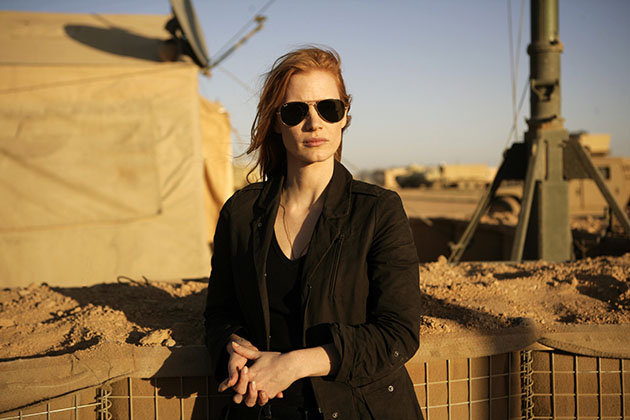
Jessica Chastain as Maya

Jessica Chastain as Maya

With Bigelow’s profile as a director meaning she is forced, whether she wants to or not, to wave the flag for women in film, it is also pleasing to see her direct a film with a female protagonist. Jessica Chastain delivers a very strong performance as Maya and is one of the favourites in the Best Picture category at this year’s Oscars. Over the last couple of years Chastain has emerged as a talented and versatile performer. She was delightful in The Help as the hopeless housewife and social outcast, Celia Foote, and also caught people’s attention as Brad Pitt’s wife in Terrence Malick’s The Tree of Life. As Zero Dark Thirty’s determined heroine, Maya, Chastain shows us something different again. Her roles in The Help and Tree of Life were both very emotionally open characters, here she plays her cards much closer to her chest. She is very closed off and methodical, living for the job.

Zero Dark Thirty is different to any thriller or war movie you have seen –our protagonist isn’t an action hero, she’s a desk jockey – but it is no less thrilling. It is a masterfully orchestrated film that takes you inside the intellectual process of finding the most wanted man in the world.

Rating – ★★★★

Review by Duncan McLean