Starring: Jane Fonda, Catherine Keener, Elizabeth Olsen, Nat Wolff, Jeffrey Dean Morgan
When New York lawyer Diane’s husband surprises her with a request for a divorce, her response is to take her two children to visit her mother with whom she has not spoken for twenty years. It sounds like the set up for a tense family drama until you add a couple of details. The mother, Grace, is an ageing hippie living in Woodstock and their estrangement was as a result of her being arrested for selling marijuana at Diane’s wedding.
Thematically, Peace, Love and Misunderstanding is a film about parents and children, specifically the need for children to accept the humanity of their parents. However, Australian director Bruce Beresford chooses not to delve too deeply into these themes, seemingly happy to let the film simply be a charming light comedy.
The film relies on heavily on stereotypical characters and formulaic situations. The fact that Diane, her daughter Zoe and son Jake all manage to meet their respective love interests within 24 hours of arriving in Woodstock is nothing if not convenient. It’s these sorts of things which leave you always feeling like you know exactly where the film is going.
Jane Fonda, who returned to acting in the mid-2000s after a 15 year retirement, here plays the hippie activist Grace, obviously a caricature of her own activist public persona. It’s a character we’ve seen many times before in films, as is Keener’s uptight lawyer, but the fact that it is Jane Fonda playing the role adds a great deal to the character by association.
Peace, Love and Misunderstanding is very formulaic and not particularly deep, but it isn’t trying to be anything more than it is. It is a charming picture with some likeable characters. Good harmless fun.
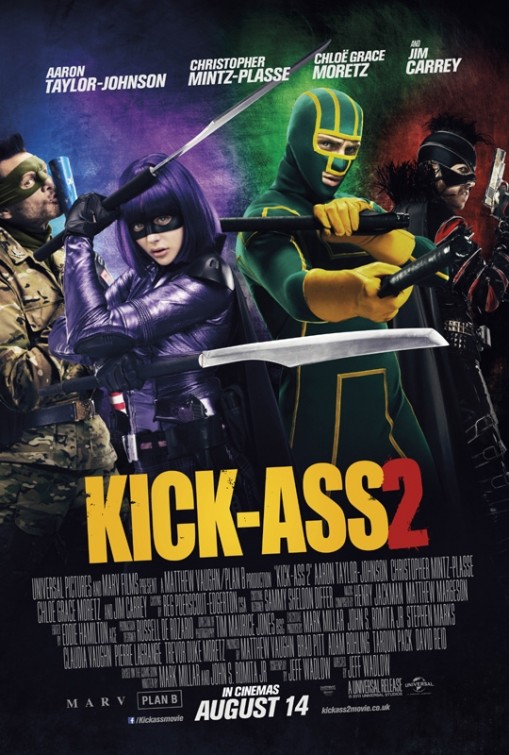
Starring: Aaron Taylor-Johnson, Chloë Grace Moretz, Christopher Mintz-Plasse, Jim Carrey, Morris Chestnut
In 2010, amidst a flurry of superhero comic book adaptations, Kick-Ass managed to capture the public’s attention by creating a little controversy. An adaptation of the comic book series by Mark Millar and John Romita Jr, this story of an average high school student who wonders why no one has ever tried to be a superhero before and decides to give it a go not only featured quite graphic violence, but a foul-mouthed vigilante played by a then 11-year-old Chloë Grace Moretz. Three years later Kick-Ass and Hit Girl are back in a film which provides more of the same.
Like a number of superhero sequels before it, Kick-Ass 2 is primarily a film about escalation. After his mob boss father was killed by Kick-Ass at the end of the first film, Chris D’Amico is bent on revenge. Abandoning his superhero persona, the Red Mist, in favour of a new name that isn’t fit for print he decides to become the world’s first super villain, assembling a squad of costume clad henchmen to help him take down Kick-Ass. At the same time, the emergence of Kick-Ass has inspired numerous others of varying degrees of skill and sanity to don costumes and join him as vigilante crime fighters.
It is in its approach to these characters that Kick-Ass 2 is quite interesting. Where other superhero stories ask what prompts someone to become a superhero, the Kick-Ass films ask a slightly different question of their characters. What type of person chooses to put on a costume and fight crime? The film then presents us with two groups. The first are the incredibly naïve but well intentioned, who are ill-equipped for what they are endeavouring to do and are ultimately a danger to themselves. The second group are the psychotic, who have no appreciation for appropriate action, just a black and white concept of justice, and are ultimately a danger to everyone.
After being a scene stealing support character in the original, Chloe Gracë Moretz’s Hit Girl becomes the co-lead character in this sequel and once again she provides the movie’s x-factor. Now 15 years old, Mindy Macready promises her new guardian that she will turn her back on crime fighting. Her subplot, which delivers many of the films laughs, delves into an idea that will be common knowledge to many teenagers, that the social world of high school can be every bit as savage as anything you might come across in a dark alley in the bad part of town.
While Kick-Ass 2 lacks some of the shock value of the original, it is still a very violent film, though it is notable that martial arts and hand-to-hand combat seems to have replaced the gun violence that was so prominent in the original. Kick-Ass 2 was also not without controversy in the lead-up to its release. Jim Carrey, who had joined the cast as vigilante Colonel Stars and Stripes, announced on Twitter in June that he would not be taking part in any promotion for the film as he had experienced a change in heart in light of recent events – most notably the Sandy Hook high school shooting which occurred only a few weeks after he filmed his scenes – and could no longer “support that level of violence.” The course language has also been dialed up. Obviously a 15-year-old has to go further to confront you with language than an 11-year-old does.
Fans of the first film will still find plenty to like about this sequel – the action sequences are well done and there are more than a handful of laughs – but ultimately despite being every bit as violent and profane as the first it is neither as shocking or as clever.
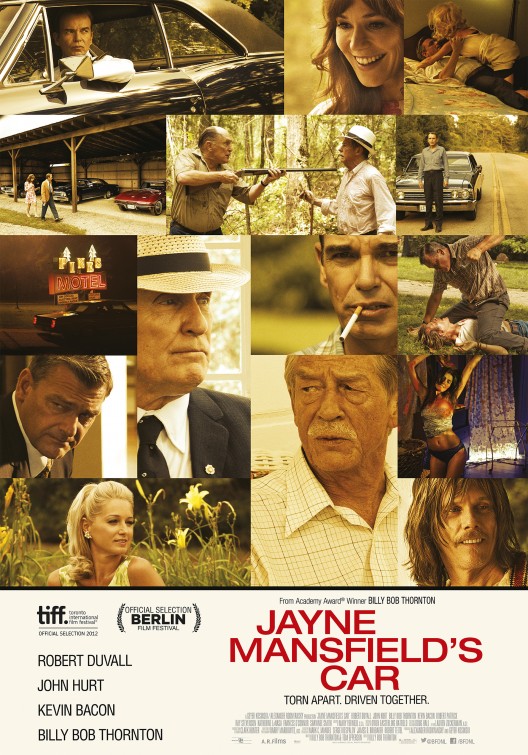
Starring: Robert Duvall, Billy Bob Thornton, Kevin Bacon, Robert Patrick, John Hurt, Ray Stevenson
In Alabama in 1969, a wealthy, Southern family is rocked by the news that their mother, who left many years ago and re-married, has passed away and her new family is coming over from England to bury her in the town where she was born.
That’s the set up, but it doesn’t really matter because in Jayne Mansfield’s Car the story isn’t really the focus. It is a film about characters and interactions and relationships. Thematically it is a film about our relationship with life and death, about family, and about changing notions of courage and heroism, particularly in relation to war. The film’s title comes from a ghoulish sideshow attraction which visits their town, peaking the interest of patriarch Jim who has a morbid fascination with car accidents, and serves as a metaphor for the American impulse to try and glamorise death.
Director Billy Bob Thornton is better known as an actor and Jayne Mansfield’s Car is very much an actors’ movie. The film is very wordy, made up of numerous scenes of dramatic monologues and dialogues. This gives the impressive ensemble cast – including Robert Duvall, John Hurt, Kevin Bacon, Robert Patrick and Thornton himself – plenty of chances to flex their acting muscles. Unfortunately, while there are some very solid individual performances, particularly from Duvall and Thornton, the cast never really knits together to make a believable family. Likewise, while some of these dramatic scenes are very interesting, they don’t really combine to make a whole of any great substance.
Jayne Mansfield’s Car is very slow and feels much longer than its two hour running time. The lack of a central narrative thread means that your engagement with the film really goes through peaks and troughs. Too heavy handed at times and too vague at others, it never quite hits the mark, always striving for a level of emotion that isn’t quite there.
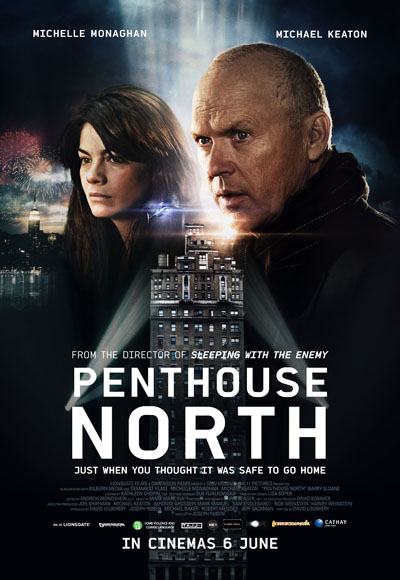
Starring: Michelle Monaghan, Michael Keaton, Barry Sloane
Penthouse North is a largely generic home-invasion thriller with one key difference, the victim is blind.
Sara is a former photojournalist who lost her sight when she was victim to a suicide bomber while on assignment in the Middle East. She now lives a reclusive life in a luxurious New York penthouse with her boyfriend, Ryan. One New Year’s Eve she arrives home from doing some shopping to find, eventually, her Ryan murdered and the killer still in the apartment. It appears Ryan used to be involved in some shady business with some bad men and made off with a fortune worth of diamonds. They have now come back to collect.
Home-invasion thrillers tend to involve small casts, minimal locations and short time frames, and the best of this genre of films use those elements to create a claustrophobic feeling. Despite having these key elements, Penthouse North doesn’t quite manage to establish that atmosphere and therefore doesn’t succeed in truly unnerving you as a viewer.
With such a small cast, the majority of the film only involves three characters, a greater than usual burden falls on the actors to carry engage the viewer. Michael Keaton is the highlight. He has always had a manic, unhinged quality – he has the crazy eyes – and this has served him well in the past in playing characters like Beetlejuice and Batman. It is enjoyable seeing him play a villain and he does quite well here, giving his character a real sense of menace. The others perform solidly, but never really grip or intrigue you. As Sara, Michelle Monaghan tries valiantly, but it is hard to not see her as someone pretending to be blind.
This is director Joseph Ruben’s first film since 2004’s The Forgotten, and is strange choice of drought-breaker. David Loughery’s screenplay goes through the motions without offering any surprises, and the result is a film that lacks tension and suspense. Despite a reasonable cast, Penthouse North is unremarkable, even if it never actually becomes bad.
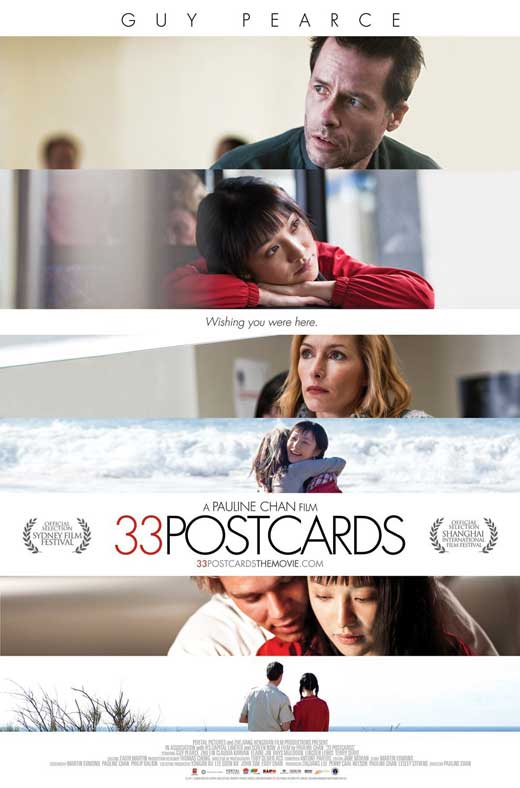
Starring: Guy Pearce, Zhu Lin, Claudia Karvan, Lincoln Lewis, Rhys Muldoon
For every Australian film like The Sapphires that makes a splash, there are dozens of other Australian films which just slip under the radar, without the backing to finance the saturation marketing required to be a hit at the box office. Pauline Chan’s 33 Postcards, an Australian and Chinese co-production, is one of these other films. A small drama which has made more of a splash on the festival circuit than it did at the box office, it is a well-crafted and touching film.
Mei-Mei is a young girl growing up in a Chinese orphanage. She has no family. She doesn’t even have a name. Her moniker simply meaning “Little Sister.” As a result she derives much joy from the correspondence she has with her Australian sponsor, Dean Randall. When her orphanage’s choir is invited to tour Australia, Mei-Mei sees the opportunity to finally meet the man who has meant so much to her. However, when she tracks down Dean, she discovers that all is not what she has been led to believe. Dean is incarcerated in Long Bay Correctional Facility serving a sentence for manslaughter, and has been there for the entirety of their correspondence.
It is great to see Guy Pearce, a genuine Hollywood actor, coming home and putting his weight behind a small film like this. He gives a restrained performance as the tortured Randall, a nice foil to the more exuberant performance of newcomer Zhu Lin as Mei-Mei.
33 Postcards is quite a lovely film about two lonely people who find comfort in each other. It explores the way that the act of sponsorship gives both characters a greater feeling of self-worth. For Mei-Mei it comes from the knowledge that she has a family, even when she discovers that family is not quite what she believed it to be. For Dean, it comes from the knowledge that, despite the mistakes he has made in his life, there is at least one person whose life is better because of him.
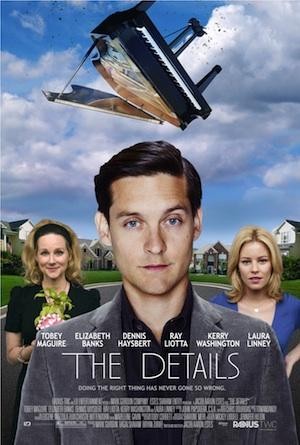
Starring: Tobey Maguire, Elizabeth Banks, Laura Linney, Dennis Haysbert, Ray Liotta, Kerry Washington
Sometimes things can snowball. You can start a series of events in motion and before you realise, the situation has got away from you. For mild-mannered Dr. Jeffrey Lang, this starting point is his decision to go ahead with an extension to his house without the required council permits. Before he knows it his life has spiralled into a mess of cat-killing, infidelity, and ultimately murder.
The Details is a hyperbolic tale of the dark side of suburbia, a place in which not everything is as it seems and you never know what is hiding behind the pleasant veneer of middle class family life. In this regard, Tobey Maguire is well cast as Jeffrey. Maguire’s baby-faced appearance and nice guy persona – which served him so well as Nick Carraway in The Great Gatsby – here combine well with Dr. Lang’s congenial, friendly presentation to disguise and contrast the darker aspects of his character.
Where The Details is most interesting is in the way that it challenges mainstream cinema’s usual dichotomy of good and evil in which bad people do bad things because they are bad and good people do good things because they are good. Instead The Details shows us bad people capable of doing very good things and good people capable of doing very bad things, so that when it all comes down to it no one is bad and no one is good, they are all just people.
What is notably missing from the film, however, is any form of ramification for bad deeds committed. That one thing can snowball into another and Jeffrey can find himself in a worse and worse predicament is one thing, but that there never appears to be any negative consequence or backlash for him personally makes the film unsatisfying.
The Details is a tonally odd film, with a campy style that seems to stifle the effectiveness of its thematic message. Writer/director Jacob Aaron Estes has given the film a light and breezy comic tone which juxtaposes its quite dark story. The result of this juxtaposition is a film that is quite difficult to know how to react to. You can’t bring yourself to laugh because the events are a bit too tragic, but at the same time you can’t completely empathise because the tone is too campy.
Starring: Gerard Butler, Aaron Eckhart, Morgan Freeman, Dylan McDermott, Rick Yune, Angela Bassett, Melissa Leo, Robert Forster
After watching Olympus has Fallen the makers of the Die Hard franchise must have been kicking themselves. How did they not think of this first? Olympus has Fallen is ‘Die Hardin the White House,’ but instead of Jon McClane, our one man army is Gerard Butler’s Secret Service agent Mike Banning.
Formerly a part of the Presidential Detail, Banning was stood down after a car accident cost the First Lady her life. Banning just happens to be in the vicinity of the White House, codename Olympus, when a group of North Korean terrorists attack the capital. With terrifying brutality, speed and precision, they take the building and the President as their hostage, but in the frenzy of the assault Banning works his way inside. With the rest of the military unable to enter the building for fear of prompting the terrorists to assassinate the President, Banning finds himself the nation’s only hope. But for him it is about more than just a sense of duty to his country. Banning feels a personal responsibility to protect the President and his son, and this moment provides him the opportunity for redemption not only in their eyes, but in his own.
While North Korea is a pretty safe bet for Hollywood to source its villains from – American films don’t get released in North Korea so there is no danger of alienating a potential audience – the film does emphasise the point that these particular villains are terrorists not acting under the guidance of Pyongyang. It is a peculiar moment of thoughtful diplomacy in a screenplay that is otherwise pretty simple and unthinking. It is a story you just have to go with without asking questions, no matter how far-fetched and improbable things get. The White House, undoubtedly one of the best protected buildings on the face of the Earth, is taken down in 12 minutes by a team of terrorists whose secret appears to be that they brought lots of guns and had some semblance of a plan? Don’t question it. Just go with it, because, much like Die Hard, the movie really starts once everyone is inside and everything before that is just setup.
As should be expected of a blockbuster about a siege on the White House, Olympus has Fallen is pretty gung-ho with its patriotism. You get your fair share of Stars and Stripes, whether in flames and falling to the ground, or fluttering triumphantly in the breeze. The movie’s plot device also allows us two Hollywood Presidents for the price of one. Aaron Eckhart as President Benjamin Asher, is the action hero President typified by Harrison Ford in Air Force One. We are introduced to him early in the film as he enjoys a sparring session in the ring with Banning (this introductory scene is intended to give us insight into the nature of both characters, particularly through Banning’s willingness to put one on the chin of the Commander and Chief). He is tough and brave and in the thick of the action. Morgan Freeman plays Speaker Trumble, who is promoted to Acting President for the duration of the hostage crisis. As you would expect of a Morgan Freeman character, Trumble is wise, thoughtful and measured. So between the two of them we manage to both of Hollywood’s favourite patriotic Presidential depictions.
The similarities to Die Hard mean that Olympus has Fallen willfeel incredibly familiar and comfortable for fans of the action thriller genre. Butler has tried a number of different things over the years: he’s been a romantic lead, he’s done comedy, he’s done Shakespeare, and he was even the Phantom of the Opera. But the action thriller appears to be where he is most at home. Butler, Eckhart and Freemen are surrounded by a strong supporting cast including Angela Basset, Melissa Leo, Dylan McDermott and Ashley Judd, and while director Antoine Fuqua – of Training Day fame – doesn’t break any new ground, he delivers a well-crafted action film that, ironically, trumps A Good Day to Die Hard as the best Die Hard of the year.
Starring: Ashley Tisdale, Simon Rex, Gracie Whitton, Ava Kolker, Lidia Porto, Charlie Sheen, Lindsey Lohan
Let’s cut to the chase. Scary Movie 5 is terrible. After an absence of seven years, the Scary Movie franchise was reignited to continue in its quest for the lowest common denominator, and surely this time it has found rock bottom.
With many of the more iconic horror films already having been exhausted, this instalment of series is built primarily around parodies of Paranormal Activity, Mama and Darren Aronofsky’s Black Swan – an excellent film deserving of a higher class of parody – with nods to Inception, Rise of the Planet of the Apes and Fifty Shades of Grey. Through the work of Mel Brooks (Young Frankenstein, Blazing Saddles) and the Zucker Brothers (Flying High, Top Secret and The Naked Gun) we know that when done well, genre parody can be very clever and very funny. However where some of the previously mentioned films were incredibly clever and dense, even when revelling in lowbrow humour, Scary Movie 5 is lazy and unimaginative, not realising that even toilet humour needs to be done well in order to get a laugh.
The key creative players in previous instalments, namely the Wayans brothers and actress Anna Farris have all moved on. Even Carmen Electra didn’t come back to be a part of this film. Seriously, if that is not a sign to move on then I don’t know what is. Taking over as the lead we have High School Musical star Ashley Tisdale. While it is common practice for young Disney starlets to seek out roles which will help them shed their innocent child-star persona and transition into a more mature career, Tisdale has certainly chosen a poor way to go about it. Scary Movie 5’s trump card, which says a lot about what is in store, is an opening cameo from Charlie Sheen and Lindsey Lohan, two actors who didn’t exactly cover themselves in glory in 2012, playing themselves preparing to make a sex tape together.
A comedy without laughs and a horror movie without scares, if Scary Movie 5 has one redeeming feature it is that it is mercifully short. That the brief 82min run-time includes over 15mins of credits and bloopers tells you just of how short on material the filmmakers were. A simply horrendous movie.
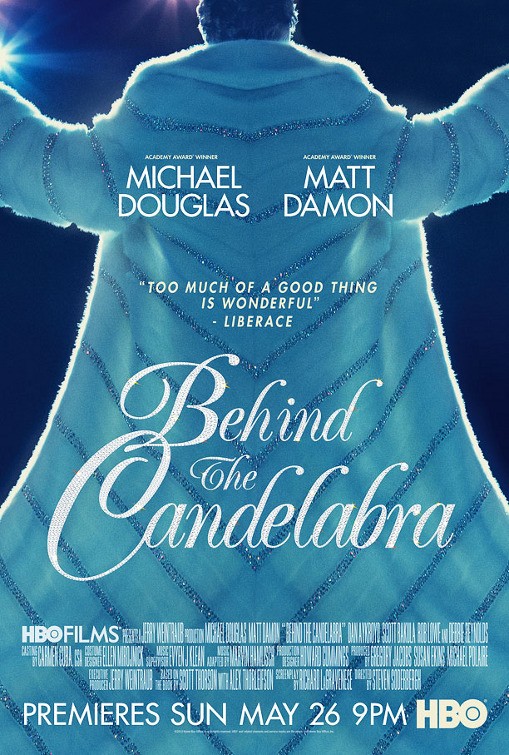
Starring: Michael Douglas, Matt Damon, Scott Bakula, Dan Aykroyd, Rob Lowe, Debbie Reynolds
With Hollywood determined to play it safe and stick to generic cliché and recycling trusted ideas, subscription television networks like AMC and HBO have become the home of innovative and interesting filmmaking. So it is fitting that one of the most interesting films of the year should be a television movie. Based on Scott Thorson’s memoir Behind the Candelabra: My Life with Liberace, Steven Soderbergh’s filmis a behind-closed-doors biopic of one of the world’s most flamboyant and conflicted entertainers.
Behind the Candelabra explores the final decade of Liberace’s life through the lens of his relationship with his young companion, friend and lover Scott. As time goes on, their relationship becomes more complicated with Scott’s identity disappearing into the world of Liberace as the entertainer seeks to adopt him and even buy him facial reconstruction surgery so they can look more alike, all in the name of being family.
Having been in gestation since 2008, the project was turned down by practically every Hollywood studio on the grounds that it was, as Soderbergh puts it, “too gay.” So it fell to HBO, who have made their name by taking chances that commercial networks wouldn’t dare, to make the picture. As a result, Behind the Candelabra was released on television in the US, but it has been given a cinematic release in Australia, Europe and the United Kingdom.
Today, it seems astounding to think that people would be unaware that Liberace was gay. But his fame predated the rise to prominence of gay culture and sensibility in America, and the film gives insight into how closely guarded and managed, not to mention litigated, his secret was. A scene in which Scott reads a passage from Liberace’s autobiography emphasises the extent to which the entertainer has been forced to live and perpetuate a lie.
The screenplay also touches on Liberace’s Catholicism, which he maintained despite that church’s stance on homosexuality, but doesn’t choose to make it a major issue.
With Michael Douglas attached to play Liberace, the production was delayed for a couple of years as he battled throat cancer, but it was worth the wait as Douglas’ performance is tremendous, some of the best work of his long career. In a role in which it would have been very easy to resort to caricature, Douglas gives Liberace incredible depth and complexity, showing him to be at once lonely, insecure, jealous, predatory, possessive and controlling. We also get some impressive scenes of Liberace working his magic on the ivories thanks to seamless digital work, compositing Douglas’ head onto a piano-playing double.
In the role of Scott Thorson, Matt Damon serves as the audiences entry point into the extravagant and glittery world of Liberace. He is as confronted as we are when he first arrives in Liberace’s home, but as he settles into his surrounding so do we. Casting the 42 year old Damon in the role of Scott, despite the fact that Scott was still a teenager when he met Liberace in real life, allows the film to focus on the authenticity of their relationship without having to deal with the awkwardness of the immense age difference.
The strong headline performances are backed up by an equally impressive supporting cast including Dan Aykroyd, Hollywood legend Debbie Reynolds and a heavily made up Rob Lowe as Liberace’s plastic surgeon Dr. Jack Startz, who is himself nipped, tucked and botoxed within an inch of his life.
Unsurprisingly in a film about the most flamboyant showman ever, the costume, set and production design takes centre stage with some fabulous recreations of Liberace’s signature costumes and his “palatial kitsch” home.
Despite being at times quite funny, overall it is a terribly sad, melancholy film, about an immensely talented, successful but conflicted man who is crippled by his need to please people, and who chooses to keep such a central part of who he is secret from the world so as not to be dismissed as a “silly old queen.”
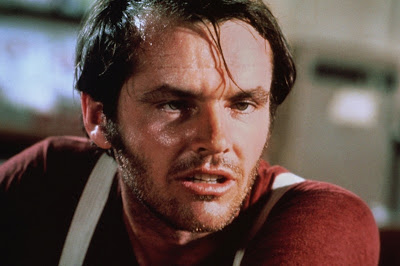
A three time Oscar winner, with a further nine nominations, Jack Nicholson is one of the American cinema’s most celebrated actors and a movie legend. Starting his career in the B cinema of Roger Corman, rising to prominence in the Hollywood Renaissance of the 1960s and 1970s as one of the era’s most interesting new faces, and establishing himself as the very epitome of the Hollywood movie star, Nicholson is a big personality and a bigger talent. Trying to whittle this legendary career down to six roles requires some tough decision making, and as a result some brilliant roles which easily could have made the list miss out – chief among them Robert Dupea in Five Easy Pieces,Jack Torrence in The Shining and Frank Costello in The Departed – but here it goes…
George Hanson
Easy Rider (1969)
With 17 films already under his belt, it was his supporting role in Hopper and Fonda’s iconic road movie Easy Rider that made turned Nicholson into a star. As the alcoholic country lawyer George Hanson, Nicholson was the conduit through which the audience were able to relate to the skittish Billy and aloof Captain America. The performance earned him the first Academy Award nomination of his career and set him up to become one of the New Hollywood’s most important actors.
Jake Gittes
Chinatown (1974)
So proud was Nicholson of his work on the Polanski directed, Towne scripted Chinatown that he has not played another detective since. While drawing on the hard-boiled fiction of Chandler and Hammett, Nicholson’s Jake Gittes is a softer hero than those played by Humphrey Bogart. He is out of his depth, too innocent to deal with the magnitude of society’s corruption and incapable of solving the mystery until it is too late.
R.P. McMurphy
One Flew Over the Cuckoo’s Nest(1975)
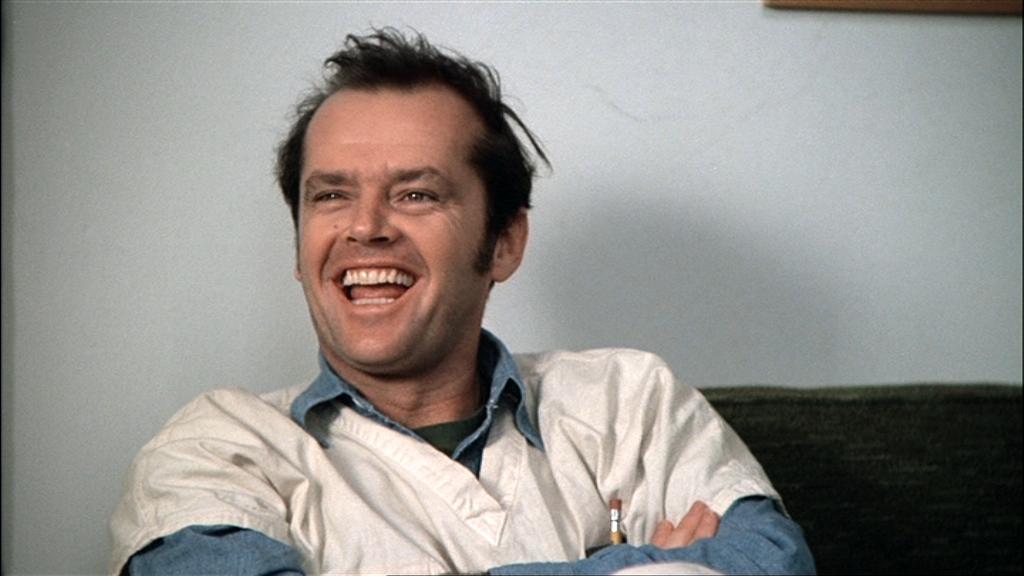
If Easy Rider was the film that made Nicholson a star, One Flew Over the Cuckoo’s Nest was the film that made him an icon. Nicholson brings Ken Kesey’s anti-hero to life, drawing on his own counter-cultural anti-authority persona to make McMurphy a life-affirming force in a lifeless institution, and a worthy nemesis for Louise Fletcher’s chilling Nurse Ratched.
The Joker/Jack Napier
Batman (1989)
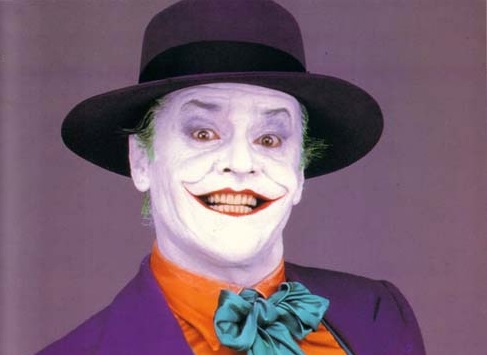
The deserved praise heaped on Heath Ledger for his performance as The Joker in The Dark Knight has seemingly resulted in many people forgetting just how good Nicholson was in the same role in Tim Burton’s Batman. Nicholson provides a different interpretation of the famous villain. Where Ledger’s Joker is a psychopath, Nicholson’s is a lunatic. Undoubtedly one of the great scene stealing performances in film history.
Melvin Udall
As Good as it Gets (1997)
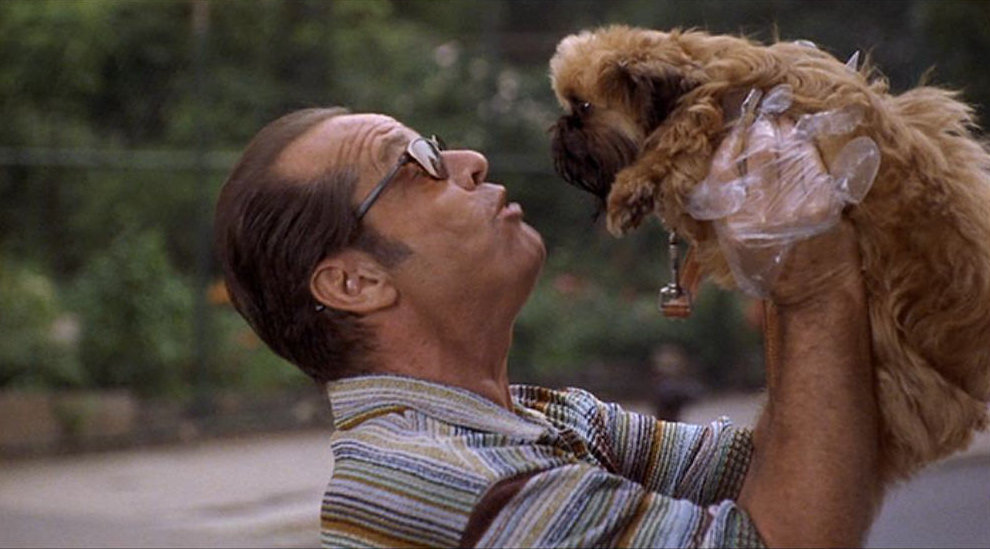
Nicholson has enjoyed a very fruitful partnership with writer/director James L. Brooks, the high point of which was his Oscar winning performance as obsessive compulsive, romance novelist Melvin Udall in As Good as it Gets. Sharp, funny and at times vicious, Jack gets to be Jack. A character and a film that will put a smile on your face, and one of the best romantic comedies of the decade.
Warren Schmidt
About Schmidt (2002)
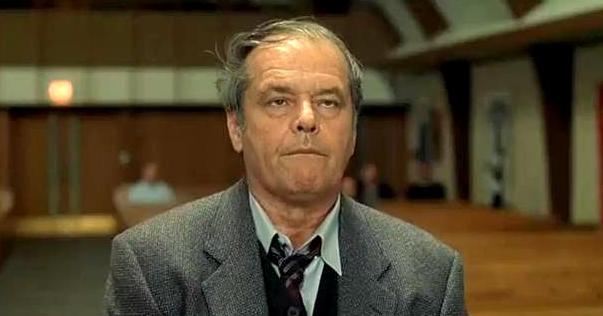
Dipping his toe into independent cinema for the first time in decades with Alexander Payne’s About Schmidt, Nicholson produces one of the most interesting and brave performances of his career. Putting aside the over-the-top, sharp-edged persona that had become the norm in recent years, Nicholson embraced his older age, playing a quiet, widower worn-down by life. A wonderful late career reminder of the incredible talent that was the foundation of his superstardom.





 Doctor of Movies
You must be logged in to post a comment.