Review – The Spectacular Now (2013)

Director: James Ponsoldt

Starring: Miles Teller, Shailene Woodley, Brie Larson, Jennifer Jason Leigh, Mary Elizabeth Winstead, Kyle Chandler, Bob Odenkirk

Spectacular NowHigh school senior Sutter Keely is a charming, fun guy, loved by everyone and the life of any party. Sutter lives in the moment, he lives for the now. But as he and his friends approach their high school graduation he finds that everyone else is looking forward, thinking of the future, making plans.

Through a chance encounter he meets Aimee Fineky. A shy, reserved girl, she knows him from school even though to him she has previously been invisible. Sutter finds something fascinating about Aimee, and she enjoys the attention. They become friends and ultimately come to love each other (but is that the same thing as being in love with each other?). Aimee and Sutter provide each other with much needed support. Both come from broken homes with absent fathers, Sutter’s through divorce and Aimee’s through death.

Sutter is a self-destructive character whose emphasis on the here and now is the result of an inability to deal with the past or face the future. He uses alcohol as a coping mechanism, constantly sipping from a hipflask he carries with him – a habit he soon transfers on Aimee – rarely getting excessively drunk but always having a buzz on. This insidious and constant presence of alcohol is much more confronting and uncomfortable than the usual representations of teen drinking we see on screen (massive party binging followed by throwing up and the rubbing or sore heads the next morning), and before long you find yourself willing him to stop.

The characters of Sutter and Aimee have a realism to them that you rarely find in screen teenagers. They look like real teenagers, not thirty year olds in backpacks. They sound like real teenagers, not the razor sharp fantasies of an all-too-clever screenwriter. The two young leads, Miles Teller and Shailene Woodley, are not household names but their performances carry this film. The two, who work so well together it is difficult to consider their performances separately, deliver incredibly authentic portrayals of teenage lovers dealing with all the confusion and uncertainty of youth. The pair received a Special Jury Prize for Acting at this year’s Sundance Film Festival “for two young actors who showed rare honesty, naturalism and transparency and whose performances brought out the best in each other,” an apt description of what they bring to this film.

From the screenwriters who delivered the gem 500 Days of Summer a couple of years ago, The Spectacular Now is a film that requires some time to process. It leaves you with a number of questions, resisting the urge to wrap everything up in a nice neat bow. The result is an honest and affecting film, a teenage love story for adults which doesn’t trivialise the teenage experience.

Rating – ★★★☆

Review by Duncan McLean
Aningaaq (2013)

In this year’s most immersive cinenamtic experience, Alfonso Cuarón’s Gravity, Dr. Ryan Stone (Sandra Bullock) is in a space station fast running out of oxygen trying to establish radio contact with ground control. Instead of ground control her distress message is picked up by a lone man, speaking an unknown language. Despite not being able to understand one another, the two share a touching moment as Stone comes to accept the fact that she is about to die. In the film, we only privy to Stone’s side of this conversation, but the director’s son Jonás Cuarón has made a short, seven-minute film in which we see the other side of that interaction. Originally intended to be a DVD extra for the film, Aningaaq has garnered strong critical attention and is now considered a possible Oscar contender in the Best Live Action Short category. If you have not yet seen it, it is a lovely and touching little film…

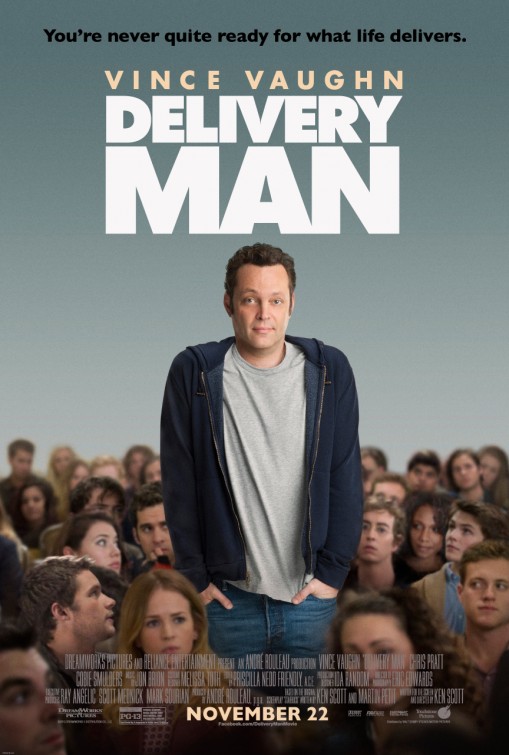
Review – Delivery Man (2013)

Director: Ken Scott

Starring: Vince Vaughn, Chris Pratt, Cobie Smulders

Delivery ManNot often does a filmmaker get the chance to have a second go, to make the same film twice, but that is exactly what has happened for Ken Scott. In 2011 Ken Scott released Starbuck,  a French-Canadian film about a man, David Wozniak, who in his youth, under the pseudonym ‘Starbuck,’ donated frequently to a sperm bank and through a clerical error ends up becoming the biological father to 533 children. Two years later, Scott is in Hollywood making Delivery Man, where Vince Vaughn plays David Wozniak, who in his youth, under the pseudonym ‘Starbuck,’ donated frequently… you get the idea.

Hollywood has a history of remaking successful foreign comedies for an American audience that can’t be bothered reading subtitles, but this is a scene-for-scene, shot-for-shot, joke-for-joke remake. While Starbuck was a bit of a critical darling, doing quite well at a number of film festivals, the remake lacks some of the freshness of the original.

Given this is Scott’s second shot at making this film it is odd that Delivery Man feels like a movie made off a first draft script. The screenplay is incredibly uneven. There are some passages which are quite sharp and well executed, while others really drag. There are also jarring changes in tone throughout the film. One moment we are giggling at a montage of David going to great lengths to secretly get to know his children –taking and re-taking historical tours, drowning in a public pool to get rescued, helping a drunken young man get home safe from a big night out – and the next moment we watch him trying to process the fact that one of his sons, Ryan, has severe cerebral palsy. The scenes with Ryan are among the most touching in the film, but they don’t sit easily with the scenes around them.

This lack of assuredness in the storytelling also manifests itself in some annoying and unnecessary subplots. David trying to prove to his pregnant girlfriend he is father material at the same time as dealing with the discovery he already has 533 children is more than enough story to satisfy a 90 minute comedy. We don’t need the extra 20 mins that comes from David being in severe debt to angry loan sharks and growing pot to help pay them off. Rather than adding drama, it just distracts from it.

Delivery Man has some laughs, though not as many as you might expect. Chris Pratt is particularly funny, though I don’t know if anyone can really believe him as a lawyer. For Vince Vaughn this film is the latest example of his transition from the obnoxious motor-mouth of Swingers and Wedding Crashers to sentimental middle-aged guy.

Rating – ★★

Review by Duncan McLean

Review – Stranded (2013)

Director: Roger Christian

Starring: Christian Slater, Brendan Fehr, Amy Matysio, Michael Therriault

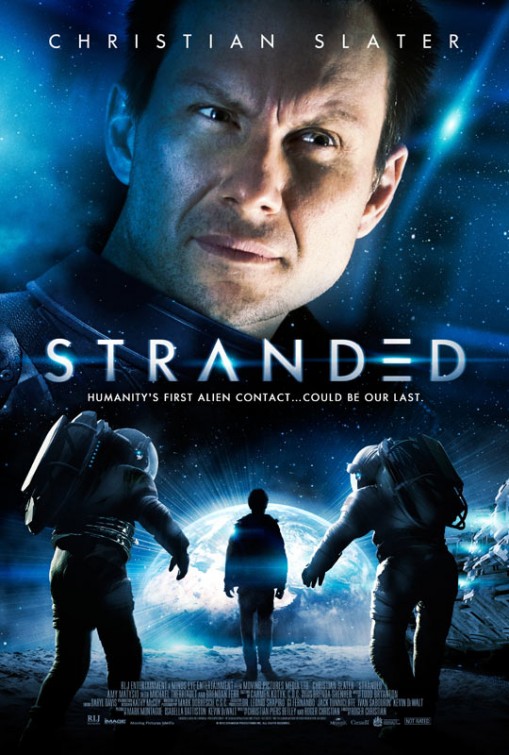
StrandedIs a thriller still a thriller if it doesn’t thrill? That is ultimately the question you are left with if you make it through Roger Christian’s sci-fi thriller Stranded.

When a lunar space station is severely damaged by a meteor shower its four staff must prepare to return to Earth. But one of the astronauts becomes infected by some spores found on one of the meteors. The result is a rapid pregnancy shortly followed by the birth of a healthy baby alien. The creature continues to develop rapidly, taking the form of one of their fellow astronauts, and starts to wreak havoc on their station while they wait for help.

Director Roger Christian has a strong science fiction pedigree. He won an Oscar as a set decorator on Star Wars and was art director for Ridley Scott’s Alien. Unfortunately when it comes to his work as a director his calling card is Battlefield Earth, a film renowned for its awfulness. Stranded is a scrapbook of ideas snipped from other films. Primarily, it is a pale imitation of Alien – we even get the alien spawning in the uterus of a female crewmember – that fails to create the intense, claustrophobic mood which was so central to that film’s success. The simple narrative is entirely uninteresting and devoid of logic and the characters don’t engage you. The film simply doesn’t make you care.

Christian Slater is the ‘name’ that leads this small cast of unknowns (Doesn’t that say something? When was the last time you chose to see a movie because Christian Slater was in it?) but he clearly isn’t overly invested in what he is doing here.

If Stranded has one saving grace it is that the film is almost completely devoid of CGI. One can only imagine how terrible the effects would have been if the rest of the production is anything to go by. That the alien conveniently takes on human form also means there is no need to design a convincing looking alien.

The movie finishes with a lame excuse for an open ending. Ordinarily you’d interpret that as leaving things open for a sequel, but surely the filmmakers here cannot seriously believe that is on the cards. Stranded falls into the awkward middle ground for genre films where it is not good enough to be enjoyed seriously, but not tacky enough to be enjoyed ironically.

Rating – ★

Review by Duncan McLean

Review – Carrie (2013)

Director: Kimberly Peirce

Starring: Chloë Grace Moretz, Julianne Moore, Gabriella Wilde, Judy Greer, Portia Doubleday, Ansel Elgort

CarrieThere have been many movies about high school outsiders that teach us that once you get to know that slightly odd kid you might just find that they actually aren’t all that different to you. But you can depend on Stephen King to borrow that much used set up in order to give us a slightly different moral: If you know someone who is a little bit weird, they are probably even weirder than you thought. Twenty-seven years since Carrie first hit our screens she is back in a remake that unfortunately doesn’t do much more than repeat the previous film and offers precious little new insight.

This time around it is Chloë Grace Moretz who plays the downtrodden teenage girl, Carrie. Victim of an oppressive home environment under her extremist Christian mother and a source of ridicule at her school, Carrie also happens to have telekinetic powers. When she is finally pushed to breaking point the result is a prom night no one will ever forget.

MGM is promoting this film as a re-imagining of Stephen King’s novel, but it really feels like a direct remake of Brian DePalma’s 1976 film. There are a number of scenes and giant slabs of dialogue which are exactly the same. There doesn’t appear to be much re-imagining going on at all. Director Kimberly Peirce is best known for her 1999 film Boys Don’t Cry for which Hillary Swank won an Oscar playing a young gay girl pretending to be a man. Given the success with which that film explored the struggles of a young woman who felt like an outsider and a freak, there was hope that Peirce might bring some new insight to the thematically similar Carrie. So it is disappointing that those hopes were unfounded, with this new version of Carrie failing to venture anywhere new or explore anything different.

Many of the changes from the original version to this one are largely superficial – for example Carrie uses her telekinesis to break a water cooler in the principal’s office rather than an ash tray, she breaks a mirror at school rather than at home – one update which is notable is the acknowledgement of the role that technology and social media now play in schoolyard bullying. Carrie’s initial breakdown, the event which starts the films plot in motion, is captured on a camera phone and posted online.

While DePalma’s film was quite tonally uneven, seeming to swing between horror and John Hughes-esque high school drama, Peirce’s take on the story is a straight teen horror. Some of the characters are a bit overbearing in their lack of subtlety – see teen queen bee Chris Hargensen who is as two-dimensional an evil villain as you will find in any fairy tale – but Carrie’s lack of subtlety is most apparent in its use of special effects. Peirce is not a director who is well practiced at shooting effects heavy scenes and this film seems to indulge too heavily in them. Nowhere is this more apparent than in the film’s key set piece, Carrie’s explosion at the prom. In DePalma’s film, despite its impact it was a surprisingly short scene – only about five minutes. This time around it is stretched out to a substantially longer scene – a good 15-20 minutes – without really achieving anything additional in this extra time.

Chloë Grace Moretz is one of the very best young actresses going around at the moment, and she is quite good in this. However, she is a stunning young woman and dressing her down in daggy clothes, frizzing up her hair and getting her to hunch over doesn’t even half disguise that fact. Despite her incredible talent, she doesn’t have the awkward, other-wordly quality that Sissy Spacek brought to the original film which earned her an Oscar nomination.

Were this the first screen adaptation of Carrie it might not be treated so harshly. It is a perfectly acceptable piece of teen horror. But unfortunately this is not the first adaptation and as such it feels completely unnecessary.

Rating – ★★

Review by Duncan McLean

Review – The Fifth Estate (2013)

Director: Bill Condon

Starring: Benedict Cumberbatch, Daniel Brühl, Alicia Vikander, Moritz Bleibtreu, David Thewlis, Peter Capaldi, Laura Linney, Anthony Mackie, Stanley Tucci

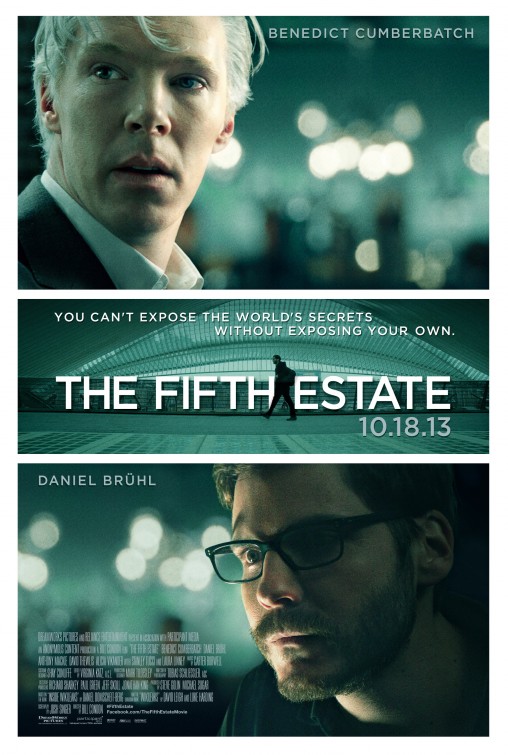
Fifth EstateJulian Assange is one of the most divisive figures in international politics in the last decade. To some he is a hero, a champion for democracy and free speech. To others he is a self-important egomaniac with little respect for the consequences of his actions. Earlier this year the story of Assange and WikiLeaks was explored on screen in Alex Gibney’s compelling documentary We Steal Secrets: The Story of WikiLeaks, and now they’re back in cinemas, this time as a thriller in Bill Condon’s The Fifth Estate.

Condon, fresh off the last two instalments of The Twilight Saga, brings us the story through the eyes of Assange’s one-time partner Daniel Berg, starting from the moment when WikiLeaks burst on to the international scene by exposing the illegal activities of Swiss bank Julius Baer and continuing through to the 2010 leak of the ‘Iraq War Logs’ and a quarter of a million US diplomatic cables, and the subsequent arrest of Bradley Manning.

Adapted from Daniel Domscheit-Berg’s book Inside WikiLeaks: My Time with Julian Assange at the World’s Most Dangerous Website, The Fifth Estate presents a rather damning account of Assange’s personality and actions – which is interesting given the film’s trailers were cut together in such a way that they appeared quite pro-Assange. The screenplay was written by Josh Singer, once a writer on The West Wing, though he hasn’t managed to bring the Sorkin-esque sharpness of dialogue that made that show so brilliant to this project.

Benedict Cumberbatch’s Assange, an egotistical control freak who possesses little in the way of social skills, is an elusive character. We are given very little insight into what, outside of ego, makes him tick. We are presented with snippets of his troubled childhood as though that explains everything, but the links between the past and the present are not always apparent. Yet despite the aggressiveness of this portrayal, it is hard to see how The Fifth Estate will change anyone’s mind about Assange or the events that occurred. His detractors will agree with the negative aspects of the representation, while his supporters will shout character assassination. Lacking in any real revelations, the film leaves you none the wiser on the whole issue.

As Berg, Daniel Brühl provides the human centre of the film. It is his journey, rather than Assange’s, that we go on. Berg is initially swept up in the excitement of Assange’s crusade. Over time he starts to doubt his decision making and his priorities, until finally he comes to doubt his motivations. Berg is the film’s conscience and the progression of his relationship to Assange and the idea that he represents seems to be reflective of many people’s response.

Stylistically, The Fifth Estate is a bit overbearing. Condon employs a number of different methods to visually represent the cyberspace in which WikiLeaks exists, and the online communication between its members, and before long you are feeling bombarded by flashing and flying text.

Given that every day our newspapers are still filled with stories relating to Bradley Manning, Edward Snowden and the revelations that the US has been tapping the phones of the leaders of allied nations, there is no doubt that The Fifth Estate is a timely film. However, despite this timeliness, it is neither revelatory enough nor well executed enough to establish itself as an important film.

Rating – ★★☆

Review by Duncan McLean

Review – Blancanieves (2012)

Director: Pablo Berger

Starring: Macarena García, Maribel Verdú, Daniel Giménez Cacho, Sofía Oria

BlancanievesIn 2011 Michel Hazanavicius’ homage to classic silent cinema, The Artist, rode a wave of critical acclaim all the way to the Best Oscars. It was the first silent film to win the award since … in …, and in the process it demonstrated that silent cinema as a medium still had plenty to offer and there was still a market for it. The advent of synchronised sound in cinema in the 1920s revolutionised filmmaking, and in the eyes of many it made silent film a redundant medium. But silent film is simply a different medium that offers a different experience. For Spanish filmmaker Pablo Berger, watching Hazanavicius accept the gold statue for Best Picture and Best Director must have been a bitter sweet moment. On the one hand the success of The Artist demonstrated that a well-made silent film could still be very successful. On the other hand it ensured that despite the fact he had already been developing his own silent film, Blancanieves, for a number of years, it would always be read in relation to this other picture. But while The Artist may have paved the way to some extent for Berger’s film, there is no denying that Blancanieves is an amazing achievement in its own right.

Blancanieves reimagines the story of Snow White as a silent melodrama set in the south of Spain in the 1920s. Carmen, the daughter of Antonio Villalta – once Spain’s most famous bullfighter who is now a quadriplegic after an accident in the ring – is forced to flee her evil step-mother Encarna who is keen to rid herself of Antonio and his daughter so she can enjoy his fortune in peace. Carmen is taken in by a band of dwarf bullfighters. When they discover her talent as a matador they incorporate her into their act and she quickly rises to become a national sensation, much to the horror of Encarna.

Berger’s adaptation does away with all the supernatural elements of the story; there is no magic mirror, no enchantments and no spells. But despite this, it retains the sense of wonder and magic of a fairy tale. Blancanieves definitely aligns itself more closely with the tone of the original Brothers Grimm version of the tale. It is quite dark and tragic, and the film’s conclusion in particular is by no means sees everyone living happily ever after. This is no Disney fairy tale.

This is a completely different beast to The Artist. Hazanavicius’ film was an endearing, modern, love letter to the world of silent films. It was a joyous film which had a fun, tongue-in-cheek approach to its silence. Blancanieves is more of an homage to the silent films of the 1910s and 1920s, with its style and selection of techniques giving it the feel of an authentic product of that era. If not for some scenes in which Encarna penchant for sadomasochism is seen, which never would have made it past the censors in the early 1900s, you could be forgiven for thinking this was a 90 year old film.

The very concept of silent film is itself a misnomer. Sound, in the form of a musical score, has always played an important role in the cinema, even before the advent of dialogue in films, and this is no different in Blancanieves where the events of the story are brought to life by Alfonso de Vilallonga’s romantic score.

If this film has a fault, it is probably that it is about 15 minutes too long – even though a 105 minute runtime is hardly exorbitant by today’s standards – as a result of a slight imbalance in the story. Berger’s script seems more interested in setting up the story, establishing the characters of Carmen, Antonio, Carmen’s mother and Encarna and the relationships between them, than it is in actually telling the story. So it is not until about halfway through the film, just when you are starting to think it might be dragging, that the Snow White narrative we are familiar with really kicks in. However, the story is so beautifully told, and the performance of Sofía Oria as the young Carmen is so endearing that you are largely happy to go with it.

Blancanieves is a clever and interesting reimagining of a familiar story, a visually beautiful featuring some engaging performances and shows the simple power of visual storytelling. Somewhat ironically, given it is a dialogue free film, it was Spain’s official nomination for Best Foreign Language Film for this year’s Academy Awards, though it didn’t make the final nominees list.

Rating – ★★★★

Review by Duncan McLean

Review – Adoration (2013)

Director: Anne Fontaine

Starring: Naomi Watts, Robin Wright, Xavier Samuel, James Frecheville

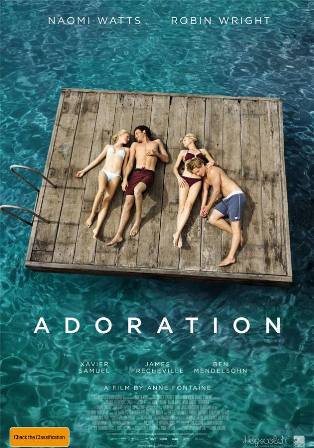
AdorationAdoration is a French-Australian co-production, and the first English language film of French director Anne Fontaine, best known for Coco avant Chanel. Based on Doris Lessing’s play The Grandmothers, it tells the story of two life-long friends, Lil and Roz, who live in an idyllic northern NSW beach town. Lil is a widower and Roz’s husband is away a lot on work, so mostly they live an isolated life with just them and their two sons, Ian and Tom.

One evening, after a few too many drinks, Ian, Lil’s son, makes a move on Roz. When Tom sees his mother coming out of Tom’s room with her jeans in her hands his response is to go straight over to Lil’s house and sleep with her. After initial tensions, the two mothers and sons decide that they are actually quite happy with the arrangement so they continue merrily with this strange, insular existence. But eventually their situation is challenged as first Ian and then Tom pursue relationships with women their own age.

The plot for this film sounds like something from an American Pie style sex comedy, but Fontaine’s film is dead serious, possibly too serious for its own good. There are no (intentional) laughs here. Adoration desperately wants to be provocative, in a Lolita kind of way, but despite all its seriousness, it lacks emotional realism. The scenario should be one which creates incredible emotional stress and tension between these character. It is one thing to fall for your friend’s mother or son. It is another thing to watch your friend engage in a relationship with your son or mother. But for much of the film these murky waters seem to be navigated with unsatisfying ease by our quartet of characters.

This lack of realism extends to other elements of the story as well. The turning point comes when Ian moves to Sydney for a short period to take a position directing a Sydney University theatre production. This revelation that Ian has always wanted to be a theatre director seems completely inconsistent with a character who up to this point does not appear to have had an expressive or artistic bone in his body.

It is refreshing, however, to see a film which is built around two central, complicated female characters. Particularly two middle aged women. Naomi Watts and Robin Wright put in stronger performances than the material here may have warranted. As Roz, Wright carries the picture. She is the only character who understands the untenable nature of their arrangement and seeks to act responsibly. Wright also puts in a valiant effort at speaking with an Australian accent, with just a couple of tells which only an Australian ear would pick up to give her away.

Released in Australia under the title Adoration, the film was initially to be called The Grandmothers and has been released in different international markets under the titles Two Mothers, Perfect Mothers and Adore. This suggests indecision in how to present and market the film, which is not surprising given its tricky subject matter.

Rating – ★☆

Review by Duncan McLean

Review – Captain Phillips (2013)

Director: Paul Greengrass

Starring: Tom Hanks, Barkhad Abdi, Barkhad Abdirahman, Faysal Ahmed, Mahat M. Ali, Michael Chernus

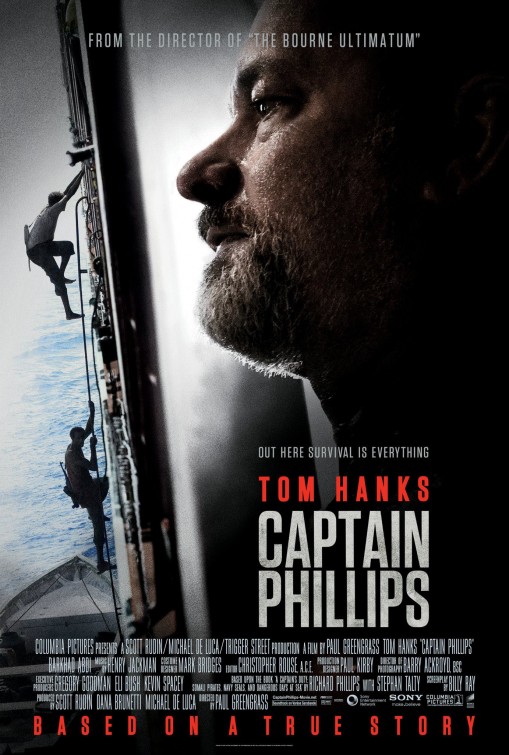
Captain PhillipsIn 2009, international headlines were made when Richard Phillips, the captain of the cargo ship Maersk Alabama, was taken hostage by Somali pirates for four days before being rescued by the US Navy. He wrote a book about his experiences, Captain’s Duty: Somali Pirates, Navy SEALS, and Dangerous Days at Sea, and now Paul Greengrass – the director the of The Bourne Supremacy, The Bourne Ultimatum and, more relevantly, United 93 – has brought the story to the screen in the impressive Captain Phillips.

We have all heard about Somali pirates and how dangerous the journey around the horn of Africa can be for cargo ships without really knowing how it works. The notion of seafaring pirates seems so old-fashioned that it is, for the uninitiated, difficult to fathom how the practice still takes place in the present day. As such, part of what makes Captain Phillips so interesting is the procedural nature of the film. Almost a docu-drama, the film shows us how high seas piracy functions in the modern world. We get to see not only how a small group of pirates can take possession of a massive container ship, but also the processes the container ships go through in the face of a pirate threat. But don’t let Greengrass’ devotion to detail and process fool you into thinking this film is in any way bland. Captain Phillips is intense, gripping storytelling.

Emotionally, the film is carried by a strong leading performance from Tom Hanks. Phillips is a veteran seaman. When he is aboard he is all business. He likes to be prepared, and initially gets his crew offside by insisting on running emergency drills. But when those emergency threats become real as the boat is approached by a skiff containing four pirates armed with automatic weapons, there is no one the crew would rather have in charge. Alongside a strong sense of duty and responsibility, Phillips is a cool head under pressure and a quick thinker. He is a schemer. The brilliance of Hanks’ performance is that so much of it is about what the character is thinking. But what propels this performance to sit among the very finest work that Hanks has produced are the post-trauma scenes in which Phillips, who has to this point been so measured, is simply unable to process the incredible ordeal he has just been through. Those scenes are devastatingly effecing. Hanks is a certainty to earn a Best Actor nomination at next year’s Academy Awards and will be a real chance of joining Daniel Day Lewis in the three Oscars club.

Hanks is the only name in the cast unless you count the blink-and-you’ll-miss-it appearance from Catherine Keener as Phillips’ wife at the beginning of the picture. However his performance is complemented by some equally strong work from the supporting cast, most notably the four first time actors who deliver impressively nuanced performances as the Somali pirates.

One of the great strengths of Captain Phillips is the way that it chooses to humanise the Somali characters when it so easily could have presented them as a terrifying other. Greengrass breaks from Phillips’ point of view by subtitling the Somali characters, so that unlike Phillips we can always understand what they are saying. In doing so he gives us access to those characters. Instead of one collection of bad guys we see four distinctly different men, displaying different emotions and reacting to the experience, and to the figure of Phillips, in individual ways. Their captain, Muse, is a man acting out of desperation. Not just the desperation of poverty which compels him to steal and kidnap to stay alive, but the desperation to prove himself to the other men in his village who deride him for his slight build. He goes on his own emotional journey in the film as he attempts to prove himself as a leader, with the way he finds himself simultaneously drawn to and pushing away from Hanks’ Phillips because he possesses the leadership qualities Muse aspires to being really interesting. The humanising of the Somali pirates is helped by the fact that despite being the aggressors and as such the villains of the film, they are also consistently the underdogs, and as an audience there is something in us which is compelled to sympathise with the underdog.

It is always impressive when a film based on high profile actual events, and therefore with a well-known outcome, manages to create and maintain legitimate dramatic tension. With Captain Phillips, Greengrass goes much further than simply maintaining dramatic tension. He delivers one of the most intense, gripping and interesting films of the year.

Rating – ★★★★☆

 Review by Duncan McLean

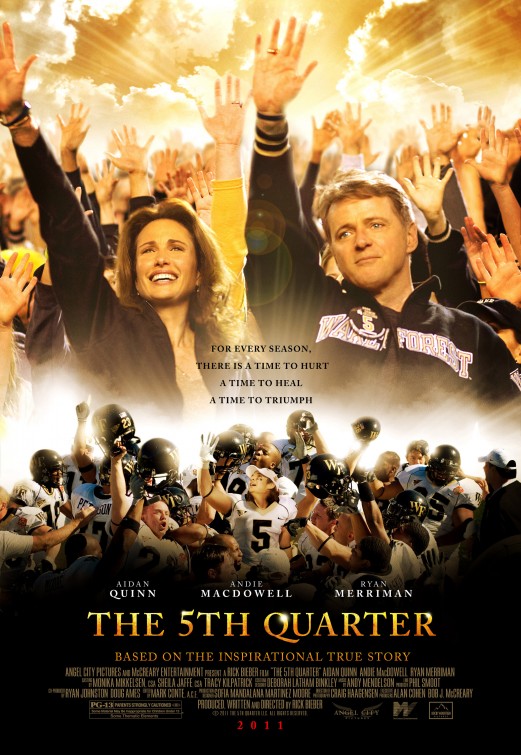
Review – The 5th Quarter (2010)

Directors: Rick Bieber

Starring: Andie MacDowell, Aidan Quinn, Ryan Merriman

5th QuarterIn 2006 the Wake Forrest football team, widely tipped to come last in their division, enjoyed their most successful season in history. All the while one of the team’s stars, Jon Abbate, was trying to come to terms with the loss of his younger brother in a car accident. The 5th Quarter seeks to bring the inspirational true story of the Abbate family’s struggle and Wake Forrest’s triumph in the face of adversity, but falls well short of the mark.

While you may be forgiven for thinking The 5th Quarter is the latest in a long line of inspirational sporting movies, anyone looking for a sports movie will be disappointed. The struggle of the Abbate family takes centre stage, with the football storyline not kicking in until over a third of the way through. All of the games which make up the historic streak are pretty much glossed over, shot in a montage style combining actual ESPN footage with inserted shots of characters cheering from the sideline. Done this way to keep the budget down, there is no attempt to play up the tension and drama of the sporting contest.

All of the problems with this film flow from a poorly written screenplay. The 5th Quarter struggles to tie together the two storylines; the Abbate family’s grieving process and the football team’s success. We are supposed to believe that the two are inextricably linked, that the Abbate family’s struggle somehow inspired the team’s achievement, but the film doesn’t do a good job of making it clear how that is the case. As a result the two narrative threads fight against each other rather than complement each other.

The heavy handed dialogue means even seasoned professionals like Aidan Quinn and Andie MacDowell struggle, often overacting to make up for the blank performances of the rest of the cast. Unsubtle writing means every emotion is verbalised and often repeated in the off chance that you had missed it the first time, leaving no room for subtext. On top of this, the equally unsubtle backing music often commentates directly on the scene through its lyrics.

This is one only for the very easily inspired.

Rating – ★

Review by Duncan McLean